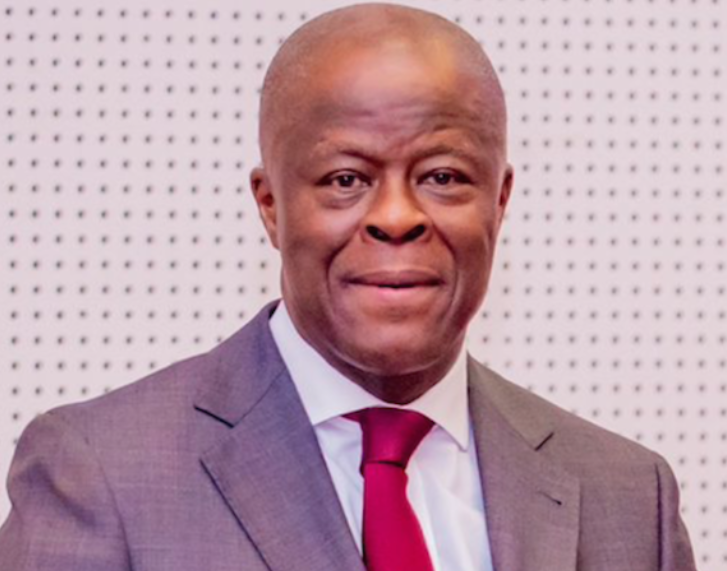
Wale Edun
By John Alechenu
Minister of Finance and Coordinating Minister of the Economy, Mr. Wale Edun, has expressed optimism that with measures already put in place, the Federal Government is expecting an increase in non-oil revenues from revenue generating agencies to exceed the N13 trillion recorded in 2023, by the end of 2024.
Edun, stated this when he appeared before the Senate Finance Committee, in Abuja, on Wednesday.
The committee is investigating Remittance of Internally Generated Revenue by MDAs and Evidence of Payment of 1% Stamp Duty into the Consolidated Revenue Fund Account from 2020-2023.
The Finance Minister explained to the committee that so far, for the month of January, 2024, over N100billion was remitted by Ministries Departments and Agencies (MDAs) to government coffers.
This, he noted, marks a substantial increase when compared to remittances received during the same period in 2023, when only N20bn was remitted into the Consolidated Revenue Fund of the Federal Government.
The finance minister further explained that remitted revenue from June to December 2023 was N3.6tn, the total collection for the 12 months of the year was N13tn.
According to him, due to policies introduced by the President Bola Tinubu administration which included digitalising operations for speedy transactions, government was projecting higher non-oil revenue output by the end of December, 2024.
He said, “What we can see is a substantial increase in remittances by MDAs and revenue generation agencies.
“We will keep this up and there will be a time we can give further data on this to the committee and the National Assembly”, the minister added.
Speaking about the government’s 1 per cent Stamp Duty collection, Edun said a total of N53bn was remitted in 2023 which was a monthly average of N3.7bn .
The minister further explained that the sum total for the year exceeded the target of N44bn set by the National Assembly.
He said, “This, I will say, was a positive development. N44bn was approved by the National Assembly, and the actual collection was N53bn.”
The minister also took time out to explain the budget performance for 2023 in terms of capital and recurrent expenditure as well as the first quarter of 2024. He stressed that capital spending for 2023 stood at N2.9tn.
As for 2024, he disclosed that first quarter capital releases so far stood at N124bn, while N581bn had been spent on salaries and other recurrent expenditure, aside from the N71bn released for overhead costs.
When questioned about the N3.7tn the Federal government allegedly lost to import duty waivers in 2023, Edun, who corroborated the records of the Nigeria Customs Service (NCS), said the Tinubu administration had introduced a new duty waiver policy to plug leakages.
The minister said this time around , all import duties would first be paid in full, while waivers would later be deducted and paid to the affected importers.
He explained that paying the duties before deducting the waivers would address “the uncertainty on how the process works”, adding that the old method of waiver application would be stopped and replaced by automation.
He further said,, “We are going to do a way with the exiting system. The system can be rejigged without changing the law. The law says there is a duty waivers for ‘X’ percent, it doesn’t say whether you should take it upfront or whether you should take it ex ante.
“If you want duty waiver, pay your duty, when we have cleared that you have brought in the goods you said you would bring, you’ll get it back automatically. If you want a duty waiver, pay your duty and get it back.
“We are going to do away with so much anomalies and have a seamless process. We are hoping to get the necessary apoovals to implement that immediately.”
On the current inflation, he said, “The inflation is due largely to eight years of printing the naira, which was not matched by production”.
Earlier, the Chairman of the Senate Committee, Senator Sani Musa gave reasons behind the decision of the Senate to institute the probe.
According to him, the quest to seek for alternative sources of income to finance government spending due to the instability in the world oil market was at the heart of it.
He said, “Volatility in oil prices and global economic challenges have made it necessary for us to explore our IGR sources.
“The days of excessive reliance on oil are gone. So, we have to explore other internal avenues, including agriculture as well as encourage voluntary tax compliance.”
Disclaimer
Comments expressed here do not reflect the opinions of Vanguard newspapers or any employee thereof.