By Miftaudeen Raji
An outbreak of deadly Marburg virus disease has hit Ghana; the country’s Health Services authorities have confirmed the first two cases on Sunday, July 17, 2022.
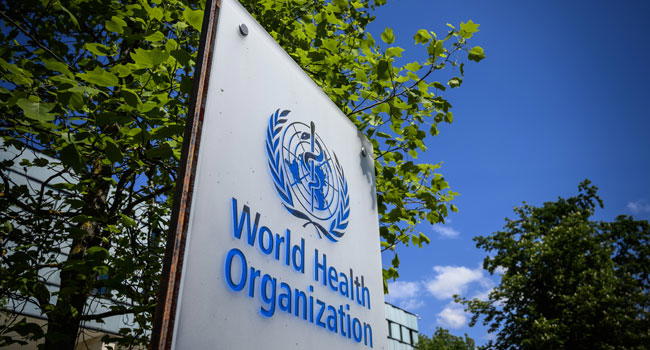
Ghana’s announcement came after a World Health Organisation, WHO Collaborating Centre laboratory confirmed earlier results.
While the WHO is facilitating the enabling support for Ghana, the organisation has commended the country’s health authorities for a rapid response towards curtailing the spread of the disease.
Here’s all you need to know about the deadly Marburg virus disease:
What is Marburg Virus?
The Marburg virus was first detected in the city of Marburg in Germany in 1967, leaving seven people dead.
Marburg is a highly infectious viral haemorrhagic fever in the same family as the more well-known Ebola virus disease.
WHO noted, “Marburg and Ebola viruses are both members of the Filoviridae family. Though caused by different viruses, the two diseases are clinically similar. Both diseases are rare and can cause outbreaks with high fatality rates.
Aside from West Africa, outbreaks and sporadic cases of Marburg virus have been previously reported in Angola, the Democratic Republic of the Congo, Kenya, South Africa and Uganda, according to WHO.
The virus was reported to have killed more than 200 people in Angola in 2005, the deadliest outbreak on the record of the organisation.
Ghana has confirmed its first two cases of the deadly Marburg virus, a highly infectious disease in the same family as the virus that causes Ebola.
History:
According to the WHO, the Marburg virus is the causative agent of Marburg virus disease, a disease with a case fatality ratio of up to 88%, but can be much lower with good patient care.
Marburg virus disease was initially detected in 1967 after simultaneous outbreaks in Marburg and Frankfurt in Germany; and in Belgrade, Serbia.
“Two large outbreaks that occurred simultaneously in Marburg and Frankfurt in Germany, and Belgrade, Serbia, in 1967, led to the initial recognition of the disease.
“The outbreak was associated with laboratory work using African green monkeys (Cercopithecus aethiops) imported from Uganda. Subsequently, outbreaks and sporadic cases have been reported in Angola, the Democratic Republic of the Congo, Kenya, South Africa (in a person with recent travel history to Zimbabwe), and Uganda.
“In 2008, two independent cases were reported in travelers who had visited a cave inhabited by Rousettus bat colonies in Uganda.”
Symptoms:
Reports said the incubation period (interval from infection to onset of symptoms) varies from 2 to 21 days.
Symptoms of Marburg virus are said to include high fever, severe headache, and severe malaise, muscle aches and pains.
Other common features include severe watery diarrhea, abdominal pain, and cramping, nausea, and vomiting can begin on the third day. For example, symptoms such as Diarrhoea can persist for a week.
At this stage, the appearance of patients is described as showing “ghost-like” drawn features, deep-set eyes, expressionless faces, and extreme lethargy.
Previous outbreak witnessed non-itchy rash in most patients between 2 and 7 days after early symptoms.
The symptoms include severe hemorrhagic manifestations between 5 and 7 days, and fatal cases usually have some form of bleeding, often from multiple areas.
The symptoms of the disease also include fresh blood in vomitus and faeces is mostly accompanied by bleeding from the nose, gums, and vagina.
Spontaneous bleeding at venepuncture sites (where intravenous access is obtained to give fluids or obtain blood samples) can be particularly troublesome.
During the severe phase of illness, patients can develop high fevers. Involvement of the central nervous system can result in confusion, irritability, and aggression. Orchitis (inflammation of one or both testicles) has been reported occasionally in the late phase of the disease (15 days).
Transmission:
The Marburg virus is transmitted to people from fruit bats and spreads between humans through the transmission of bodily fluids of infected people, surfaces and materials. Illness begins abruptly, with a high fever, severe headache, and malaise.
Those at highest risk of getting infected include family members and hospital staff caring for someone who is sick.
It is a severe, often fatal illness with symptoms including headache, fever, muscle pains, vomiting blood and bleeding. People remain infectious as long as their blood contains the virus.
Ghanaian officials are warning people to keep away from caves and to thoroughly cook all meat products before eating them.
Treatment:
The health authorities and medical team have yet to discover treatment for Marburg, but doctors say drinking plenty of water and treating specific symptoms improves a patient’s chances of survival.
Although there are no vaccines or antiviral treatments approved for MVD, it is encouraged that supportive care – rehydration with oral or intravenous fluids – and treatment of specific symptoms can increase chances of survival.
Health service authorities have also said that there are monoclonal antibodies (mAbs) under development and antivirals, e.g., Remdesivir and Favipiravir, that have been used in clinical studies for Ebola Virus Disease (EVD) that could also be tested for MVD or used under compassionate use/expanded access.
Action taken by authorities:
The Institut Pasteur in Dakar, Senegal received samples from each of the two patients from the southern Ashanti region of Ghana – both deceased and unrelated – who showed symptoms including diarrhoea, fever, nausea and vomiting.
The laboratory corroborated the Noguchi Memorial Institute for Medical Research results, which suggested their illness was due to the Marburg virus.
Meanwhile, the WHO has reached out to neighbouring high-risk countries and they are on alert.
In a statement, the WHO Regional Director for Africa, Dr. Matshidiso Moeti, said, “Health authorities have responded swiftly, getting a head start preparing for a possible outbreak. This is good because without immediate and decisive action, Marburg can easily get out of hand. WHO is on the ground supporting health authorities and now that the outbreak is declared, we are marshalling more resources for the response.”
The UN health organiation said more than 90 contacts, including health workers and community members, have been identified and are being monitored.
WHO noted, “Many patients develop severe haemorrhagic signs within seven days. Case fatality rates have varied from 24 percent to 88 percent in past outbreaks depending on virus strain and the quality of case management. Although there are no vaccines or antiviral treatments approved to treat the virus, supportive care – rehydration with oral or intravenous fluids – and treatment of specific symptoms, improve survival.
“A range of potential treatments, including blood products, immune therapies, and drug therapies, as well as candidate vaccines with phase 1 data are being evaluated.”
Health officials in the West African nation say 98 people are now under quarantine as suspected contact cases.
Disclaimer
Comments expressed here do not reflect the opinions of Vanguard newspapers or any employee thereof.