By Sola Ebiseni
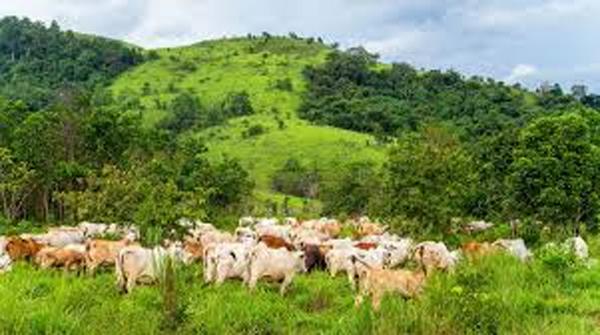
IN a memorandum on “Pastoralist-Farmers’ Conflicts and the Search for Peaceful Resolution” published in January 2018, some prominent Nigerians of northern extraction, notably, Professor Ibrahim Gambari, the present Chief of Staff to President Buhari and Professor Attahiru Jega, immediate past Chairman of the Independent National Electoral Commission, grazing reserves are defined as “areas of land demarcated, set aside and reserved for exclusive or semi-exclusive use by pastoralists”.
This definition is in tandem with the opinions of most other scholars on the subject. In his work, “Grazing Reserves Development: A Panacea to the Intractable Strife Between Farmers and Herders” published in December 1994, Dr Ismail Iro, was more direct as he defined grazing reserve as “a piece of land that the government acquires, develops, and releases to the pastoral Fulani”.
Going further, Gambari et al opined that “it is clear that Nigeria and indeed Africa have to plan towards the transformation of pastoralism into settled forms of animal husbandry.
The establishment of grazing reserves provides the opportunity for practicing a more limited form of pastoralism and is, therefore, a pathway towards a more settled form of animal husbandry. Grazing reserves are areas of land demarcated, set aside and reserved for exclusive or semi-exclusive use by pastoralists.”
They revealed that currently, Nigeria has a total of 417 grazing reserves all over the country, out of which only about 113 have been gazetted.
In a very extensive study and quoting other authorities, Ismail Iro (supra) revealed that grazing reserves in Nigeria started during the pre-colonial era being demarcated by the Fulani who he said conquered and ruled Northern Nigeria.
But that “formal grazing reserves in Nigeria started accidentally in the 1950s when Hamisu Kano, working with pastoralists on livestock vaccination, foresaw the shortages of grazing land in Northern Nigeria and, with the support of government, initiated the grazing reserve scheme from the abandoned government resettlement schemes (Fulani Settlement Scheme)” which eventually collapsed for varied reasons.
Yet, according to Ismail: “By 1964, the government had gazetted about 6.4 million hectares of the forest reserve, 98 percent in the savanna. Sokoto Province had 21 per cent of the land, followed by Kabba, Bauchi, Zaria, Ilorin, and Katsina, with 11-15 per cent each.
ALSO READ: Why are Nigerians obsessed with President Buhari?
The Wase, Zamfara, and Udubo reserves followed in succession.” It is thus clear, and as repeated several times by the irrepressible Governor Samuel Ortom of Benue State, that the bottom line of all issues clothed in several terminologies like farmers/herders clash and associated matters of insecurity, cattle colony, grazing routes and reserves and ranching is land.
It is the sociology of a permanent place for the Fulani who are the last and newest entrants into the Nigerian territorial space.
Even in the core Hausa states, which traditional political structures were altered by the Uthman Dan Fodio Jihad of 1804, there is still no full integration between the host peasant Hausa farmers and the new Fulani immigrants.
In effect, the concept of Hausa/Fulani which finds acceptable expression among the town dwelling members of the two ethnic groups, is virtually non-existent in the vast lands where the Fulani and Hausa are each respectively identified by the Fufulde and Hausa languages and also by pastoralism and farming occupations.
Even among people of other ethnic nationalities, you will never hear any mention of the Hausa in all the killings in the forests of Southern and Middle Belt Nigeria, while the war in Katsina, Zamfara, Kaduna, Niger and Plateau are between the Fulani and other groups.
The Federal Government seems to be deliberately oblivious of the cultural dispositions of the different ethnic groups to land before suggesting or initiating its various failed programmes to settle the pastoralists.
Writing about the Fulani concept of land, Ismail, again held the view that “the Fulani understanding of land possession differs from the legal or bureaucratic definitions of ownership. Ownership among the Fulani means the de facto possession or the occupation of uncontested and unchallenged land.
The Fulani man who clears a parcel of land and builds his hut on it may claim rights of that piece of land if nobody else objects. In their claims for land, the Fulani respect and uphold the principles of first-come-first-serve”.
Among the aboriginal people of the South and the Middle Belt, land is more than a means of production, the people are identified by the concept of “the fatherland”. Among the Yoruba, Bini, Igbo, Ibibio, etc., land is worshipped.
It is the land of our ancestors. The land is, in most cases, not even partitioned among the kindred not to imagine leaving it out to non-members whose ownership is backed up by legislation. It is more preposterous that we are told that these pastoralists need not even be Nigerians to be settled on our ancestral lands.
Those from all parts of greater Sahel are qualified to make Nigeria their havens. It sounds strange that as down South as Ilorin and Kabba in the Yoruba hinterland, it could be contemplated that land would be carved out, as the Northern Region Government contemplated, for the inheritance and use by government fiat.
Even the metropolitan Ilorin which ancient Yoruba rulership was altered by subterfuge, the original owners of the land were not dispossessed.
In spite of the fact that the generation of the few Fulani in Ilorin do not speak a word of the Fulani Fufulde or Hausa language which is the Northern Nigeria lingua franca, the indigenous Yoruba and the migrant Fulani still savour their individual identity, the reason the elder brother of the Chief of Staff to the President had to drop the “Kolapo” Yoruba name with which he had always been known as soon as he became the Emir of Ilorin.
As a trained diplomat, the Chief of Staff does not have to openly advertise his relinquishing “Agboola” for which he is known and called in Ilorin. He has to be fully Fulani with “Ibrahim”. Yet, he is at the top of an illegal Committee of the Federal Government seeking to appropriate the land of the indigenous people in the name of grazing reserves.
It is noteworthy that from the inception of Nigeria, land has always been a residual matter under the legislative authority of the regions and states. The power of the states is also not absolute.
ALSO READ: A breakdown of Biafra separatism, and where Kanu fits into the picture
It is trite that the extant legal regimes not only regulate land use but unambiguously define the powers of the citizens and the extent of control by different tiers of government in the federation. Except for land for minerals, the Federal Government is completely out.
The power of the State is to grant right of occupancy and issue a Certificate of Statutory Right of Occupancy thereof or give consent to consequent transactions thereon.
The power of the Governor in this regard does not extend to arbitrary dispossession of any citizen, family or community of their land except for proven overriding public purposes through the due process of law. There is no uncontested or no man’s land.
Governor Ortom of Benue State has told Nigerians several times how the Buhari administration has released the sum of N500 million to the Katsina home state of the President for ranching which the President himself practises.
Governor Ganduje of Kano State has invited all herders roaming Southern and Middle Belt areas to Kano for settlement. He has also been ignored. The governments of the Southern states have banned open grazing but welcome ranching.
What exactly is the hidden agenda behind the insistence by the Federal Government, even against the Constitution and the relevant laws, that people must surrender their lands willy-nilly.
When an issue gets to this state, it is seen by the ancient wisdom of our people as the tussle between the cock and the rope on which it perches. It is of mutual wahala. I know as self-evident that as long as Nigeria exists, it must and shall be ruled by law. Nigeria, we hail thee.
Disclaimer
Comments expressed here do not reflect the opinions of Vanguard newspapers or any employee thereof.