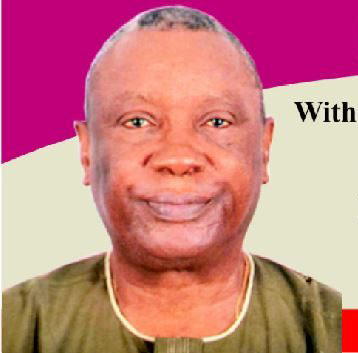
By Eric Teniola
The second part of this piece examined the lives of influential traditional rulers in the country. This edition continues with the review of the reigns of these rulers.
HE was appointed the Olowo in 1941 and ruled for twenty five years before he was deposed in 1966. In 1993, his crown was restored to him until he died in 1998. Some of his children Wale, Gbenle, Jare, Yemi, Suyi are my personal friends. In the 60s, he was the most powerful ruler in Owo division of Ondo province which now constitute six local governments of Ondo State, four Akoko local governments, Owo local government and Ose local government.
The Olukare of Ikare, Oba Akadiri Saliu Momoh, has been on the throne since 1984. Similarly the Owa Ale also of Ikare, Samuel Lolapo Adedoyin who died recently, was on the throne for 48 years. The Alake of Egbaland, Oba Samuel Mofolounsho Lipede, reigned from 1972 to 2005.
The late Olu of Warri, D. Eyeolusan Joao Akengbuwa ruled from 1795 to 1848. He was the longest reigning monarch in Itsekiri land followed by Erejuwa II, Wilson Ayoronmitsi Gbesimi Emiko, who ruled from 1951 to 1986, and followed also by Olu Atuwatse II, Godwin Toritseju Emiko, who ruled from May 2, 1987 to September 5, 2015.
Oba Sir Titus Martins Adesoji Tadeniawo Aderemi, Atobatele I, (November 15, 1889-July 3, 1980) was the Ooni of Ife from 1930 until 1980. He served as the governor of Western Region, Nigeria between 1960 and 1962. Sir Adesoji Aderemi was known as a wealthy man and had a large family of many wives and children.
The first Otaru of Auchi in Edo State, Ikelebe the first, ruled from 1819 to 1861. Auchi is the second largest city in Edo state after Benin City. Auchi is the headquarters of Etsako West Local Government. During the British colonial rule, it was the headquarters of the Kukuruku Division, the administrative headquarters of five districts. Auchi is also the root of one of the Momoh family. It is the home of Auchi Polytechnic.
Mention must be made of Olubadan of Ibadan, Oba Isaac Akinyele (1880-1965), he was the first Christian to be the Olubadan. He reigned for only ten years but laid a formidable reputation when died in May 1965.
Sir Siddiq Abubakar III (1903-1988), was traditional ruler (Sultan) of Sokoto. He was born at Dange, some 60km from Sokoto, on March 15, 1903, the same day on which the British finally subdued the Sokoto Caliphate.
ALSO READ: UK court rejects WikiLeaks founder Assange’s US extradition
Siddiq Abubakar III was the son of Usman Shehu, an eminent personality whose father, Mu’azu, was the Sultan of Sokoto (1877-1881) and a direct descendant of Usman Dan Fodio who founded the Caliphate in 1809. Siddiq Abubakar III had an Islamic education; he attended the local Koranic schools and held several administrative posts before succeeding his uncle, Hassan Ibn Mu’azu as the Sultan of Sokoto at the age of 35.
He first came to Sultan Hassan’s attention when he was a district scribe, and in 1931 he was appointed a local authority councillor of the Sokoto Native Administration. Later, as head of Talata Mafara, a most important district which included the commercial town of Gusau, he distinguished himself by his administrative competence and the able way he dealt with appeals from traditional courts and supervised districts and village heads.
In recognition of his ability and usefulness to the emirates, he was the Sultan of Sokoto between 1938 till November 1988. He was succeeded by Sultan Ibrahim Dasuki who reigned from 1988 till 1996. The present Sultan Saadu Mohammed Abubakar is the son of Sir Sddik Abubakar.
His Highness Alhaji Umaru Sanda Ndayako (1937-2002) the late Etsu Nupe was Permanent Secretary in Kaduna in 1964. He ascended the throne in 1975 and was nominated as a member of the Constituent Assembly in 1976. When he died in 2003 his people mourned his passage, for the development he brought to his kingdom.
The late Amanyanbo of Opobo, Chief Douglas Jaja (1915-1980), son of Chief Arthur Mac Pepple Jaja (1872-1936) ruled for 60 years although he renounced his chieftaincy temporarily between 1943-1951 to get involved in politics. At the time of his death in 1980, he was much loved by his people. The late of Oba of Benin, Oba Uku Akpolokpolo Akenzua II (1899-1978), son of Oba Eweka II born as Edokparhogbuyunmun ruled for 44 years following the death of his father in 1934. In 1925, he served under the supervision of the late Alake of Egbaland, Oba Ademola in his palace.
Sir Oladipo Samuel Ademola (1872-1962) was crowned the Alake of Egbaland on September 27, 1920, to succeed Oba Gbadebo who died on May 28, 1920. At the crowning ceremony, over 70,000 people were present, including a representative of the Queen of England. He ruled for 22 years. One of his sons, Justice Adetokunbo Ademola, eventually became the first Chief Justice of Nigeria.
In 1948, Prince Adeyinka Oyekan challenged Prince Adeniji Adele (1893-1964) to the throne of Lagos. The oracle told the two of them that they both will be kings.
Eventually Oba Adele ruled from 1949-1964 while Oba Adeyinka Oyekan II (June 30, 1911-March 1, 2003) ruled Lagos for 38 years making him the second longest ruling monarch in Lagos.
The first being Oba Akinsemoyin who ruled from 1704-1749 for 45 years. Oba Suleiman Durotoye Abegunde (1907-1993) ruled Omuaran in Kwara State from 1945 to 1993, while the late Olofa of Offa also in Kwara State, Oba Mustapha Olawore Olaonipekun, who died in 2010, ruled for over 40 years.
To be concluded next week…
Disclaimer
Comments expressed here do not reflect the opinions of Vanguard newspapers or any employee thereof.