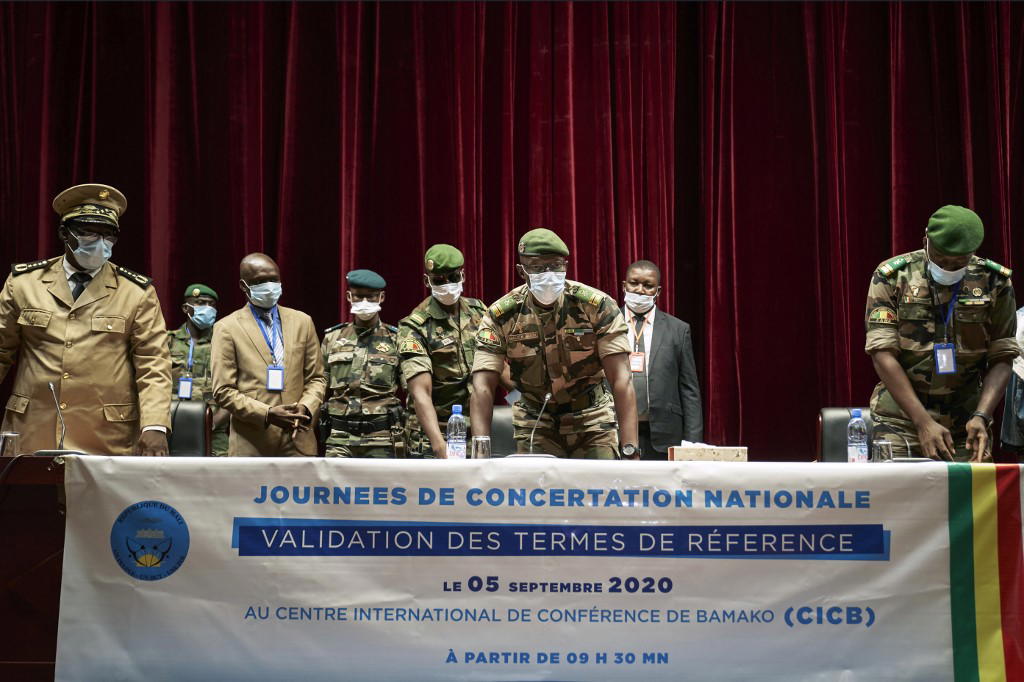
Vice-President of the CNSP (National Committee for the Salvation of the People) Colonel Malick Diaw (C) takes a seat with other military leaders during the opening of two days of talks aimed at validating the terms of reference for a transitional government in Mali, on September 5, 2020, in Bamako. – Mali’s military junta began talks with opposition groups on September 5 on its promised transition to civilian rule after mounting pressure from neighbours to yield power in the weeks since it overthrew the nation’s leader. The West African country has long been plagued by chronic instability, a simmering jihadist revolt, ethnic violence and endemic corruption, prompting a clique of rebel colonels to detain the president last month. (Photo by MICHELE CATTANI / AFP)
Mali’s interim legislature on Saturday elected Colonel Malick Diaw, a member of the military junta that toppled president Ibrahim Boubacar Keita in August, as its president.
The 121-seat body known as the National Transition Council was meeting for its inaugural session in the capital Bamako, and is a key part of the post-coup interim government apparatus in Mali.
Young army officers in the conflict-ridden Sahel state toppled president Ibrahim Boubacar Keita on August 18 after weeks of anti-government protests.
Under the threat of international sanctions, the officers between September and October handed power to an interim government, which is meant to rule for 18 months before staging elections.
Figures with army links dominate this interim government, however, and anger over their prominent role is growing.
Coup leader Colonel Assimi Goita was elected interim vice president, for example, and retired army colonel Bah Ndaw was also elected interim president.
ALSO READ: Mali interim government names MPs
Members of the defence and security forces have 22 seats in the transition council, according to a government decree, while political parties, civil society groups and trade unions also have seats.
On Saturday, the council elected Colonel Malick Diaw as its president unopposed, according to AFP journalists, with 111 votes in his favour and seven abstentions. Three council members did not vote.
Diaw was second in command of the military junta that took power after Keita’s ouster. The junta has never formally been dissolved.
Last month, Goita was also given veto power over the appointments to the new legislature, in a move seen by critics of the interim regime as strengthening army control.
The opposition June 5 Movement, which led protests against Keita this year, said in a statement on Friday that it was boycotting the new legislature and that it would not serve as a “stooge for a disguised military regime”.
[AFP]
Disclaimer
Comments expressed here do not reflect the opinions of Vanguard newspapers or any employee thereof.