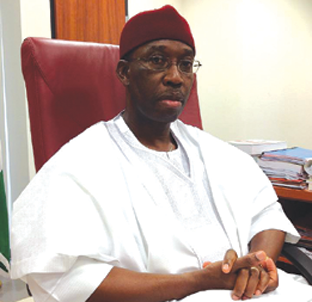
GOVERNOR Ifeanyi Okowa
By Julius Oweh
The common war cry ‘health is wealth‘ is borne out of the reality that it is only a healthy man that can meet his needs, his immediate environment and the society at large. A healthy man is a wealthy man by any standard and his social, political and economic contributions to the society are unassailable. Little wonder, the government of Delta State is driven by the uncommon passion to minister to the health challenges of Deltans through the provision of quality health care delivery and making sure that the various government owned hospitals across the length and breadth of the state are manned by qualified manpower and the constant provision of drugs and other medicaments. This is not by fluke or accident of history. The man at the driver‘s seat in Government House, Asaba, Senator Ifeanyi Okowa is a qualified medical doctor, a product of the University of Ibadan.
And this point was recently driven home during the presentation of 2018 budget estimates to the State House of Assembly by the governor of the state. The sum of N6.6 billion was set aside for the health sector to consolidate the on-going rehabilitation of the health facilities. The government also set aside one billion Naira to augment the contributing health insurance scheme especially under 5 and Free Maternal health care scheme.

GOVERNOR Ifeanyi Okowa
Governor Okowa explained the predicate of his health programme: ‘ Our guiding philosophy for this health sector is the establishment of a qualitative, affordable and accessible health care delivery system in the state, hence we are focussing on infrastructural developments of our hospitals and primary health care centres as well as the procurement of drugs and cutting edge medical equipment in major health care facilities across the three senatorial districts…. The Free Maternal and the Free under Five Healthcare programmes that were initiated by the previous administration in 2007 and 2010 respectively are still being implemented in January, 2017; the financing of these programmes was taken over by the Delta State Contributory Health Commission. As at July 2017, total enrolment of these categories of people in the scheme stood at 71,350 (under 5 -44,445, maternal 26,905) Registration of civil servants under the scheme has commenced and is currently in progress. Sustaining the free Maternal and the Free under Five Healthcare programmes has been critical in ensuring that the maternal mortality ration and under five mortality in the state remain the lowest in the country‘.
The governor during the budget presentation also disclosed that a lot of steam has been added to the state health insurance scheme and upgrading facilities at the teaching hospital in Oghara. Listen to Him: ‘The Delta State Health Insurance Scheme has kicked off and its cardinal objectives is to give quality and affordable healthcare no matter their socio-economic status, the sum of N1.2 billion is provided for the commission`s activities during the 2018 fiscal year….We have infused vigour and vitality into the teaching hospital at Oghara with critical personnel changes and the overhauling of the MRI and CT scan facilities that are now functional. In addition, we have instituted Public Private Partnership for some diagnostic services to ensure sustainability, and a grant of N142 million was released to the institution to meet pressing needs. Infrastructural work at the Asaba Central hospital has continued to receive priority attention from this administration and is now almost 70 per cent completed`.
It is to the credit of this administration that there is a government owned hospital in every local government area of the state. And these hospitals constantly get drugs to run the health care programme of the government. There are central hospitals at Warri, Agbor, Sapele and Asaba. The Oghara teaching hospital, an arm of the Delta State University, Abraka is now famous for the provision of high rate medical care and is now more of medical tourism destination. There is School of Health Technology at Ufuoma. And schools of Nursing in Warri, Agbor, Sapele and Asaba saddled with the responsibilities of providing middle level medical personnel.
Speaking recently, Solomon Ebinum, the senior special assistant on health to the governor took to the cleaners the critics of Governor Ifeanyi Okowa health programme. According to Ebinum, such people were speaking from the position of ignorance. Ebinum listed the importance of Free Mother and Child health care programme, the Delta State health insurance scheme and that 0.5 per cent of the state consolidated revenue is used to pay for the healthcare service of all Deltans. He also mentioned that more than 60,000 pregnant women and children under 5 are receiving free treatment in several hospitals across the state. And that these health schemes are accessible in the villages and rural communities through the primary health centres.
It is worthy of mention that the 05 Initiative, the scheme of the spouse of the governor, Dame Edith Okowa is also contributing to the health programme success of the governor. Recently the 05 Initiative partnered with Dr Isioma Okobah Foundation to give more than 2,500 prison inmates free medical treatment. Dame Okowa in that occasion reaffirmed the commitment of the state government to meet the health needs of the people. She further said that the 2017 free medical programme was aimed at expanding the scope with a view of accommodating more beneficiaries and bring closer to the doorsteps of the people quality health care services. The governor‘s wife further maintained that with partnership with non-governmental organizations, the state was scout ready to provide efficient, quality and affordable healthcare for all Deltans.
For a man not used to sitting in the office to get reports from officials, Governor Okowa said that plans were a float to take a comprehensive audit of health facilities in the state so that only the best could be given to Deltans. This is how he puts it: ‘A proper inventory and internal visitation of all medical and health institutions shall be undertaken with a view to improving upon the existing ones and establishing new ones where necessary. Training of existing health personnel and engagement of more community health personnel, community health extension workers and more sanitary health workers to boost primary health care. The teaching hospital at Oghara will be consolidated as centre of excellence, while other hospitals across the state shall be equipped and staffed to promote specialist services in various fields of medicine‘.
Thus with the cast determination of the state governor backed with the support of the Health Commissioner, Dr Nicholas Azinge and the constant understanding of the Delta State House of Assembly as regards the early passage of budget and other legislative support, indeed and in truth, the state government shall meet the health challenges of Deltans so as to put the state on a pedestal of wellbeing and resultant wealth.
Disclaimer
Comments expressed here do not reflect the opinions of Vanguard newspapers or any employee thereof.