…as Reps, agency, NBC disagree on additives in soft drinks
..Sunset yellow not relevant, Benzoic acid level can be reduced – CPC
By Levinus Nwabughiogu
ABUJA – National Agency for Food and Drug Administration and Control, NAFDAC has said that it lacked adequate laboratory tools to conduct test on all foods and drinks imported or manufactured in Nigeria to certify them fit for human consumption before their release into the market.

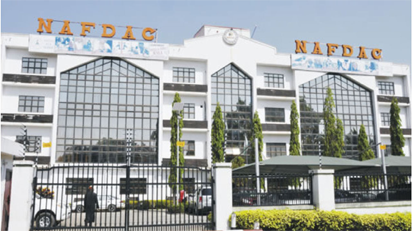
NAFDAC
It, however, said that major investigations were being taken on key paramaters to determine the wholesomeness of the products.
The agency also said that some additives and preservatives such as benzoic acid, sunset yellow amongst others, used in most drinks manufactured or imported into the country were safe for consumption.
NAFDAC made the submission at the first day of a public hearing by a House of Representatives Adhoc Committee investigating the production and distribution of drinks manufactured by the Nigerian Bottling Company, NBC, Limited and other drinks produced or marketed in Nigeria in Abuja on Wednesday.
It will be recalled that the House of Representatives had through a motion sponsored by Hon. Rotimi Agunsoye (APC, Lagos) recently queried why NAFDAC refused to enforce the ruling of a Lagos High Court, which ordered it to mandate the NBC to include a warning that the content of the bottles cannot be taken with Vitamin C.
Agunsoye in his remarks at the hearing, said that it was incumbent on the National Assembly to ensure that consumables in Nigeria were healthy.
“As a responsible lawmaking institution, we are determined to ensure a Nigerian environment that produces consumables and products that are healthy for consumption and satisfies international health standards and best practices. This development calls for serious legislative investigation to help us nip such development in the bud before it comes a serious danger to out national well-being”, he said.
But in her presentation at the hearing, Mrs. Simidele Onabanjo, a Deputy-Director who represented the Acting Director-General of NAFDAC, Mr. Ademola Mogbojuri said that preservatives were healthy.
She said: “Any certificate of analysis as being issued in the NADAC laboratory will address the physical parameter, the appearance, the colour, the taste. It will address the chemical composition, the microbial composition, including the yeast, ecology, the bacteria. It will also address contaminants like pesticides and heavy metals.
“You will agree with me that we do not have the facility to carry out all these things at oncs. As a result, we identify key parameters in any product or else, it will take forever to release a product in the market. It will hinder the ease of doing business. There are so many things that we could consider in a product, but since this product has been registered and we are just checking for conformity, we might not need to go through the whole hub when we are doing routine analysis. Some of these analyses are done holistically, comprehensively at the registration.
“Nigeria is one of the stringent regulatory agencies as it concerns food. In the UK and America, they do not register food products. They self-regulate and then periodically, they regulatory authorities visit and sample. However, in Nigeria, we try as much as possible to ensure that all products registered in Nigeria, imported or made-in-Nigeria, even those that are substandard are analyzed. Yes, it is true that we have a lot of challenges and constraints in the agency, even though we didn’t put it in the document. We didn’t want shoot ourselves in the foot.”
Giving further details on the issue, Onabanjo said that it was not within the powers of NAFDAC to set the standards.
“They are actually preservatives. Asorbebic acid is a fortificant, it can act as an anti-oxidant and it can be preservative. Those things are added like a stablizer so that the drinks will not break down in trade. That’s the essence of their being there. The contention now is that in some countries, the standards are lower while in Nigeria, ours is a bit higher. While the disparity.
“It has to do with whatever that’s is adopted in the country. But because there still a bit of contention, they are reviewing it. We cannot unilaterally as an agency take any other country if it has not been adopted as a Nation. Standards are developed by the SON but there are other organizations that participate in setting these standards”, she said.
But her position did not go down well with the lawmakers who interrogated the relevance of sunset, a colourant they said had been proven to cause Attention Deficit Hyperactivity Disorder (ADHD) in children and consequently banned in some countries such as Finland, Sweden, United Kingdom and Australia.
The Committee also expressed worry that benzoic content in Nigeria was much higher than what was obtained in Nigeria.
While it is 250milligram per kilogram in Nigeria, it is 150mg per kg in the UK.
To this end, a member of the Committee, Hon. Uko Nkole advised the agency to be proactive in their efforts to rid the country of unwholesome products.
“You can now agree with me that your conclusion is quite inclusive. If you don’t have all the facilities to certify a product, you do tumbum tumbum and tell us it is very safe. My own take is that NAFDAC, if you are doing your job, you must be seen to be doing your job”, he said.
In the same vein, the Consumer Protection Council, CPC while certifying fit the components said sunset yellow can be done away with while benzioc acid level could be reduced.
“Sunset yet is not that relevant. Bezioc acid should be reduced. Because, they are able to separate everything. Hyperactivity in children is a problem. They have figured out the problem. We have not”, the CPC Director-General, Babatunde Irukare said at the hearing.
But the Operations Director, North of NBC, Aliyo Paiko disagreed with the CPC.
In his presentation, he said the reduction of benzoic acid was possible but could be harmful to the health of the consumers.
“It will be detrimental to the health of the consumer”, he simply said.
The hearing continues Tuesday.
Disclaimer
Comments expressed here do not reflect the opinions of Vanguard newspapers or any employee thereof.