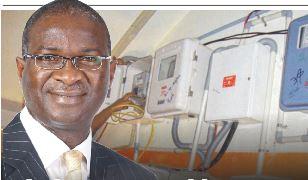
Fashola, electric meter
Lagos – Mr Andrew Herscowitz, Coordinator of the United States Power Africa Project, has advised people in Nigeria and other African countries to pay for steady power supply.
The U.S. Embassy in Nigeria said in a statement that Herscowitz made the observation at a workshop for Nigerian Power Distribution Companies.
“There are 600 million people on the African continent without power. That is a 600 million person problem, but it also represents a 600 million person opportunity!
“To those who suggest that consumers will not pay for power, people will pay for power.
“It is a commodity. They will pay for something that is reliable. People will pay for the things that they want,’’ he said.

Fashola, electric meter
According to him, about 95 million Nigerians currently do not have access to electricity.
He said that the U.S. Power Africa project was working with the private sector and governments in increasing the number of people with access to power, on and off grid, across Africa.
Herscowitz said that the Power Africa’s goal was to add more than 30,000 megawatts to sub-Saharan Africa, including 450 megawatts to Nigeria’s grid by late 2018.
“We believe that if we are successful in Nigeria, we can be successful anywhere in the continent,’’ he added. “Power Africa’’ is a new five-year American presidential initiative inaugurated by President Barack Obama in Tanzania during his Africa Tour in July 2013.
The initiative aims at supporting economic growth and development by increasing access to reliable, affordable, and sustainable power in Africa.
The programme is designed as a multi-stakeholder partnership among the governments of the United States of America, Tanzania, Kenya, Ethiopia, Ghana, Nigeria and Liberia, the US and the African private sector.
The African Development Bank Group (AfDB) has been a key partner in the design of the initiative and will continue to be during its implementation.
AfDB was praised by President Obama: “I want to thank the African Development Bank for its partnership, as well as many companies that have stepped up with commitments, including some here.”
The United States of America, through its development agency USAID, with close collaboration from the AfDB have taken the lead in shaping a list of priority power transactions across the six main focus countries, where interventions will enable them reach significant milestones in the next 12-18 months.
Disclaimer
Comments expressed here do not reflect the opinions of Vanguard newspapers or any employee thereof.