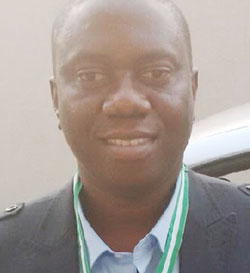
Kelvin Ebhohime.
By Favour Nnabugwu
A RECIPIENT of the UN Peace Ambassador Award, Mr. Kelvin Ebhohime, has called for the revitalisation of the country’s Primary Health Centres, PHC, saying it is the bedrock of healthcare delivery anywhere in the world.
Ebhohime who is also the Chief Executive Officer of Usunobun Nigeria Limited, also said that the situation of most health centres in the country is appallling and require urgent attention.

Kelvin Ebhohime.
Pointing out that government alone can not solve all the problems in the sector, he decried that in most of these centres, key professionals were not on ground and as a result there are usually serious gaps in the quality of care.
“No doctor, no drugs, nothing works in those centres. Some health centres are so deserted that you cannot even find ordinary over-the-counter drugs.
“I don’t think government has done enough. But it is still not worth putting much blame on them, because everything has to start from the top. The little we can do is to support the people to make sure that health is not a barrier to life.”
On the activities of the organisation, he explained that they have been working underground for some time now. “We have been supportive of people living with HIV, people with kidney problems; we also have this small and medium scale programme, where we support women to start up small scale business.
“We also go a long way to help provide drugs for primary health centres. We were doing it on a very small scale, not knowing people were also observing what we were doing. That has been our little contribution to society.
There is also this core value for family, I have always practiced, both in my community, in the church and whereever I have worked.
Speaking on challenges experienced over the years, Ebhohime said: “First of all, it is making up your mind to start. You start with one, one person tells another and that is how it spread. The challenge basically, has been finance to enable us cover everybody. We try as much as possible to go 60 to 70 per cent of people we meet, to solve their issues, mostly health issues. You find out that when you go to general hospitals, for as low as N1,000, somebody cannot treat himself or herself.
In most of these cases, we partner with some of these hospitals, get their bills and pay off the one we could. It has been a little bit challenging. Collation of data has been challenging. Some people cannot be honest. Finance too has been like a breach.”
On his award, he said: “First of all, I will appreciate God; it is an award for Peace Ambassador, under the United Nations. It all boils down to recognising you for your support and contributions towards the community, families and Nigeria as a whole. Being a Peace Ambassador gives you more responsibility to do more for the society.
Effect of the award : “The effect will be so big, because it will sort of bring me out. You have to report to the embassies on activities you do, whether quarterly, monthly or yearly. There are reports one has to bring out, because it is said that to whom much is given, much is expected. We will have to come out more now, more pronounced, more known and try to spread our support widely.
“We are working towards partnering with some individuals and organisations that on their own would support us financially. What we need is financial support, basically. This is because we partner with some of these pharmaceutical companies to give us drugs for primary healthcare centres. We need more support from outside to help us grow. It is just a one man thing. It is just I alone who is doing it for now. Definitely, I would welcome support from individuals and organisations.
“The next stage should be like a bigger one, like having more. Because what we intend to do after this is to open up an office, have staff that will solely deal on issues of health and environment. After this level, what have been given to me is expected to push me higher. We have to open up an office, do more publications and try to reach out more, mostly on primary healthcare services.”
Disclaimer
Comments expressed here do not reflect the opinions of Vanguard newspapers or any employee thereof.