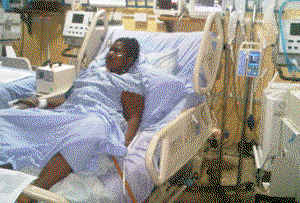
Christiana recuperating after her corrective heart surgery
By Chioma Obinna & Olasukanmi Akoni
LAGOS—“May the infirmities of all those who are brought into this centre be fully cured.” These were the parting words of the Lagos State governor, Babatunde Fashola as he commissioned the first Cardiac and Renal Centre in Nigeria and West Africa at large.
With the centre in place, the agony of Nigerians with heart and renal related ailments has now come to an end as the state government also promised to provide free medical treatment for indigent Nigerians at the centre.
The commissioning of the centre yesterday, by the governor will reduce the rate at which Nigerians are sent abroad for cardiac and renal care.
The 67-bed facility which is an extension of the state teaching hospital situated at the Gbagada General Hospital is already open to the public for services, apart from offering specialist care to patients locally.
Fashola said: ‘’It will help in reversing human capacity flight from Nigeria thereby turning a brain drain into a brain gain.’’
He said the centre will provide a comprehensive healthcare solution and services to patients suffering from cardiac and renal diseases at an affordable cost and also reduce the rate at which Nigerians travel abroad for medical care.
The centre which was conceived five years ago has three floors and provides a state-of- the-art cardiac care and renal centre with eight specialised out-patient clinics.
To ensure confidence in the services at the centre, Fashola said the state has already engaged the services of a multi dimensional consortium of Nigerian and American doctors and nurses, Renescor Team, who are cardiac and kidney specialists from America.
“They have also assured me that there will be no strikes in this hospital because critically ill people will never be left alone. They also have in their agreement; an accommodation for a quota of poor people who the state will refer to them to treat for free and when that quota is exceeded the state will pay.”
Disclaimer
Comments expressed here do not reflect the opinions of Vanguard newspapers or any employee thereof.