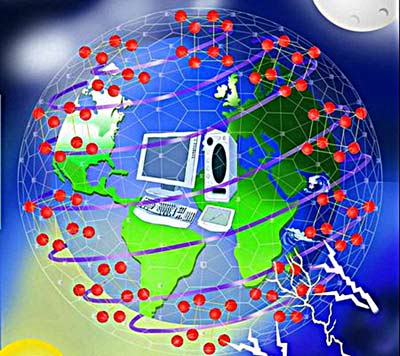
The Wired World: A graphic representation of the Internet
By Jonah Nwokpoku
Deeper mobile penetration and increased investment in offline marketing and logistics infrastructure by different operators in online business, especially the retail sector, dominated activities in Nigeria’s e-commerce in 2014.
Most of the online businesses reported more than 40 per cent increase in the use of mobile devices to access their services. This led to more investment in mobile friendly platforms and strategic approach which prioritised mobile against being an alternative which hitherto was the norm.
The year also saw fierce competition especially among the major online retailers in the country. This was characterised by aggressive offline marketing campaign that raked in hundreds of millions of naira for advertisers.
For instance, Nigeria’s pioneer online retailer, Jumia.com championed investment in offline marketing that cut across different offline media within the year. So did others like Konga.com, shoptomydoor, Chekki, Jovago, Hotels.ng, Carmudi, Lamudi, Kaymu etc. Industry watchers believe that this trend portends even more offline marketing approach come 2015.
Another premium feature of 2014 online business was the increase in investment in logistics. Due to the dearth of logistics infrastructure especially efficient road network in the country, which will enhance delivery for retailers, most of the operators in the space saw logistics as a determinant for winning or losing and therefore made significant efforts at investing more in it. For instance, online mall, Konga.com Konga raised its largest new venture fund of $40 million in October. This fund was invested in the building of new engineering department which was unveiled in November. The substantial part of the fund may also have been dedicated to the building of a separate logistics outfit, ‘K-Express’ for the company which made it possible for Konga to make a 24 hour delivery at some point within the year.
Recall also that in November, Jumia raised additional $150 million. This was to make additional investment in improvement of logistics and then the offline marketing.
The year also saw some major innovative and new entry like the emergence of grocery outfits like Supermart, Gloo, and fashion specialists like Fashpa, Tracklist etc. This is not forgetting job portal like Careers24 which made a bold entry into the job market.
The year 2014 also witnessed a remarkable improvement in payment system as most of the online companies made significant efforts at bolstering their payment systems to enhance online payment and boost credibility. This was characterised by partnerships between major payment providers and these online businesses. This was also boosted by the entry of global payment processor like PayPal.
Speaking on the growth and the trends in the sector, Co-CEO of Jumia Nigeria, Nicola Martin said: “The overall retail market in Nigeria is growing very fast, with a capacity to grow even faster. In comparison to more mature economies in Europe and the United States where e-commerce is about 15 to 20 per cent of the overall retail market, the retail market in Nigeria is still small, but emerging trends show us that we have the opportunity to push harder and grow to as much as 40 to 50 of the retail market in Nigeria.
This year we took major steps in expanding our logistics fleet, and we are positioned to cover more areas in Nigeria faster. We started working with exciting partners like MTN which will enable us reach more Nigerians. We are happy with the performance of the market, and believe we can get 10 to 20 twenty times bigger in two to three years to come.”
He added: “Nigerians are beginning to recognize the value proposition that e-commerce brings to them. From the beginning of the year, we invested heavily in e-commerce education on TV, Radio, Newspapers, in the streets, etc; and the outcome has been increased trust of Nigerians in e-commerce generally.
As the pioneers of e-commerce in Nigeria, we believe that education and great service delivery are key in ensuring that this market reaches its potential.”
On his part, Konga’s founder/CEO Sim Shagaya said: “E-commerce saw a huge boom in 2014 with significant growth in the industry. More and more people have come to accept online trading in Nigerian. There are more shoppers online and the shopping carts have also increased in value.”
On the factors and trends that shaped e-commerce in 2014, Shagaya said: “The increased internet and mobile phone penetration directly meant that e-commerce became more accessible to many Nigerians with the resultant growth in the industry as a whole.”
He noted that “the record breaking Initial Public Offering by AliExpress also brought a fresh surge of energy to the industry towards the end of the year. It has shown the crucial role e-commerce stands to play in building a country’s economy.” He added that, “It was a year that also saw a lot of new entrants to the industry and health energizing competition between the players in the field.”
For Mark Essien, the Founder of Hotels.ng: “The e-commerce sector in 2014 has seen a huge spurt of growth. We have seen huge amounts of funds coming into the sector, with both Jumia and Konga raising mega capital rounds. We have seen the expansion of DealDey, as well as the rise in other e-commerce sites like Hotels.ng.”
Essien believes that 2014 was very much shaped by a ‘let’s get to business’ attitude, as there was less NGO financing, less experimental apps, and more of a focus on making money and growing real businesses.
He noted that the trends impacted positively in hotel booking as this meant a lot more investment in the space, with online firms like WakaNow raising significant capital, and Rocket Internet employing Managing Directors to build travel solutions for the West African market.
Also speaking, Managing Director of Jovago.com, Marek ZmysBowski said: “The e-commerce industry in Nigeria has experienced a significant boom in the past one year. 2014 saw the astronomical rise of online shopping, whether for products, services or travel, Nigerians have embraced the culture of convenience that comes with shopping online. Companies like Jumia, and Kaymu which offer sales of a range of consumer goods have become an instant customer favourite in 2014. The travel sector has also been positively impacted by this boom. With more people going online to purchase products, the misconceptions about online shopping are being put to rest and so people are now more open to booking their trips and hotel accommodations online. Companies like Jovago.com have also helped shape this shift by constantly creating avenues for the re-education of the market on the benefits of transacting business online.”
He identified the entry of global payment processor, PayPal into the Nigerian market as one of the most significant factors that impacted e-commerce in Nigeria this year. This, he said, “has demonstrated that online payments in Nigeria has become more reliable and even local players are now creating more efficient mobile and online payment systems. Also the proliferation of Nigerian mobile applications has brought about a revolution which is driving more people online. Hubs like the C0-Creation Hub and Idea Hub are very essential for growing the online ecosystem and this has greatly helped create more awareness of the importance of e-commerce.”
Disclaimer
Comments expressed here do not reflect the opinions of Vanguard newspapers or any employee thereof.