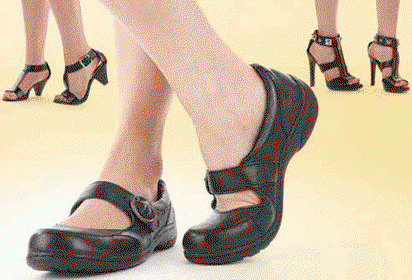
Lady Gaga, one of the most successful women on the planet, has one of the worst and probably the unhealthiest taste for shoes. Gaga is well known for her eccentric style and outrageous fashion trends and no right thinking person would want to step into any of her 12-inch mega-heels. Whether they’re sky-high or mid-heel, wrong size shoes or badly designed shoes are notorious for causing foot problems and even deformities.
Wrong size shoes
Wrong size shoes are more common than imagined. In reality, nine out of 10 men and women are wearing shoes that are too small. They end up with calluses, blisters, bunions, corns, and other problems. Many children are also wearing the wrong shoe size, which puts them at risk for foot deformities as they grow.
High heels
The heights, styles, and woes of today’s footwear are scary. Heels are getting higher and higher. Podiatrists call it “shoe-icide. The ultra-high heels force the feet into a position that puts stress on the ball of the foot. All high heels boost the risk of a lateral sprain, which stretches the ankle ligaments beyond their normal length.
Toe deformities
High heeled shoes push too much body weight toward the toes and then squeeze them together. Over time, the result can be hammertoe, abnormal bends in the toe joints that can gradually become rigid.
Low heels
Switching to lower heels will help avoid problems with the metatarsal bones. The lower the heel of the shoe, the more natural will be the foot position.
Stilettos
Although high heels can cause problems, the ultra narrow heels of stilettos pinpoint all the weight on one area. You wobble when walking and you’re more likely to trip and sprain your ankle.
Chunky heels
A chunky heel has more surface area and distributes weight more evenly making the feet much more stable compared to stilettos or spindle heels.
Ballet flats
Avoid these because there’s no arch support whatsoever to keep the feet from functioning optimally and this can lead to knee, hip, and back problems.
Flip-flops
Walking barefoot, or in flimsy shoes such as flip-flops or “slippers” without sufficient arch support, can overstretch, tear, or inflame the plantar fascia.
Platform shoes
Platform shoes and wedges tend to have rigid foot beds that throw off the biomechanics of walking. The foot is trying to bend a certain way, but the shoe is resistant because it’s so rigid. Look for a wide wedge or platform that is nearly parallel with the ground.
Pointy toes
Pointy-toed shoes might be stylish, but they squeeze the entire front of your feet together. After time, this can cause nerve pain, bunions, blisters, and hammertoes. Look for shoes that slope to a point beyond the edge of your toes. Choose a softer material, rather than stiff leather.
Measure your feet
Before buying new shoes, have a professional measure the length and width of your feet at the end of the day, while you’re standing. For unusually flat feet or high arches, an examination by a podiatrist (foot specialist) may be warranted.
Ideal shoes
The best time to buy new shoes is in the evening or late afternoon. Never buy shoes in the morning. And wear your new shoes every other day, not everyday. In the morning, your feet are not so swollen, but as you walk around, towards evening, shoes get tighter because all the fluids have gathered in the lower extremities. Proper fitting and wearing of shoes is essential. Make sure the shoe bends at the toe box, but is not too flexible. Don’t sacrifice comfort for style. Ensure sufficient arch support.
Disclaimer
Comments expressed here do not reflect the opinions of Vanguard newspapers or any employee thereof.