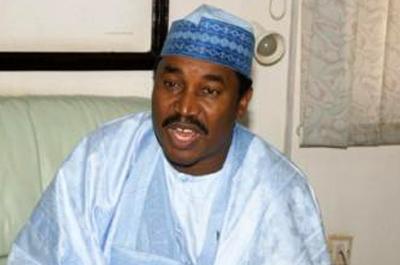
Ex Gov Ibrahim Shema
By Lekan Bilesanmi
Dr Dikko Suleiman is the chairman of the Katsina State Universal Basic Education Board, SUBEB. In this interview, he explains why some teachers were kicked out in the state even as some administrators were sent to the classroom while many teachers became administrators.
How has it been managing Katsina SUBEB?
Although I am only three months in the saddle, I discovered that most of the problems the sector was facing was lack of supervision on the part of the personnel responsible for the development of our education. So, what I did when I assumed office was to organize an inspection crew that went round the schools meting out punishment to teachers, pupils and even parents that failed to contribute their quota to the education development of the state, in particularly, the lazy teachers, those not up to the task, we flushed them out immediately.
How do you mean those not up to the task?
I mean those who had no teaching qualification and those who were not ready to do the job properly. On teachers training, I realized that their main problem was how to teach. Though they had the knowledge of teaching, how to impact it to the understanding of the students appeared to be the problem. We then set up a committee comprising educationists to come out with the modality on how to improve the sector, the primary and secondary school I mean.
We are awaiting their report. We made new changes in terms of effectiveness of the personnel both in the classroom and in the office so that those who are better utilized in the classroom and they are in the office, we deploy to the classroom and vice versa. We discovered that some of the teachers perform better as administrators. So, presently, in Katsina, there is nobody beyond the classroom. An administrator can be posted to the classroom once we discovere the classroom is better for him.

Gov Ibrahim Shema
What is the driving force behind this radical change you are making?
I am an educationist. I did my Grade 2, NCE, B.Ed, M.Ed & Ph.D, in education. I have never worked in any other sector, from primary school to the university level. So when I came here, I discovered that a lot of things had been messed up. Like some of the subjects in the school were too many and beyond the comprehension of the students. Imagine primary 1 – 3 having 12 subjects.
We slashed it to 4 subjects with emphasis on Mathematics and English because, once you are good in English and Mathematics, you can catch up at any level. Classes 4 to 6, we slashed it to 7 subjects instead of 24. How could a primary school student have 24 subjects? In which subjects will he excel? You end up teaching them nothing and they understand nothing. As an educationist, I did my master’s and Ph.D in child development; so I am so lucky that I am posted here where I know the problems of children.
You have completely new structures for primary schools. What informed this?
We shared the buildings among the local government areas not only within the metropolis but in the hinterlands. We have three of such in each of the local governments. The essence of the buildings really is to curtail the increase in the population of students. Where we notice that students are on the increase in a particular locality, instead of building one small building and litter them around, we say why not build a massive building that will contain all of them?
That is why the buildings are concentrated in the urban areas of each local government area. For example, in Katsina here, we have primary school that has more than 3,000 students; so how many buildings are we going to erect? Building is not for building sake, but for the purpose of containing the explosion of students.
The state operates a totally free education policy. What has been the response of the people?
It has been quite encouraging. The response has been massive. But more than that, in terms of motivation on the part of the teachers, I can tell you that there is no state that pays much premium to the teaching personnel like we do here in Katsina State. The new salary structure, TSS, has been implemented in the state. So the teachers are well motivated to give their best. Further training while on the job is free here. For example, if a teacher gets the TRC certificate, there is an allowance attached to it. That is one of the ways of encouraging and motivating our teachers.
It is not totally rosy, what are the challenges?
The greatest challenge is to make the teachers do their best because, no matter what you do in education, if the staff are not ready, you cannot make any positive contribution and this is the greatest challenge in any institution of learning. No amount of instructional materials, if the teachers are not committed, there is no way there can be improvement. In our own days, there was hardly instructional materials, but the teachers were committed and we are better for it now. So the commitment is what we are lacking.
And that is why we introduced impromptu supervision and on – the-spot- assessment of teachers; things have been improving because what we do is that we assess whether you can teach; if you can’t, we find out the problem; if it is in area of furthering your knowledge, we send you on course to improve.
Disclaimer
Comments expressed here do not reflect the opinions of Vanguard newspapers or any employee thereof.