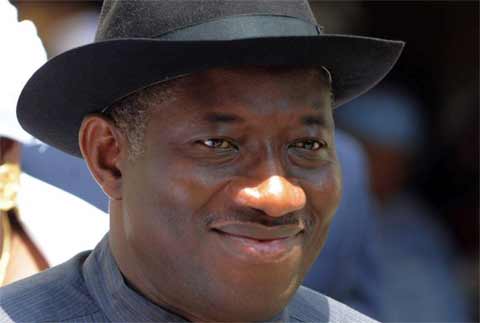
President Goodluck Jonathan
By Kenneth Ehigiator
…FG vows to dismantle price disparity, as experts see little hope
Four months ago, the Federal Government came out of its shell to attempt to bite foreign airlines operating in the country for what it considered unfair treatment of Nigerians through charging of fares higher than that paid by their counterparts in other West African countries.
Prior to this period, the government had always barked at the airlines over this kind of exploitation but failed to complement it with the ability to bite and achieve results, despite previous repeated outcry by stakeholders in the aviation industry, mostly travellers.
It, however, took the shabby treatment meted out on Arik Air at Heathrow Airport, London for government to wake up to its responsibility.
The Nigerian carrier had been denied its slot at Heathrow by the airport authorities in London, which asked it to pay for the slot in apparent violation of the Bilateral Air Services Agreement, BASA, signed between Nigeria and Britain. The agreement has the principle of reciprocity as one of its clauses, meaning airlines from both countries should have equal frequencies into each other’s airports.
Although the issue concerning slot allocation, as it relates to Arik Air in London, had been resolved as the airline has since re-started its Abuja-London operations, the issue of astronomical fares charged Nigerian travellers is still on the table, yet to be sorted out.
The question is: why is the Federal Government agitated over this fare issue? The reason is not far-fetched. Nigerians had always implored the government to prevail on the international airlines to cut down on their fares, on the ground that the cost of international travels in the country remains the highest in the world coupled with the poor on-board services rendered by the airlines which do not justify the high fares.
The Nigerian government’s angst is that Nigerians are made to pay more to travel to Europe, Asia, North and South America and other parts of the world compared to their counterparts in Ghana, Senegal, Cote’Ivoire and the entire West Coast.
Although government, in the aftermath of the Arik Air-Heathrow imbroglio, closed in on the two British carriers, namely: British Airways and Virgin Atlantic Airways, all other international airlines in the country have been found to be guilty of the same practice. German carrier, Lufthansa Airlines, Air France, Dutch carrier, KLM, Alitalia and Spain’s Iberia, amongst others, are all guilty of charging astronomical fares.
The Nigerian government is wondering what could have made a Nigerian travelling from either Lagos or Abuja to London pay more for travelling for less number of hours of flight than a Ghanaian flying for more hours to the same destination – London Heathrow.
For instance, while a Nigerian travelling in the First Class cabin of British Airways is made to pay between $9,285 and $10,070 to fly 5001km in 5hrs 55mins into Heathrow, depending on the season, as there is high and low seasons, the Ghanaian pays less than half of that – $4,943 to fly 5,096.79km in 6hrs 55mins. Aviation fuel plays a key role here and it is simple mathematics that the aircraft would burn more fuel flying longer hours.
Similarly, the Nigerian traveller from Lagos or Abuja to London pays $7,367 to fly the Club Class cabin Virgin Atlantic Airways, as there is no First Class cabin in the airline, but the Ghanaian pays $4,136 for same journey in the same class cabin. This unequal fare regime is not limited to British carriers; other European airlines are guilty of the same practice.
Flying from Lagos to Frankfurt in the First Class cabin of Lufthansa Airlines, the Nigerian traveller pays between $8,195 and $9,350, depending on the season, while those travelling from Accra to the same destination pay $4,719.
The same thing applies to KLM Club Class cabin which attracts between $5,146 and $7,036 for the Nigerian and between $3,189 and $5,271 for the Ghanaian traveller, also depending on the season.
Passengers pay more during the high season when passenger volume is high (Christmas season) and less when the volume is low in the first quarter of the year. 
This scenario is the same on routes outside West Africa and the continent. Consider this: Fares on British Airways First Class cabin flight from Lagos to London Heathrow in 5hrs 55mins is N1,540,903; Boston-Heathrow – 7hrs 30mins, N2,216,098; and New York-Heathrow – 7hrs 30 mins, N2,216,098.
Business Class cabin for the same flight on Lagos-Heathrow is N649,480; Boston-Heathrow – N381, 778; and New York-Heathrow – N381, 778, while Economy Class cabin ticket on Lagos-Heathrow is N163, 561; Boston-Heathrow- N136, 385; and New York-Heathrow – N136, 385.
For Virgin Atlantic Airways Upper Class cabin flight for same routes on Lagos-Heathrow is N683,343; Boston-Heathrow – N401, 078; and New York-Heathrow – N401, 078. On the Pemium Economy Class, the fare is Lagos-Heathrow – N286,707; Boston-Heathrow – N240,523; and New York-Heathrow – N240, 523.
Similarly, for the Economy Class on Virgin Atlantic, Lagos-Heathrow is N165,272; Boston-Heathrow – N117, 871; and New York-Heathrow – N118, 871.
However, for most of the major carriers in Nigeria, there is no low season, as their seats are fully booked all year round, which explains the reason they don’t toy with their Nigerian operations. But the Nigerian government was emphatic about not allowing this to continue, describing it as exploitation of the highest order.
In fact, Aviation Minister, Princess Oduah’s insistence that the two British carriers must review their fares downwards, with a threat to stop their operations should they refuse to cooperate, propelled the intervention of British Prime Minister, David Cameron who personally wrote President Goodluck Jonathan asking him to intervene on the matter. It also led to the setting up of a special committee to negotiate with a British team on how fairness could be engendered in the fare regime of the two airlines.
Director-General of Nigerian Civil Aviation Authority, NCAA, Dr. Harold Demuren, did not also mince words in warning foreign carriers to stop exploitation of Nigerians or face the consequences. If the airlines are making as much money as they are doing in Nigeria, why are they reluctant in shifting ground, despite government’s agitation?
International airlines in Nigeria have always had their ways with the government of the day. Officials of the Federal Ministry of Aviation have always given them full backing in all areas of their operations, which explains the reason for their ignoring most excesses of the airlines.
Most of the airlines have had problems with previous governments but deployed some prominent Nigerians, especially powerful traditional rulers to prevail on government not to wield the big stick. This explains why stakeholders in the aviation sector tagged along with the present government in its efforts to cut them to size, especially the British carriers.
The thinking in the industry is that if government is able to curtail the excesses of the two British carriers, considering historical relationship between Nigeria and Britain, others will fall in line. Perhaps, this explains why Government concentrated on British Airways and Virgin Atlantic.
There is doubt that the heat was on the British airlines, and this prompted the British Government to ask for more time till December 31, 2011, to do its own independent study of the airlines’ fares regime in other countries on the West Coast to come up with something acceptable to the government. This was after the Aviation Minister rejected the 20 per cent reduction in fares offered by British Airways.
However, the December 31, 2011, deadline has expired with no words from the Federal Government on the matter, fuelling fears that government may have buckled under pressures from the British Government to overlook the matter as it had always been with previous governments.

President Goodluck Jonathan
Firstly, there is this information that Aviation Ministry officials did not have their facts right while confronting officials of the British Government on British Airways and Virgin Atlantic which, it was learnt, gave both airlines an escape route.
Vanguard actually gathered that the British Government is not in a hurry to redress the imbalance in fares charged Nigerians by the British carriers, especially following the intervention of Prime Minister David Cameron who was said to have personally contacted President Goodluck Jonathan to caution him on the need not to rupture the “warm relations between both countries.”
A source told Vanguard that in one of the meetings held between the Nigerian and British negotiating teams, the British team stated emphatically that what the Nigerian government wanted was not feasible, as the differentials in fares from country to country and region to region depended on certain technical extraneous variables associated with the business of commercial aviation.
The source said though the Aviation Minister, Princess Stella Oduah, was desirous of seeing the matter to its logical conclusion, her hands appeared to have been tied on the matter, as she was said to have been told in clear terms that “Nigeria needed the support of Britain in Foreign Direct Investments, and cannot, therefore, do anything that will endanger that.”
According to the source, “when the matter was brought to the President, he said we should tarry awhile, because we need these people for investments in the country.”
It was also learnt that the outcome of the panel set up by Nigerian Civil Aviation Authority, NCAA, to investigate the price fixing allegation against the two British carriers is not helpful to the Federal Government’s cause. The NCAA had asked both airlines to pay their Nigerian customers compensation in excess of $235 million as a result.
But the panel’s report which gave both airlines a clean bill put paid to this, as the panel concluded that the law the airlines allegedly violated was not in place when the offence was committed. “Consequently, nothing has changed in respect of the high fares Nigerians pay to fly both British carriers, and there is no hope that this would abate soon,” the source said.
Asked why government was dilly-dallying in dealing with the issue once and for all, four months after the agitation started, Media Adviser to Aviation Minister, Mr. Joe Obi, said government was not relenting in its efforts to dismantle the price disparity of the airlines, adding that the British Government had asked for more time to complete the study it was conducting on the matter.
He said, however, that the issue was still on but couldn’t give a lead as to when Nigerians should expect a cut in fares by foreign airlines. Obi said: “I can confirm to you that they (British) have commissioned the study, which is ongoing. They got across to the minister. The minister had been lenient with those people but one thing is clear, the government will not go back on its words to see this injustice addressed. The ministry will not let this injustice prevail.
“You are aware that the Aviation minister rejected the 20 per cent price reduction offered by British Airways last December because she wanted a holistic cut in fares to match those they charge in Ghana and the entire West Coast.”
He reiterated the fact that the government would not wait endlessly for its British counterpart and that they had been told in clear terms to conclude the study as soon as possible, so that the Federal Government could take its decision.
Vanguard gathered that the British were merely playing politics, buying time, to see whether the Ministry of Aviation will soft-pedal on the issue. But spokesman of defunct Nigeria Airways and seasoned aviation expert, Mr. Chris Aligbe, told Vanguard that in as much as it was desirable to see government try to protect the interest of Nigerian travellers against exploitation, there was really nothing it could do to force foreign airlines in the country to slash fares because, according to him, government does not have control over the services offered by the airlines and cannot, therefore, control their fares.
He also said it would amount to economic suicide for government to try to ask the airlines to leave the country should they fail to reduce fares to an acceptable level. For him, the only way to cut down the excesses of the foreign airlines is through competition.
Aligbe said it would serve Nigeria right to start-off more private-driven flag carriers to complement the efforts of Arik Air with a view to giving the foreign airlines a stiff competition, noting that this could not have been possible in the days of Nigeria Airways as the airline was able to put foreign airlines in check through competitive fares.
He said: “We can’t control the price of services offered by the foreign airlines and we cannot stop them, only competition will put them in check. They can’t do it in South Africa; they can’t do this in Ethiopia, Egypt and Morocco because these countries have strong airlines that can match them in fares. They can’t even do it in Ghana because the Ghanaian Government has given them a lot of incentives through reduction in tax and other charges.”
He advised government to move fast in its plans to ensure take-off of more private-driven flag carriers and empower Arik Air to be able to compete with the foreign airlines. “This is the only thing than can force down fares,” Aligbe said emphatically.
Indications also emerged weekend that beyond British Airways and Virgin Atlantic Airways, government had not reached out to other foreign airlines on fare reduction. Media Consultant to Lufthansa Airlines, Mr. Hakeem Jimoh, said the airline was not aware of any agitation by the Federal Government for a cut in fares. According to him, no Aviation Ministry official has contacted the airline on the matter.
Aviation expert, Olu Ohunayo, blamed the current state on the regulatory agency, NCAA, which, according to him, has woken up rather late to its responsibility of economic regulation of both local and international airlines operating in the country. He made a case for urgent review of the Act which set up the regulatory agency with a view to empowering it to sanction airlines that flout its economic regulation policies.
“What is happening shows that the NCAA spent so much time on safety issues and left economic regulations unattended to. There is need to update NCAA Act to regulate economic issues. At present, the agency’s role is advisory; it cannot impose sanctions.
“Look at what happened recently in America when the U.S. Government fined British Airways for violating its laws and the airline paid because there are sanctions clearly spelt out for every offence. Therefore, whereas the NCAA is ready to bite, it is shackled by lack of regulations to impose sanctions,” he said.
Disclaimer
Comments expressed here do not reflect the opinions of Vanguard newspapers or any employee thereof.