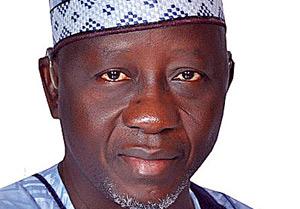
Almakura
By Ochereome Nnanna
When I got the invitation to tour Nasarawa State along with four other prominent opinion leaders in the media I was excited. I visited the state as part of a presidential entourage when it was still part of old Plateau in 1992. On that occasion we made whistle stops at Lafia and Keffi where we paid courtesy calls on the traditional rulers and military president, General Ibrahim Babangida, commissioned a couple of projects.
Since the state was carved out of Plateau State by the late General Sani Abacha on October 1, 1996, I have not had the opportunity to be there. Others that were born on the same occasion were Bayelsa, Ebonyi, Gombe, Ekiti and Zamfara states. Of all the states created by Abacha, Bayelsa seems the most grateful in that the second most prominent road in the capital, Yenagoa, is named after the late head of state.

Almakura
Ekiti people are also very vocal in their gratitude to Abacha for giving them an opportunity for self-determination they never before experienced. Ekiti has made steady progress. So has Ebonyi, which has had the good fortune of above average performing leadership since inception.
After our tour, I reached the conclusion that Nasarawa is probably the least developed of these six newest states. I have never been to Zamfara and Gombe, but I read rosy reports of former Governor Danjuma Goje’s stewardship during which infrastructural development got a big boost. Of Zamfara, I know not much except that it has a huge deposit of solid minerals and was the starting point of the “Shari mania” of the early part of the last decade.
The underdevelopment of Nasarawa State owes to poor leadership and lack of continuity in governance. The eight-year regime of Alhaji Abdullahi Adamu, who is now a senator, offered great opportunity for the foundation for take-off of the state to be laid.
During our two-day tour, we saw so many projects that were conceived and constructed by that regime. Some were even commissioned, especially by then President Olusegun Obasanjo. They were subsequently abandoned, and billions of naira went down the drain.
The list of projects that suffered this fate is a very long one: The Cultural Centre, International Market, Masaka Meat Factory, 60-kilometre Mararaba-Panda-Gitata road project, all in Karu and Mararaba, the state’s commercial axis that borders the Federal Capital Territory, Abuja.
Others include the Mada Waterworks near Akwanga, the 13-kilometre Akwanga-Angwan Zaria road project, the Nasara Packaging Factory and most pathetically, the N6 billion Farin Ruwa Independent Hydro Electric Power Project, FRU-IPP.
All these projects were started by former Governor Adamu and abandoned by him as far back as 2005 when he started eyeing the presidential race. That was when commitments to contractors were no longer honoured and work on capital projects came to a screeching stop all over the state.
When his successor, Alhaji Aliyu Akwe Doma was elected with the active support of Adamu, rather than continuity, Doma simply ignored the unfinished work of his supposed godfather. He did not pay contractors. The only project that state officials accredited to former Governor Doma was a large housing estate in the state capital.
It was also completed but abandoned, as the basic infrastructure such as roads, water and electricity were not provided. When we visited, the estate was overgrown with weeds but officials said the new government has arranged for work to resume soon.
These abandoned projects would have taken very little to put thousands of people to gainful employment but due to selfish political leadership the state remains underdeveloped with so much of its resources tied up in unproductive capital projects. The International Market in Mararaba is the largest in the North Central Zone.
With its activation, Nasarawa State will become to Abuja what Ogun State is to Lagos. Also, the FRU-IPP, according to the Managing Director of the Nasarawa State Energy Company, NASENCO, Prof Sulyman Ugya, would supply 20 megawatts out of the 90 megawatts the state needs. The state has paid more than 100 per cent of the initial N5.4 billion cost of the project.
At the site of the project, machines and parts litter the ground. They were brought in more than three years ago and simply left to the elements. Nobody even thought of building a warehouse to keep them in. Ugya, an engineer, who was brought back from the US to help restore the project, told us that an American company has taken up the project as a concessionaire after the Korean company that handled it from the beginning was asked to go.
Both the International Market and the FRU-IPP are subjects of legal tussles between the government and contractors or financiers.
Old Plateau State owed the Paris Club of creditors heavily, and Nasarawa, like other states that found themselves in a similar situation, also paid through the nose.
In Nigeria, it is not easy to dislodge a sitting governor at the polls, especially when such a governor belongs to the Peoples Democratic Party, PDP, which controls the Federal Government. But in recent years when votes have increasingly begun to count, it is no longer impossible.
The people took matters in their hands in states like Imo and Nasarawa states to remove sitting PDP governors. In the case of Nasarawa State, they elected Alhaji Umaru Tanko Al Makura, the only Congress for Progressive Change, CPC, governor.
He did not invite us to come and see the wonders he was able to perform in his first 100. That would not have been worth the bother. He wanted us to see the rot and dilapidation his predecessors left the state in. He has given us a fair chance to assess his contributions by the time he is done.
When a politician throws this challenge to journalists, it is worth taking on. In my own experience, a politician who wants the media to see where he is starting from usually intends to work. I am in a position today to say that Governor Sule Lamido of Jigawa has made a great difference in his state, taking it away from the bottom as the poorest in the North to one of the rapidly developing ones.
One is hoping that the fire will not go out in al Makura as it did Abdullahi Adamu, who started so well but ended so woefully. The danger in disappointing the electorate that flushed out an incumbent to put you in power is that those who shouted “Hosanna!” yesterday will shout “Crucify him” tomorrow. The people of Nasarawa State may not be fooled a third time.
Keeping the devil at bay
A WISE man learns from the mistakes of others. But an idiot never learns, even from his own mistakes, no matter how many times he has been stumped. This old saying came to mind after our encounter with Governor Al Makura.
Nasarawa State is a frontline state of sorts. It is bordered by three volatile administrative units – the Federal Capital Territory (which has witnessed many terrorist bombings), Niger State (especially Suleija, where the Boko Haram terrorist group set up a bomb making factory and has attacked a church and a local office of the Independent National Electoral Commission), and Plateau State, where communal conflicts and killings have for years made life a living hell for both indigenes and resident s alike.
We wanted to know from the Governor what steps he has taken to ensure the virus of killings based on religion, ethnicity and terrorism do not cross the border into his state.
The question is a germane one, in that Nasarawa State possesses the qualities that would lend it out to the demons of discord unless care is applied. It is a state where Christians and Muslims are almost equal in number, with its own share of followers of African religions.
With the official population of about two million people locked in its 10,283 square kilometres, it has 25 separate ethnic groups. Poverty and unemployment are high, and the situation is worsened by proximity to Abuja, with population growing at an alarming rate due to inflow of migration. Its already poor amenity base is under severe pressure.
Al Makura knows the state cannot afford any form of discord. According to him, he adopted the charter of equity and sincerity in the management of the diversity and sharing of resources of the states. He made sure to divide the number of commissioners equally between Christians and Muslims (eight each). The same thing applies to the Permanent Secretaries (13 each).
No group is made to see itself as dominant or marginalised. There is no indigene/settler dichotomy. Even non-indigenes who dominate the populations of Karu and Mararaba feel free like those who live inside nearby Abuja. Besides, there is also a policy of vigilance.
With minimal social tension, the journey out of poverty can begin in earnest.
Disclaimer
Comments expressed here do not reflect the opinions of Vanguard newspapers or any employee thereof.