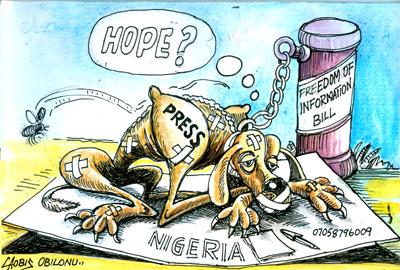
ENTHUSIASM that the media will have more access to information with the passage of the Freedom of Information Bill remains muted. Silence has greeted the bill from the President. Expectations of a passage of the bill “soon” have withered.
When the bill got to the National Assembly in 1999, its proponents were optimistic that with the gale of official posture against corruption, the media would gain access to information to invigorate the fight. The optimism was misplaced and 12 years after, it is still a bill.
Those who celebrate miniscule steps like the National Assembly passing it, do not realise the reluctance of the elite to free access to information. The elite knows the power of information.
Passage of the bill will await the pleasures of the next National Assembly, which will go through the process again before sending it to the President. Remarkably, the Special Adviser to the President on National Assembly Matters Senator Mohammed Abba Aji said in March that the President would not sign the bill.
The quality of the bill has been compromised during its 12-year sojourn. Senator Smart Adeyemi warned that the bill would not meet with the concept of freedom of information. “What we have here is different from the one that was submitted. They have watered down the bill so much that it cannot bite. If we bring the original bill and place it side by side with what we have here, we’ll see that it’s different in concept and content.”
Deputy Speaker of the House of Representatives Usman Bayero Nafada said at a lecture last August, “We want to produce a bill that will be acceptable to every Nigerian and not a bill that will only be acceptable to the media practitioners.”
There are more truculent resistance to the bill like the contributions of Deputy Senate President, Ikechukwu Ekweremadu. “Nigeria is one of the few countries with freedom of information in their Constitution. If it’s in the Constitution, it would amount to surplusage.”
Surplusage is a legal term for useless statement completely irrelevant to a cause. A layman’s definition will be over abundance, waste, superfluous. It is not entirely surprising that the National Assembly abhors the media not with the legislators’ activities that are bursting to the seams with scandals.
With the debates on media and peoples’ freedom on, the constrictors on the media are continuing. Daily Trust has withdrawn its Jigawa State correspondent Malam Yusha’u Ibrahim, according to the newspaper, in response to “security concerns arising from hostile events emanating from the state government.” He will not be replaced.
The Director of Press Affairs in the Dutse Government House Alhaji Umar Kyari conveyed the decision banning Ibrahim from covering any event which Governor Sule Lamido attends. The government was reacting to reports it considered unfavourable.
Under what powers did Mallam Lamido restrict Ibrahim’s movement? Other “executive” governors act in this manner. Some use their security personnel to brutalise journalists and anyone opposed to them.
Personal liberties are even more important than the media’s freedom. The challenges of this society centre on the greed of a few who ensconce themselves in comfort while abridging others’ rights.
Such people and institutions should be resisted by every legal means, which is what Trust should do.
Disclaimer
Comments expressed here do not reflect the opinions of Vanguard newspapers or any employee thereof.