*Says Labour now occupies backseat on national issues
By Victor Ahiuma-Young
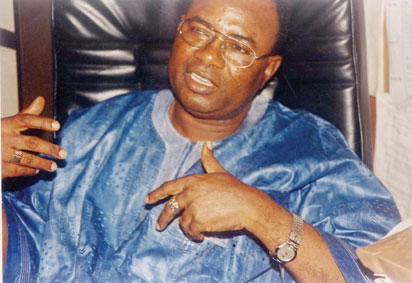
PRINCE Peter Adeyemi, the General Secretary of Non-Academic Staff Union of Educational and Other Institutions, NASU, and a former Deputy President of the Nigeria Labour Congress, NLC, in Sunday Vanguard, speaks on politics in labour government, leadership, challenges and prospects.
What is the state of the labour movement in Nigeria?
 We as trade unions are confronting issues that affect our members and we are handling those issues with all diligence and our members are not complaining. I am also aware that in the last couple of months, we have witnessed several strikes that have taken place in the power sector, health sector, education sector and so on.
So, I think the trade unions are working within the limit of their capacity. However, if we want to do the nation’s assessment of the visibility of the central labour bodies, you can also say that depending on the issues at any given time, the centres will determine what they want to do about issues; and I think to a large extent, it is probably driven by the level of contribution and support they get from the affiliates.
If you look at critical labour national issues, it seems as if we have not been visible as we used to be. I am aware that in years past, the voice of the people at the national level used to be much more pronounced. In fact, there was a time that the labour movement in this country was the rallying point for the masses. There have been a whole lot of issues and it seems we have not taken the front seat. I think those who are handling the centres will be able to speak on some of these issues.
What is wrong with the movement, how did we get it wrong?
Well, I am a labour leader and used to be an active part of the movement until 2011 when I contested election for the position of the Deputy President and I was schemed out. I think up to that point I would have been in the position to do a proper assessment. If I do it now, of course, there is tendency for people to think that I am doing the assessment because I am not part of the leadership. But I say with all sense of responsibility that I am aware that Nigerians have complained very bitterly that labour at the centre is no longer what it used to be.
Recently, I read what somebody by name Jibo wrote. He compared what is happening in the Ghana labour movement with that of Nigeria. Right now, Ghana Trade Union Congress, TUC, is struggling over some unfriendly policies of the government and he related that to what is happening here in Nigeria. He wrote about what happened during the fuel subsidy protest, how the labour movement in Nigeria decided to abandon the people midway.
If you look at that, it is a pointer to the fact that those in the labour movement may not be able to do an assessment of their own performance. I have already said the labour movement is no longer what it used to be and I agree absolutely with that because I have seen quite a number of struggles of various unions and I thought that some of those struggles would better be coordinated by the labour centres and much better results would have been achieved.
It could be that the present leadership at the labour centres decided not to be as confrontational as we used to be. It could also be that there was a deliberate policy to do it that way. We have been completely absent when it comes to standing up on critical national issues. Look at what has happened on the issue of the Chibok girls, one would have thought that the labour movement should have been in the forefront. It is critical for the labour movement to talk about the Chibok girls and take action about the girls.
As a result of the abduction of those girls, there have been lots of crises. We have seen that many of our members have been killed. When you talk about the Chibok girls, you are also talking about insecurity in the country. We have seen situations where staff members of West Africa Examinations Council, WAEC, supervising examinations have been killed.
We have seen situations where nurses and health workers have been killed and we have seen situations where teachers have been killed. In fact, in Jibo’s article, he wrote that over 173 teachers have been lost to the crisis of insecurity and he was surprised that even the President of NLC that comes from Nigeria Union of Teachers, NUT, has not been able to push anything regarding this issue.
There are many issues that affect the nation and Nigerians expect that at this point in time the voice of the labour movement should become louder, but we have decided to take a back seat. This is very unfortunate because we now see different types of human right groups driving this process and, in most cases, they are not properly coordinated. There are too many issues and clearly it has not been the best of time for us. However, I think hope is not lost yet.
How can labour reclaim its lost glory and meet the expectations of the masses?
The only way you can talk about labour regaining its lost role is for the labour movement itself to become a democratic institution. The labour movement is supposed to be the pacesetter; we have talked about several things that are wrong.
We talked about manoeuvring of election processes, we talked about rigging, and we talked about different types of uncivilised activities that are associated with politics. But again we also know that if the election process is characterised by a lot of manipulations and manoeuvres, it may then throw up the type of leadership that may not be able to deliver.
We are aware that in February, the NLC will be going for its Delegates Conference where new leaders will be elected. The question we should be asking ourselves now is, how are they working towards a fair election now? This is because, if it is not properly managed, we will end up in a situation where we will then have a leadership again that may not be able to change the current situation.
If the movement has not been able to deliver maximum result to the yearning and aspiration of the Nigerian masses, if the movement has taken the back seat in the opinion of the Nigerian workers, if the labour movement has not been visible as it used to be, then I think everybody should be concerned about the processes that will lead to the emergence of a new leadership. I am not sure we are doing that now.
One of the critical elements and stakeholders in this process is the media and I am not really sure that we are doing enough to put these issues on the table. With some months to the conference of the NLC- a vital institution in the country – we seem complacent about what is happening.
What we need to understand is that the next leadership that will emerge from the NLC election next year will determine what will happen to us in the next four years and, my own opinion is the need for the media and every stakeholder in this country to show more concern about what is happening in NLC and what is going to happen in February 2015, when the Delegates Conference will take place. The outcome of the next election will determine whether there will be a positive shift or we are going to remain where we are as far as labour is concerned in the country.
But what happens if this trend continues beyond 2015?
The likely implications are very obvious. First, there will be no checks and balances because the very active labour movement that once served as a check on the impunity and excesses of government not only at the federal government level but also at state and local government level will no longer be there. We need potent, virile, effective and forward looking labour centres that will impact very positively on the various strata of government.
When the state governors know that if they handle the state workers with impunity, there is a forward looking labour centre that can engage the state governments, they will be mindful of their actions against workers. But when they know that the leadership of labour at the centre is clearly ineffective and clearly unable to deliver, then some of the things we see today in Nigeria will continue.
The situation where we have the national minimum wage law which prescribes that each state should pay not less than N18,000 and you still see some state governments like Plateau and few other states that are not even paying anything near N18,000 to their workers, is a sad commentary. Yet, we have a labour movement that has not been able to do anything about that. Let me tell you, there is a limit to what the state councils can do about this issue and if the labour centre refuses to act, there will be more impunity.
Our state governments are extremely powerful and if you look at the position that is being canvassed in the Senate, that trade union matters should be removed from the Exclusive list to the Concurrent; that shows you clearly that the future is not certain.
You need a forward looking labour centre with leaders that are determined to fight for the rights of workers. The National Conference out of its selfishness and greed recommended that labour matters should be removed from the Concurrent list and it involved our labour leaders. The moment you remove labour from where it is currently, it means anybody can toy with the labour movement.
The way it is presently, we are having difficulties in making government to respect laws that have been passed by the National Assembly. I was part of the committee that negotiated the minimum wage. Some states came to the committee to say they have the ability to pay N30, 000, some said N25, 000 and some N40, 000. But as we speak today, there are states that are contemplating a cut in the minimum wage.
In Benue, the order of the day right now is that the Governor, Right Honourable Gabriel Suswam is talking about cutting the minimum wage because, according to him, the resources are not available. Recently, the teachers in that state who had been on strike for almost eight months suspended their industrial action. Ask me why they went on strike; it is because the state government refused to pay N18, 000 minimum wage to teachers in the state.
When Adams Oshiomhole was president of the NLC, we had problems but you find out that when the problems arose, you could see visibly that labour was confronting them head on. But the challenge right now is that those who are at the helm of affairs are not confronting those problems.
As at that time former President Olusegun Obasanjo increased the price of petrol, we were all on the streets while Adams Oshiomhole was at the front, all of us protesting. At the end of the day even when Obasanjo wanted to increase by N10, we forced him to reduce it by 50-60 percent .
You see, if not for the labour movement at that time, maybe Nigerians would now be paying almost N200 for a litre of petrol. Then, we were able to check the excesses of government due to the way and manner labour was structured. Labour then was well organised and highly mobile. So, I do not see the future as bright if the current trend does not changed but I am confident that this trend will definitely change.
How do you think this change can come about?
We have gone through some period where Nigerian workers have clearly seen that those driving the process are doing so properly, so change will surely take place. I am very sure if an average labour person in Nigeria today wants to do a fair assessment of what is happening now, he knows that there is need for the movement to do what we refer to as self-rethink. We need to do self-rethink and find out if this is where we want the movement to be.
If we are honest with ourselves and we are convinced that this is not where we want the movement to be then, there is need to put in place a leadership that will be able to deliver and take the labour movement out of this present situation back to where we used to be. I think the first step is to redeem our image and that will be dependent on the type of leadership that comes out of the Delegates Conference. I think the labour leaders in this country need to check the credentials of those who are presenting themselves for the Conference.
First, consider their union, two, look at how democratic they have been and how they have been able to impact on their membership. The truth of the matter is that, it is not all unions that are coming from the background of struggles. There are so many unions that do not have a history of struggles. If you want to put in place leaders, you have to put in place leaders that you know have history of struggle, people you know have achieved success in their respective unions.
Let me share this with you; I may not be a 100 percent fan of Adams Oshiomhole as at today. But I tell you, one of those things that endeared me to Adams, which made people like us to work for him to become the president of the NLC at that time was his union. We looked at what Oshiomhole was able to deliver at the Textile Union. Textile Union then was one of the best unions in Nigeria and that was as a result of what he was able to achieve in the union.
So, we felt that if he was able to do that in his union, then he would have something to offer at the level of the NLC. NLC cannot just go and put in place anybody who has not made a mark in his union. Secondly, I also need to tell you that I am one of the driving forces in trade union organisation. The Secretariat of our labour centres need to be reinvigorated and strengthened. We must be able to compete with labour centres like COSATU and other trade unions in Africa and possibly in other parts of the world.
Today, we look at ourselves when they say they are doing rating. NLC used to be the leader of all trade unions in Africa. But it is no longer the situation as people talk more about COSATU and Ghana TUC. So it is quite unfortunate; even at the level of the International Labour Organisation, ILO, we are no longer visible. In those days when Adams Oshiomhole was in office, we used to serve in the governing council of the ILO. But for the past eight years or so, we are no longer there. We are not visible.
Nigeria is a giant country and apart from being a giant country, we once had a labour movement that was reckoned with all over the world as being very active and resourceful. I think the only way we can return to that level is for us to look currently at those who are presenting themselves for leadership positions at the forthcoming election.
For those who want to be president of NLC, we should find out how democratic they are, what they have been able to do, what they have achieved in the labour movement, their antecedents and the antecedents of their unions. I think it is more of service now and until we are able to get to that point, we will be deceiving ourselves.
I insist that everybody cannot just sit down and behave as if nothing is happening. I tell you, if this labour movement is not reinvigorated, a lot of things are going to happen that will not be positive for Nigerian workers.
We have seen how the labour movement worked with the civil society organisations to get government to think twice before they put in place any policy. There was a time former President Olusegun Obasanjo tagged the NLC a parallel government.
You can imagine the president of a big country like Nigeria telling the nation in an independence day broadcast that the NLC has turned itself into a parallel government. It meant a lot and I think we need to begin to think how we will move the movement back to its former state and it cannot happen when individuals like us are selfish.
What I see as a big task today is for the labour leaders to bury their arrogance and differences, for us to come together as people who are concerned about the fact that we want the labour movement to continue to exist. This is because the signals we are seeing now do not portend anything good.
Now, state governors are determining what to pay Nigerian workers whereas they all earn the same amount irrespective of the resources accruing to their various states.
What is the motivating factor for our senators who, of course, want to be governors, to say labour issues should be decentralised, so that when they become governors they can pay whatever they like to workers?
 Senators are not being paid based on the size of their state; they are paid the same amount of money whether you are from the smallest or biggest state in Nigeria. Governors are not paid according to what comes from their state, because if that is the case, why will my governor from Osun State be receiving the same salary as Governor Rotimi Amaechi of Rivers? This is simply because my state does not generate as much revenue as Rivers State generates. I am not talking in terms of their capacity and ability to deliver.
I am talking in terms of the resources that are found in the state. If you want to use resources that are found in each state to determine what you will pay the workers, then you will not only starve the workers, you will starve the politicians as well. I have never seen where the labour movement will survive without fighting. I can have my friend as president of the country but that friendship only lasts when he takes into consideration the plight of my members, the plight of Nigerian workers and the Nigerian people.
When I tell him what I think is good and he refuses and decides to invoke government policy, of course, he cannot remain my friend. First, I will listen to my constituents. What we are saying is that government should listen to the people, be ready to do what is just and right. So, we need a virile and viable labour movement that cannot afford to be servile.
People have been preaching dialogue rather than confrontation, what is your take?
The first thing you do is to dialogue. Clearly you cannot just wake up tomorrow and start fighting with the government. The truth of the matter is that in our country, 90 percent of those dialogues do not work. Let us look at it today; when we talk about the militants in Niger Delta, they had to fight for their rights before government decided to give them a listening ear. So, I think what is also lacking in our labour movement today is that we appear not to be able to match government word for word.
We are not offering alternative suggestions on the way forward. What I think we should do in this movement is that, if we are saying no to one policy of government, we should be coming up with alternative ideas that should be ready to debate with government policy. I watched what happened on television during the issue of the oil subsidy removal and I felt things should not be as they were then.
If government is putting forward their own argument on why subsidy should be removed, the labour movement should equally be handy with their own relevant position and justification as to why subsidy should stay. We have done that in the past such that when government is confronting us with an argument we will bring a superior argument.
What will you tell those who believe labour can longer fight government because government is bankrolling labour activities?
I think what is clear is that where the top is virile and focused those below will fall in line. I am aware that there have been complaints that some chapters in the state are more or less appendages of state governments.
However, in the past wherever we observed lapses, we applied sanction appropriately. Those who are running the affairs of labour at the state are also human beings and they are also aware of the current situation in the labour centres. In fact, in my union, NASU, what we see that happens in the state is a reflection of what happens at the national level.
If at the national level, you do not see me collecting money from the management, tell me how those at the state level can go and do that. During the previous leadership, any time we call on the state chapters to do something, it was done properly. When they have issues, we go there and give them the necessary backup.
There is argument that in recent time, presidents of labour centres have become so powerful that nobody challenges them. How do you respond?
I do not think what should have happened is to challenge the president. I think what should have happened is for individuals in the cabinet that knows the leadership is not doing well to resign. That also takes us back to what I said initially about the emergence of leadership.
You know there are politics that go on when the Delegates Conferences are coming up and there are backups. Remember what happened at the last NLC Conference when people went to the point of taking oath and there was a line up and some people were excluded, people that they knew would come up and challenge them if they were elected into office. We are not likely to see anything different because the entire people in the leadership are people that come from one line up that was arranged.
So if you are in my line up and I worked for you to be elected, you cannot have the courage to confront and challenge me. That is what we have seen in recent years. This leadership has a line up and those in the line up won the election. So, tell me if there is any of them who can challenge the current NLC President? The reason is that, even if you do, you will be working against your conscience.
In an attempt to remove me as the Deputy President, they recruited somebody to take my position. So that person cannot stand up today and say you people are not doing well, that is why I talk more about the processes that will lead to the emergence of a new leadership.
You now have a situation where it is no longer about your ability to deliver to the Nigeria working people; it is about how people manage the process within a closed circle to exclude some people. Right now, the process of exclusion is already going on. They are trying very hard to exclude those people they think will constitute problem to them during the next election.
These are people that have record of what they have done in their unions and are able to deliver for the Nigerian workers. There is also a process that is currently going in the NLC; if a president is leaving, he will bring an anointed person to take over. This is also the problem we are talking about. So, when you talk about challenge, who will challenge who?
Now it is not only restricted to our labour movement; it is also there in the political arena. When a governor wants to leave, he puts his anointed person there. When the leader of the Senate wants to leave, he puts his anointed person there. You want to put somebody, so that when you say go, the person goes like zombie. That is the person you want rather than someone who can add value to the system.
There is nobody in the centre that can challenge anybody because they are all from the same line up and the same caucus and cannot complain when their leader is not doing well. Some of them are complaining that they are no longer comfortable with what is going on but how can they say it out when they came through that same group that has not been able to deliver. If care is not taken, we are going to run into that process again.
When I was active in the NLC, there were a whole lot of policy decisions that we took and they are no longer working now. One of those policies is that, if you are no longer actively in charge of your union, you cannot be in the National Administrative Council, NAC, of the NLC. This is because you do not have control of your union. This is because for the NAC of NLC to be active and dynamic, those who are there must be active in their respective unions.
So, if we have let’s say a NAC of 12 members, we must also ensure that the NAC has the number of union leaders that you cannot easily pocket and that whatever decision you take is agreed to by them. In arriving at this arithmetic, we used to look at critical unions before we decided who went to the NAC. So that when they are elected into NAC and decisions are taken, we know those critical unions will be at the forefront and the others will follow.
That is why we talk about NUPENG, Road Transport; we talk about unions in the education and health sectors and others. When you have those critical unions in the NAC, and you want to go on a national strike, it is clear that you already have unions that can paralyse even the economy.
But when you have a situation where the people in the NAC have finished their tenure as presidents of their unions and they no longer have control over their unions; they are sitting in the NAC and taking decisions which they cannot enforce even in their unions because of the fact that they are no longer holding any position. That is why in those days, the NAC was the exclusive preserve of presidents and general secretaries of affiliate unions.
Disclaimer
Comments expressed here do not reflect the opinions of Vanguard newspapers or any employee thereof.