South-East 400-km $100m gas pipeline, recipe for region’s industrial growth — SEDC
Will the proposed 400-kilometer South-East Gas Distribution Pipeline Project, with an initial budget of $100m, be a game changer for them?









Justice on a slow lane: Sign of corruption fighting back
Also speaking on the matter, a legal luminary, Norrison I. Quakers, SAN, had this to say: “Overtime, in prosecuting the anti-corruption agenda of the Buhari led-administration, a cause for concern has always been the dreaded forces of corruption fighting back with media reports of mind-boggling revelations of criminal diversion of public funds even within the present administration despite several ongoing criminal trials of politically exposed persons, PEPs.
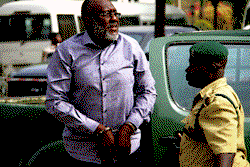
Justice on a slow lane
For instance, in the opinion of the Chairman of the Presidential Advisory Committee on Anti-Corruption, PACAC, Prof. Itse Sagay, before the ACJ Act was enacted, Senior Advocates of Nigeria, SANs, representing allegedly corrupt governors had a field day frustrating the trial process with preliminary objections.

High profile political trial cases still pending in courts
EFCC is prosecuting him over allegation that he had before the 2015 Presidential election, received N400million from the Office of the National Security Adviser, ONSA, without executing any contract

Brig-Gen Boroh sack, an exit foretold
FORMER Coordinator of the Presidential Amnesty Programme, PAP, and Special Adviser to the President on Niger Delta, Brigadier-General Paul Boroh, sacked on Tuesday by President Muhammadu Buhari was not unaware that his head was on the cutting block for months running, but spirited attempts in his last days in office to stop the sword of Damocles were botched.
Understanding Nigeria’s Weak Party System by Ladipo Adamolekun
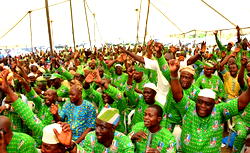
After five election cycles (1999, 2003, 2007, 2011 and 2015), Nigeria’s party system has remained fundamentally weak. Strong evidence of this weakness is provided by the current inchoate state of the two major parties, the All Progressive Congress (APC) that controls the federal government and twenty-three of the thirty-six states and the Peoples Democratic Party (PDP) that ruled at the centre from 1999 to 2015 and controls twelve states. Besides the All Progressive Grand Alliance (APGA) that controls one state government, all the other 65 registered parties (27 of them were registered in 2017) largely exist only on paper, notwithstanding the requirements for effective national spread prescribed in Part III, D of the 1999 Constitution.