
FG alleviating poverty with propaganda
FG: Budgeting or barefaced robbery?
Open letter to CBN Governor, Minister of Agriculture
Budget 2021 already amended as predicted
SARS, Herdsmen: Economic terrorists with impunity
The 2021 Budget as a joke (1)
Subsidy removal 2020 and the end of Organized Labour
Is Vision 2050 a case of the blind leading the rest of us?
Real famine imminent in 2020, early 2021
Who will save Nigeria from imminent debt bondage?
Why Nigeria might not escape poverty (2)
That bad news from the VP, Osinbanjo
Nigeria’s economic future built on falsehood (2)
Nigeria’s economic future built on falsehood (1)
FGN not learning from its mistakes
They still cannot tell Nigerians the truth
Grave consequences of Buharinomics

Subscribe to our newsletter
Sign up for our newsletter, and be the first to get the latest news on Vanguard.
Subscribe
National home-grown feeding programme revisited
When Buhari announced on May 29, 2015, that his government would launch a Social Investment Programme, SIP, it was clear that this was expected to be his legacy programme. Solemn promises were made to Fellow Nigerians on that day. But, as Honore de Balzac, 1799-1850, has remarked, “I am beginning to wonder, how many fools it takes to make the term “My Fellow Citizens”. Some of us who had lived through decades of fiction rendered as promises were sceptical. After all if a man fools you once, the shame is on him. If twice, you should be ashamed of yourself. I did not believe a word of what the President announced that day. Nevertheless, they ended up in the 2016 Budget presented to the National Assembly, NASS – which actually took Buhari seriously and substantially passed the budget after the usual favours-trading between the Presidency and NASS. Nigerians, invariably have been the losers at the end of the day.
FG’s bogus agricultural revolution
Two Ministers represented the Federal Government at the media briefing where this copy-cat programme was announced – indicating that all the noise about “CHANGE” was a swindle. A political party introducing a “revolutionary” programme in its fifth year in office has confirmed that it had no programme before and after the 2015 election for transforming our agricultural sector. They now expect Nigerians to believe they can leave a legacy in three years after failing to make any progress in the previous five. Incredible!!
Is the economic advisory council now redundant?
When Buhari appointed the Dr Doyin Salami-led Economic Advisory Council, EAC, last September, most commentators were optimistic that Nigeria’s economic policy management was about to receive the professional touch which had been lacking since May 29, 2015. Unlike other commentators who assumed that Buhari had changed his view of economic management, I learnt from reading one of Professor Dorfman’ s books that it is never easy for a man over 70 to change his habits on most things – even after acquiring a new set of advisers. Invariably, the advisers become redundant and run the risk of being held responsible for decisions taken without their inputs.
How Nigeria lost the benefits of a strong EFCC
CAN you recollect when the news report that “the EFCC is investigating allegations of N1billion fraud against Governor ABC” would send the governor scampering to the airport for the first flight out of Nigeria? Can you remember when entire States’ Houses of Assembly trembled if Malam Nuhu Ribadu, the first Chairman of the Economic and Financial Crimes Commission, EFCC, merely mentioned that the lawmakers were under investigation? Do you even remember who Nuhu Ribadu is and does it matter anymore? Yet, the first visit of the former EFCC Chairman to Lagos to meet the media created a massive hold-up for hours.
State Governments face unprecedented financial crisis
The report stated as follows: “the states were expecting to share N3.3 trillion from the Federation Account during the year, they would not be able to get more than N2.1trillion…. Federal Government’s share from the Federation Account, which was initially projected to be N4.8tn, will decline to N2.4trillion.”
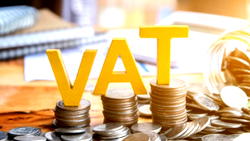
Why FG must not reduce VAT, see the Saudi example
been published today. But, a more urgent matter has arisen. The Federal Government announced what was called the 2020 Revised Budget. Keen observers would have noticed that there is little difference in the aggregate figure from the original budget.
WAKING UP LAZARUS AT POLARIS BANK
The story by Nike Popoola went on to say that:“POLARIS Bank Limited said it recorded N27.8bn profit before tax in its first audited IFRS 2019-compliant financial result.
What government wont tell you about recession (5)
SOMETIMES, it is necessary to bring more than one indisputable news report to the notice of Nigerians who might not be able to read several newspapers and follow important developments regarding the economy and how it affects them. I must confess that it is often a daunting task to determine which reports to highlight.
What Govt won’t tell you about recession – (4)
“The Federal Government had, in the budget proposal, revised downward the revenue projection for the 2020 fiscal period by N3.3trillion from the initial approved amount of N8.4 trillion to N5.08 trillion.” Punch, April 14, 2020, p 21.
What government won’t tell you about recession (3)
NOTE: Before launching into the substance of today’s article, permit me to repeat what was published last week. Some messages are so important, they need to be repeated many times in order to cross the threshold of peoples’ awareness of the dangers ahead for us as individuals and as a country. Here is the message.

Subscribe to our E-EDITIONS
Subscribe to our digital e-editions here, and enjoy access to the exact replica of Vanguard Newspapers publications.
Subscribe