
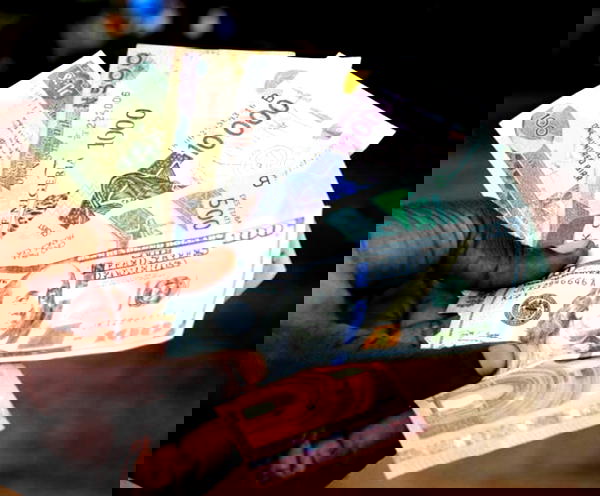
Forex inflow rises 36.5% to $33.76bn in five months
By Elizabeth Adegbesan Nigeria’s net foreign exchange (forex) inflow rose by 36.5 percent year-on-year (YoY) to $33.76 billion in the first five months of 2026 (5M’26), from $24.72 billion in the corresponding period of 2025 (5M’25). The increase came amid ongoing efforts by the Central Bank of Nigeria (CBN) to deepen the foreign exchange market, […]







SEC targets bond market to finance $3.9 trn infrastructure deficit
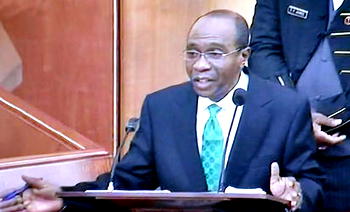
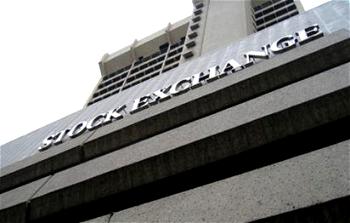
The Securities and Exchange Commission, SEC has said that it wants a bond market that will be capable of financing the $3.9 trillion infrastructure deficits facing the country in the next 30 years.
The Director General of the Securities and Exchange Commission, SEC, Ms Arunma Oteh, who stated this at the 4th Capital Market Committee retreat held in Abuja said” The bond market has a lot of room for growth with debt-to-GDP ratio at only 11 percent compared to over 200 percent in Japan, 110 percent in Singapore, 103 percent in the United Kingdom, 103 percent in the United States (US) and over 60 percent in China. All round, liquidity needs to improve well beyond its current level.
So we want a bond market that will enable us meet the infrastructure deficit estimated at USD3.9 trillion over the next 30 years. We want a market that does more for housing finance, enabling Nigeria close down the 17 million housing unit deficit while supporting entrepreneurship by doing more for SMEs and startups. We want a capital market that combines all the elements needed to support Nigeria actualize her aspirations of peace and prosperity for all citizens.”
Commenting on where it wants the country to be in 2025, she said “Without any master plan in place, we have been able to grow our stock market by a cumulative annual growth rate (CAGR) of 21.52 percent over the last 10 years. I have no doubt, that with faithful implementation of these master plans our market will eventually emerge as one of the world’s deepest, most liquid and largest capital market that will not only contribute to the socioeconomic development of our dear country but will also serve as a global financial hub offering opportunities into other parts of Africa. Therefore we want to see our market in 2025 to be deep, highly liquid, broad and diversified market that is a multiple of Nigeria’s GDP. It must boast of one of the most efficient and favorable operating environments that engenders best practice, innovation and competitiveness.”
Oteh, who spoke on the achievement of the Nigerian capital market since 2010 said “ We started by ensuring that investor confidence is restored, adopting a posture of zero tolerance to wrongdoing while strengthening our enforcement machinery through partnerships with the Office of the Attorney General of the Federation and the Nigeria Police Force. We instituted legal proceedings against over 260 individuals and entities for various forms of market infractions seeking to disgorge all illegally gotten wealth and restitute investors.
We have revamped our investor protection and dispute resolution mechanism by strengthening the SEC’s quasi-judicial Administrative Proceedings Committee (APC), developing a robust complaint management framework, setting up the National Investor Protection Fund and strengthening Anti-Money Laundering and Counter Terrorism Financing (AML/CFT) framework.”
Continuing she noted “ We have invigorated our rule making, ensured adherence to the principles of securities regulation as espoused by members of the International Organization of Securities Commission (IOSCO) in which we are a leading member. We have also enhanced market transparency through implementation of global best practice in corporate governance and financial reporting, issuing a new Code of Corporate Governance and supporting the adoption of the International Financial Reporting Standards (IFRS).
Focusing on building the bond market, we streamlined the bond issuance process, introduced shelf registration and bookbuilding, and reduced issuance costs. In the stock market we introduced rules on securities lending and market making to boost liquidity, we approved new listing rules to attract more listings and allow our market do more for SMEs and businesses in strategic sectors. We created an enabling environment that fosters product innovation leading to the introduction of newer products beyond equities and bonds including exchange traded funds (ETFs), real estate investment trusts (REITs), other varieties of collective investment schemes and broadened non-interest capital market products to include Sukuk bonds.
We reinforced our investor education agenda leveraging innovative platforms like Nigeria’s Nollywood, cable television and the social media. We also reach people directly through our catch-them-young program, secondary school quiz competitions, partnership with NYSC, SEC Integrity Award, programs for market men and women and academies for shareholders and journalists.
As a result of these initiatives today we have a market that has witnessed remarkable progress in all spheres. The domestic bond market is attracting different categories of issuers including State governments, government agencies and companies. Current bond market capitalization is at N9.95 trillion comprising N4.10 trillion of FGN bonds, N4.35 trillion of AMCON bonds and N1.5 trillion state government and corporate bonds. The market is attracting triple-A rated issuers like the African Development Bank (AfDB) and the International Finance Corporation (IFC) both of whom have issued Naira-denominated bonds. With benchmark yield curve of up to 20 years, the domestic bond market is well positioned to serve as an important source of capital to tackle Nigeria’s infrastructure deficit.”
Naira devaluation’ll have mixed effects on economy, says varsity don
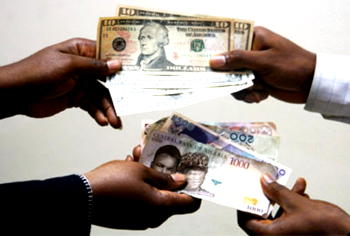
Dr. Obida Wafure of the Economics Department, University of Abuja, says the recent devaluation of naira by the Central Bank of Nigeria (CBN) will have positive and negative ripple effects on the economy.
Naira depreciation persists in interbank, parallel market
The Naira fell to an all time low against the dollar at the interbank and parallel exchange markets despite measures announced by the Central Bank of Nigeria (CBN).
Electricity Stability: We must increase generation capacity – Nebo
The Minister of Power, Prof. Chinedu Nebo has advocated for an increase in the maximization of gas utilization capacity if Nigeria is to experience stability in electricity supply.

Unveiling Nigeria’s Top 100 Companies
The names that made the list of Nigeria’s top 100 companies command such power and wealth such that the initiative of President Goodluck Jonathan has come to define the country’s business operations.