
NSIA unveils $300m Renewable Energy Fund
By Emma Ujah, Abuja Bureau Chief The Nigeria Sovereign Investment Authority, (NSIA) has launched the $300 million Nigeria Distributed Renewable Energy (DRE) Fund, a new investment vehicle designed to accelerate private-sector investment in renewable energy and expand electricity access to underserved communities and businesses across the country. The Fund, which reached its commercial launch milestone […]


Petrol may not be up to 70 per litre if price template is reviewed – ASCSN
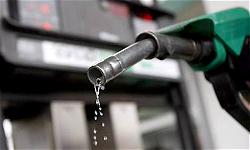
The Association of Senior Civil Servants of Nigeria, ASCSN, has said that if the price template of petrol is reviewed downward to reflect global oil price reduction, then petrol may not be up to N70 per litter in Nigeria. The association which called for a confluence of stakeholders in the oil sector to dialogue and bring solution to the issue of fuel subsidy, however, commended the Federal Government for the N6.08 trillion 2016 budget announced on Tuesday just as it stressed the need for the content of the budget to be implemented for the benefit of all Nigerians.
Markets sound indifferent to expansionary budget
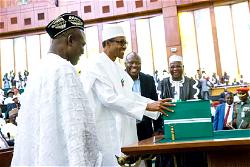
Total expenditure at N6.1 trillion was over 40 per cent higher than 2015 figure of N4.4 trillion. Former president Goodluck Jonathan had reduced the budget for 2015 from N4.7 trillion after the oil price began a steady drop in the third quarter of 2014. The policy thrust of the 2016 budget included stimulating the economy and making it more competitive by focusing on infrastructural development; delivering inclusive growth; and prioritizing the welfare of Nigerians.
Industry, Trade, Investment in 2015: Year of mega-merger
The major stories that shaped the industrial sector of the Nigerian economy in the outgoing year can be summed up in three parts. It was a year of mega merger between Lafarge group and Holcim; a year for strengthening of regional economies by Africa’s Richest Man, Aliko Dangote through his cement empire. The sector also witnessed policy shocks in the second half of the year which persists into the New Year. The devaluation of the naira and the suspension of Retail Dutch Auction System (RDAS/WDAS) by the Central Bank of Nigeria (CBN) hit industries hard.
2015: Events that shaped maritime industry
At the beginning of the year 2015, operators in the industry (especially the RORO port operations) were worried following the introduction of the auto policy two years before. The policy raised the import duty and levy payable on both new and fairly used vehicles to 70 percent from the previous 20 percent. The two major RORO terminal operators involved in vehicle importation business are Five Star Logistics Terminal and Ports and Terminal Multiservices Limited, PTML both of which are located at Tin Can Island Port Lagos.
Local investments, online marketplace trends drive e-commerce in 2015
For instance in June, 2015, Nigeria’s online hotel booking platform, Hotels.ng received about N240 million investment from Omidyar Network and Nigeria’s EchoVC Partners, thereby becoming the only e-commerce company in Nigeria with the most indigenous investment of up to 90 percent, having also received seed investment of $225, 000, about N36 million in 2013 from Lagos-based venture capital firm, Spark.ng.