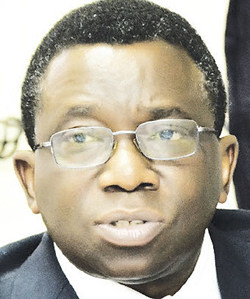
Dr. Chukwudi Ukpaka
By Chidi Nkwopara
In mid 1980s, Miss Azuka (surname withheld), as she then was, was diagnosed of appendicitis by an Owerri based medical doctor. The girl’s father quickly consented to her going in for surgery.
The medical procedure was ordinarily said to be a “huge success”, but there was a minus. A cotton swab was left in the young girl’s belly!
Following this avoidable mistake, the wound refused to heal. She remained in the private medical outfit while hospital bills kept increasing.
Every member of Azuka’s immediate family became curious. This situation eventually attracted the attention of Azuka’s elder sister, who was a senior nursing officer at University of Benin Teaching Hospital, UBTH, Benin.
Azuka was moved out of the private hospital against what the officials called “against medical advice” and taken to UBTH where her condition was reviewed. A thorough medical examination and tests revealed that a cotton swab was left in her belly! She was immediately wheeled into the theatre and corrective surgery carried out to remove the foreign body.
Similarly, this writer experienced intermittent heart burn in the mid 70s. He consulted a doctor (name withheld) at the then General Hospital, Owerri (now Federal Medical Centre). His diagnosis was “functional neurosis”!
The doctor then went on to prescribe three different types of sedatives for his patient, and directed how the drugs should be taken. The drugs were consumed religiously but the heart burn remained, while the patient almost slept to death.

Dr. Chukwudi Ukpaka
The timely intervention of a seasoned pharmacist, Chief Conleth Anokwu, who was then serving in the Specialist Hospital, Enugu (now the University of Nigeria Teaching Hospital, Enugu), saved the patient from imminent death! What saved him was Vitamin B Complex. The two instances above represent the lucky ones. Medical practice is one area of study that does not have second chance. There are many other near death tales told by patients and/or their relations. Whereas some are lucky to tell the stories themselves, the not so lucky ones die or suffer permanent disability.
When confronted with these tales, a United Kingdom based Family Health Consultant, Dr. Chukwudi Ukpaka, not only said that “such negligence is wrong”, but equally pushed for “ Clinical Governance”, a body to support health professionals and protect patients.
While expressing the belief that “bad leadership and weak health system are some of Nigeria’s biggest challenges”, Ukpaka however explained: “Clinical Governance is a government initiative and has about 12 pillars wherein health professionals are encouraged to do the right thing in taking care of their patients and are disciplined for their negligence to avoid deaths and health risks on patients “.
Ukpaka recalled that the Minister of Health, Professor Isaac Folorunso Adewole, on Thursday, July 19, 2016, chaired the Clinical Governance Summit in Abuja, where the vision was shared with heads of health institutions across the nation, in order to avoid more deaths.
It was his opinion that from the way some medical doctors make mistakes, it is as though patients pay doctors for them to be killed via wrong diagnosis, injection, among other mistakes, during treatment, saying, “All that will soon stop and be corrected “.
KIDNEY FAILURE
Ukpaka expressed regret that many people do not truly appreciate the damage they cause to their well-being by using bleaching cream.
According to him, the use of bleaching creams is largely responsible for kidney failures in Nigeria.
“Bleaching creams contain mercury and other heavy metals that enter the body through the blood, travels to the kidney and go out through urine. After a period of time, the mercury and heavy metals accumulate and break down the kidney. A lot of people, who require dialysis today inadvertently, caused their problems by their use of bleaching creams”, he said.
The medical consultant regretted that about 20 million Nigerians cannot afford to pay for dialysis but prefer to use bleaching creams because they want to appear more beautiful or possibly look like Europeans and, in the end, cause themselves pain and their relations discomfort while shopping for kidney transplant.
ILLICIT USE OF DRUGS
Speaking on condemning illicit and uncontrolled use of drugs, Ukpaka said continuous use of gentamycin causes deafness and kidney failure for people whose kidneys are not strong, pointing out that these problems may take one year to manifest.
On fibroid, he said that as a result of research, fibroids no longer require surgery that may result in bleeding and infection.
He said there is a drug that shrinks it until it becomes small and falls off, even as he added that it costs about N200,000 to procure the drug.
TREATMENT OF MALARIA
Ukpaka agreed that malaria remains a nagging issue in Nigeria, but cautioned that the way Nigerians treat the ailment was worrisome, possibly as a result of ignorance or quackery.
“We have seen cases of Nigerians treating malaria with antibiotics. Those who indulge in this act erroneously believe that malaria always goes with typhoid. It is wrong to think so and it is also criminal to treat malaria with antibiotics. It must be noted that antibiotics expose the body to some clinical levels which ultimately generate drug resistance”, the health consultant said.
He acknowledged that because drugs can be purchased over the counter, people swallow all manner of malaria drugs, thereby abusing the drugs and causing harm to their bodies.
He warned against the use of chloroquine in the treatment of malaria, pointing out that the drug had long been banned by global health bodies, because it causes blindness and may take up to five years after use before presentation.
ROAD TRAFFIC CRASHES
The medical consultant posited that many road traffic crashes in Nigeria are caused by people battling blindness or poor vision as a result of diabetes, even as he stated that sufferers may be oblivious of their health conditions.
“Many people do not see well while driving because they may be presenting signs of diabetes without being conversant with their health conditions. For such people, routine health check is not in their programme. They never check their blood pressure or sugar levels. Such people are truly responsible for the carnage on Nigerian roads. Momentary loss of their sight while driving, is all that is needed to complete the circuit for automobile crash”, Ukpaka said.
FAULTY LAB RESULTS
He corroborated the position of the Acting Registrar of Medical Laboratory Science Council of Nigeria, MLSCN, Mr. Tosan Erhabor, that about 95 percent of the medical laboratories in public and private hospitals in the country are manned by unqualified medical laboratory scientists. He lamented that a good number of the laboratory scientists simply collect money from patients but do not, in the real sense, conduct any test and end up writing typhoid fever.
“Such people go ahead treating the wrong ailment over time and this results in avoidable deaths. In such a circumstance, people are left to think that the death was caused by fake drugs”, Ukpaka said.
Disclaimer
Comments expressed here do not reflect the opinions of Vanguard newspapers or any employee thereof.