Stories by Chioma Obinna
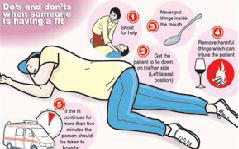
Epilepsy in Nigeria is one of the neglected disorders and the misconception about the disorder has not helped sufferers. Even when the attack occurs only a few people know what to do and how the disease can be managed and treated.
 Experts say proper diagnosis and right drugs as well as treatment will improve quality of life of patients. Epilepsy, also known as seizure disorder, is a general term that refers to a tendency to have recurrent seizures. A seizure is a temporary disturbance in brain function in which groups of nerve cells in the brain signal abnormally and excessively.
According to a Senior Consultant Neurologist, Institute of Neuro-sciences, Apollo Hospital, Delhi, India, Prof. Pushpendra Renjen, cases of epilepsy are growing in Nigeria due to absence of proper diagnosis and the belief that the disorder is more of a spiritual attack than a medical disorder. “If you pick up the right treatment epilepsy is controlled in 70 to 75 percent (3 in 4) of uncontrolled epileptic patients,” he said. Many epileptic patients in Nigeria today do not get treatment due to the myths and misconceptions surrounding the disorder.
Deep Brain Stimulation
Renjen said although there is no permanent cure for epilepsy, but with the right diagnosis and right drugs patients symptoms will improve their quality of life. Unfortunately, these drugs are not available in Nigeria and many people do not know where to get help for epilepsy.
Epilepsy affects the brain and causes problems with the wiring. It is not contagious; the saliva and the foaming from the mouth cannot transmit epilepsy. He said people with uncontrolled epilepsy can be treated with surgery.
“For instance, a Deep Brain Stimulation, DBS, can be used to treat patients. DBS is a surgery technique which involves implanting electrodes inside the deep nuclei of the brain called subthalamus under local anesthesia. With the progress of the disease the parameters of stimulation are changed over a period of time so that patients can remain symptom free for a long period.
Renjen who said Apollo hospital has carried out 100DBS said 20 out of the patients were from Nigeria. “Rechargeable pacemakers are now available that can be recharged at home. The life of these pace makers are 15-20 years. It cannot be cured but controlled in 75 percent of patients. If your diagnosis is right and the drug is right, 75 percent will go into long term remission and they will not have attack for the rest of their lives.
Disclaimer
Comments expressed here do not reflect the opinions of Vanguard newspapers or any employee thereof.