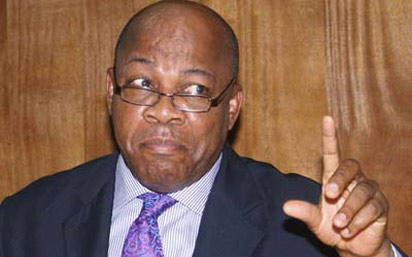
Agbakoba
By LAWANI MIKAIRU
The introduction of Aviation Cabotage law will save Nigeria 200 Billion Naira annual revenue lose and stimulate the development of indigenous capacity and facilitate the pursuit for deep local participation in the aviation sector. This is the view of Dr Olisa Agbakoba, a Human right Lawyer, Aviation and Maritime Consultant.

Agbakoba
Agbakoba made this view known during a seminar on setting aviation agenda for incoming government of General Muhammadu Buhari. He said the dwindling oil revenue has made it absolutely necessary for the incoming administration to focus on Aviation sector for economic diversification. And this, according to him, calls for an Aviation Sector Action Plan (ASAP). Cabotage law will compel the aviation sector to reserve certain percentage of the market for local airlines and stakeholders.
Agbakoba said “With about 170 million persons and regional economic potentials, 22 airports, a growing mass of flying middle class, Nigeria’s aviation requires massive revamping in terms of infrastructure, legal, institutional and administrative frameworks. “
“The Economic Benefits of Aviation and Performance in the Travel & Tourism Competitiveness Index Report 2013 states that the aviation industry supports tourism and international business by providing the world’s only rapid worldwide transportation network.
Airlines transported 2.8 billion passengers and 47.6 million metric tonnes of air cargo in 2011, connecting the world’s cities with 36,000 routes. By providing these services, the aviation industry plays an important role in enabling economic growth and providing various economic and social benefits.”
He added that “The International Air Transport Association (IATA) commissioned Oxford Economics to estimate the economic and social benefits of aviation in over 80 countries. The report shows that the economic value created by the industry goes beyond the value captured by these measures. The study also investigated the positive impacts of the connectivity provided by air transport services.
The connections made between cities and markets produce an important infrastructure asset that facilitates activities that enhance a nation’s productivity. More specifically, it concludes that air transport enables foreign direct investment (FDI), business cluster development, specialization, and other spillover effects.”
He also commended the efforts the outgoing administration has made in terms of Airport infrastructural remodeling and said “upgrading is not a bad idea at all because Airport edifices around the World boost a country’s image, confidence, and tourism. Dubai, Dulles in DC, Beijing, and Heathrow are master pieces of Art, Imagery, Sensation, Culture and Aspiration. Aviation Passenger’s Service Portal (APSP), Aviation Commits Initiative (ACI), Aviation Revenue Automation Project (ARAP) project are laudable policies and projects by the present minister which should be continued.”
He however said beyond physical Infrastructures which are basically physical, are the requirement of “ soft infrastructures; legal, regulatory, administrative and institutional framework designs. These critical issues underpin the most important aspects of aviation; functionality, safety, security, and profitability.”
He also called on the incoming government to as a matter of urgency initiate Fly Nigeria Bill. This is because “Government sponsored passengers constitute a significant percentage of flying population, with billions being paid to foreign airlines annually.
USA tapped into that resource base through the FLY AMERICA Regulation, which requires Federal employees, dependents, consultants, contractors, grantees, and other persons performing Government financed air travel to travel US flag Air Carriers. Fly Nigeria Bill will be modeled like the US regulation with special regard to Nigeria’s technical abilities, capacity and development
We are ready to code-share with any airline-Chairman Air Peace
Disclaimer
Comments expressed here do not reflect the opinions of Vanguard newspapers or any employee thereof.