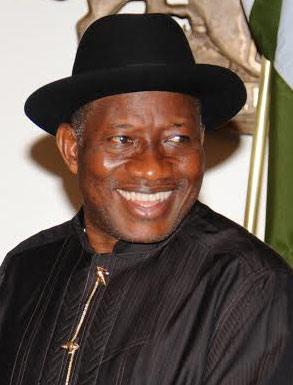
Jonathan Goodluck
By Emeka Anaeto
Abuja—The Federal Government may have narrowed its options for bridging its funding gap to just two, borrowings and tax reforms.
Tax reforms would also be modified away from the initial focus on luxury tax to widening the tax net and bringing in more non oil sector taxables.
Hitherto options being considered include workforce downsizing, non-oil receipt stimulus and capital expenditure restrictions in addition to the two options.
A finance ministry source told Vanguard yesterday that even the two favoured options were the most feasible in the tight financial and political circumstance adding that borrowing is the most effective and realistic of all the options.
Vanguard also learnt that it was canvassed amongst the fiscal policy executives that only borrowing option can be considered as soon as practicable if the oil price recovery did not sustain into or stabilize above USD65 in the first quarter and non-oil receipt component did not show significant improvement in the first half of the year.
This position it was learnt became imperative with the sensitive nature of all other options in the face of political and electioneering considerations. However more latitude for policy options would be executed in the event of a favourable electioneering outcome in the second quarter.
Since November 2014 the Finance Ministry has been embroiled in policy canversing for starving off economic headwinds occasioned by two major external shocks, the oil price crash and global liquidity squeeze.
It is speculated that some of the otherwise plausible options such as federal workforce downsizing, imposition of luxury tax, overhauling recurrent expenditure on overhead and reduction in debt servicing obligations are considered either too sensitive in the current electioneering dispensation or sub-optimal in the short run.
Conscious of a challenging 2015 fiscal operations the Federal Government had planned to spend N4.35 trillion, about 7% less than N4.695% in 2014 out of which recurrent would gulp a lion share of N3.9 trillion or 91% against a paltry capital expenditure of N387.2 billion or 9% (backing out the SURE-P component of capital expenditure operations of about N3.97 billion).
These figures were based on a budgetary oil revenue benchmark of USD65 per barrel yielding estimated N1.92 trillion non-oil revenue of N1.68 trillion. The actual oil price had slumped below the benchmark before the recent rebound which is also yet to meet up with the benchmark. The fiscal authorities are still optimistic that the rebound would surpass the benchmark soon.
Disclaimer
Comments expressed here do not reflect the opinions of Vanguard newspapers or any employee thereof.