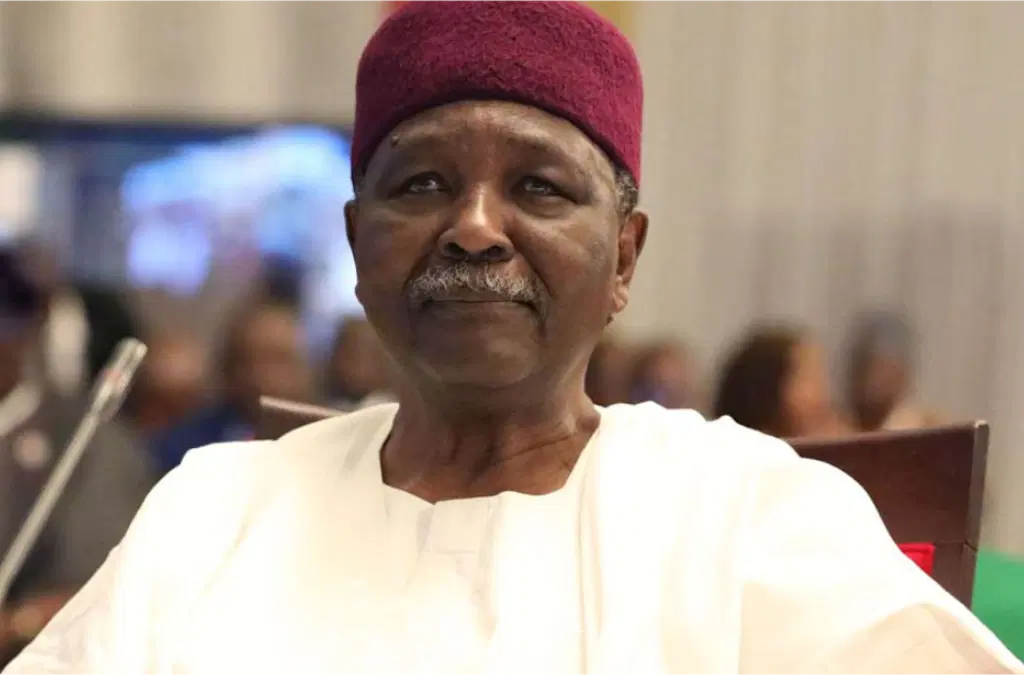
Gowon
RIGHT OF REPLY
By Solomon Asemota, SAN
I have read Chuks Ileogbunam’s latest
commentary in your newspaper titled
‘Gowon’s Book of bareface lies’ and I thought the treatise demands a reply. Chuk’s narrative seems to point at the fact that Gowon’s book was deliberately delayed and published at the wrong time. One wonders when exactly is the right or wrong time. For those who know General Gowon as I do, I know as a fact that he will not lie, nor thrive in controversies. Long ago, Gowon would not be persuaded to write his memoirs because he didn’t want to renew old wounds. He was however pressured by some of us to do the needful. For the avoidance of doubts, I am a friend to both General Yakubu Gowon and the late Chief Odumegwu Ojukwu. Both Mrs Victoria Gowon and Mrs Bianca Ojukwu can attest to my close friendship with their husbands. This, therefore is an attempt to keep the record straight.
Jack Gowon as Chief of Staff
Now back to Chuk’s treatise. Did Gowon actually lie in his book? My immediate reaction is that it depends on the side of the divide which one belongs. Chuk’s book on “Ironsi, Nigeria, the Army, Power and Politics “ published in 1999 reads at page 135: “Jack Gowon was Ironsi’s loyal Chief of Staff “ whom Ironsi was hoping will help quel the July 1966 coup before he was killed. In Gowon’s letter of 28 July 2026 to Ambassador Ironsi, the son of General Ironsi, Gowon adopted Ileogbunam’s narrative. However, facts concerning the July 1966 coup by A.H.M. Kirk Greene, A documentary Sourcebook 1966 – 1969 Vol.1, described in details General Gowon’s version in his book to show that Dickson’s story as contained in Gowon’s book “My Life of Duty and Allegiance”
I can confirm General Gowon’s statement that Dickson was a Major in the Airforce. Fortunately there is an independent narrative of events by a British Historian and ethnographer Anthony Kirk-Greene, a British Historian best known for his work on Nigerian History and the History of British colonial administration in Africa. He has 31 books to his credit Good reads with 185 ratings.
‘It is as yet no more possible to trace the hour-by-hour happenings of the July coup than it is to be certain of all those of the January one.5 Both stories must await the opening of the national archives to uncommitted scholars, an event unlikely to be witnessed in the near future. In subsequent attempts to place the blame, both the Federal and Eastern Governments agreed6 only on the fact that the mutiny started when Northern troops shot three Ibo officers of the Abeokuta detachment on the night of 28 July. At Ibadan, General Ironsi and his host, Lt.-Col. Fajuyi, were arrested in Government lodge, taken off and killed ( though it was another six months before their death was officially announced ). In Lagos, troops mutinied in the Ikeja barracks and seizing the international airport, ordered a B.O.A.C. captain to fly Northern soldiers’ families to Kano before returning to pick up his commercial passengers bound for London.7 There had been grapevine talk as far afield as England that something was planned for early August, but this was the first clue as to who was at whose throat this time: it was now clear that this coup was Northern-led. In Kano and Kaduna, rebel elements shot their Ibo officers and took control of the battalions, but there was no mutiny in the unit stationed in Enugu. Lt.-Col. Gowon, dispatched by the chief of staff, Brigadier Ogundipe, to restore order, was taken prisoner by the soldiers. A convoy sent out by Ogundipe to recapture Ikeja airport was ambushed and shot up. Ogundipe issued a communique relayed at 2:30pm, proclaiming a state of emergency in the Lagos-Abeokuta-Ibadan conclave and adding the hope that he will be able to ‘restore peace and tranquility very soon’.1 Later that evening he broadcast to the nation reassuring them that things were under control and that there was ‘no cause for alarm’.2
“Meanwhile discussion between Ogundipe, accompanied by three or four senior Northern advisers from Lagos, and the rebels continued throughout the night.3 They were reported to have turned on the latters’ refusal to share barracks any longer with their Ibo brothers-in-arms, and their demand either for secession by the North or for a repeal of the unification decree with a return to the status quo ante 15 January under a civilian government.4 When Brigadier Ogundipe declared himself unable to accept this proposal, the rebels asked Lt.-Col. Gowon, whom they had earlier released to take part in this negotiations, to assume command of the army”.
“This he did. Ogundipe now relinquished his command and reportedly retired to the sanctuary of an Elder Dempster boat offshore.5 In a broadcast. On the morning of 1 August.[Doc 37] Lt.-Col. Gowon brought the nation’s suspense to an end by describing what had happened and announcing that he had assumed responsibility for filling the dangerous political vacuum. In a vital and much-quoted passage from this seminal speech (said by some to have been altered at the last moment on the intervention of the British and American diplomatic leaders to dissuade him from announcing the North’s succession from the Federation),6 Gowon declared ‘As a result of the recent event and the other previous similiar ones, I have come to strongly believe that we cannot honestly and sincerely continue in this wise, as the basic for trust and confidence in our unitary system of government has been unable to stand the test of time. Suffice to say that putting all considerations to test, political, economic as well as social, the base for unity is not there, or is badly rocked not only once but several times.’ He promised that a new decree would be drawn up to prevent Nigeria from drifting to destruction. Editorials of the day reviewed Nigeria’s reaction to yet another traumatic coupe as many ask themselves whether Nigeria could survive this further bout of naked tribalism1.(Pg 53-55)
5. Information at any level, including the personal one,is much harder to come by for the events of 29 july than for the mutiny of 15 January. It is doubtful whether even the opening of official archieves will result in the full story being told,for the impression is given that in the july mutiny personal memory will be of greater importance than the written record.The fullest accounts so far available are, beside the partisan ones from the Federal and Eastern Governments require for the propaganda war,those given at the time in West Africa(1966) and by Frederick Forsyth in chapter 4 of his The Biafra Story (London,1966)
6. Nigeria 1966, p.9: January 15, p. 44
7. Interview in the Guardian, 1 August 1966
1(8). Nigeria House Press Release, 29 July 1966. This announcement was broadcast on all the Nigerian radio stations between 2:30 and 8:30pm on that day.
2(9). A reference, but no verbatim text, appeared in Daily Times, 30 July 1966. The B.B.C monitoring service also carried only a resume of the broadcast, made from Lagos at 11:00pm
3(10). Africa Research Bulletin, p.571
4(11). The Biafrans claim that the Northern troops flew their improvised secessionist flag of the Republic of the North over Ikeja barracks but this has not been confirmed by any other source.CF. Schwarz,op.cit.,p. 212
5(12). At Aburi later, Ojukwu was to say that he had assured Ogundipe by telephone that if he were to go on the air and announce that he had taken over the Government, Ojukwu would have at once come out in support.
6(13). Forsyth is explicit on this accusation, op.cit.,pp.58 and 144
1(14). e.g the analytical article by J.D.F.Jones, Financial Times,2 August 1966.
2(15). Statement issued in Lagos on 2 August 1966.
Chuks was also ascerbic in his review of the Gowon’s narrative of the role of a Major. Paul Dickson in the events of July 1966.Whereas Chuks thinks Dickson was a mere Sergeant in the Airforce at the time, it really does not change the facts. Chuks was no participant in the events he reportedly claimed were part of the ‘Gowon’s book of lies’.
GOWON’s RECENT LETTER TO AMB THOMAS IRONSI
I was privileged to have seen a recent letter dated 28th July 2026 by Gen. Gowon to General- Ironsi’s son, Thomas on the commemoration of their father’s death. He wrote and because of its relevance, it is reproduced below:
“Dear Thomas,
First to congratulate you and your siblings for this milestone, which for me brings back memories of turbulent years in our Nation’s history. Sixty years is a long time to remember but can’t be wished away, especially knowing that few participants in the events that shaped the future of this country are still around. For students of History, especially the history of the armed forces of Nigeria I became the chief of army staff under the administration of your father general Aguyi Ironsi, as supreme commander of the armed forces of Nigeria.
“Before I was ready to serve General Aguyi Ironsi’s regime, I made every effort to be sure that civilians really had asked him to step in”. Then I served him loyally “, I am quoted as having said in your father’s biography, “Ironsi, Nigeria, the Army, power and politics “, written by Chuks Ileogbunam.
That assessment succinctly sums up resolutely the relationship between your father and I moving the nation forward after the January 15, 1966 coup that toppled the government.
I have recently published my memoir, ‘the truth’, which as expected, has provided criticism both positive and negative. I take responsibility for all therein but do not remove the fact that your father and I, working with the armed forces of Nigeria acted in the best interest of this country until that trust was breached.
Like I earlier said, 60 years is a long time to remember but the three years of civil war invokes not just a memory of events of the war but its aftermath. After the civil war ended in January 1970, the Federal Government led by me, introduced the 3Rs policy: Reconciliation, Rehabilitation/’Reintegration’ and Reconstruction. This program aimed to heal the nation under the “No Victor, No vanquish” declaration by me in order to reintegrate the people of the former Biafra and fix broken infrastructure.
Reconciliation includes the deep healing of ethnic and emotional wounds between the federal side and the “Biafra”. No Victor, No vanquish to stop revenge and welcome everyone back as one country.
Rehabitation/Reintegration was to care for displaced people and bring back basic daily life in addition to resettling refugees, return abandoned properties or jobs where possible and provide medical aid to those hurt by the war and top them up with Reconstruction, which aim at fixing and rebuilding physical structures and the economy commencing with the 1975-80 Development Plan.
Action: Repair damaged infrastructures, roads, bridges, schools and hospitals mostly in the eastern area. I believe there is the urgent need for complete re-orientation in the attitude of the leaders and the elite towards national, political, social and economic development.
There is need to reaffirm and adopt a number of core values to inform the pursuit of all activities, political and economic. We refer here to the values of patriotism, the pursuit of the public good, avoidance of corruption, frugality, and cost effectiveness in the use of public funds.
As a participant, it will be wrong to continue indefinitely to emphasize on the Aburi Accord. It was a discussion between a sub-national and a national that could only be binding and enforceable if the national accepted the terms and not the other way around. The 3Rs would have been implemented fully had the event of July 29, 1975 not taken place.
I, like your father, was a victim of the times because as the then Commander-in-Chief that succeeded in putting an end to the civil war, was himself overthrown 9 years later for failing to hand over power to civilians, only for those who took over to continue the search for democracy. I wonder how many years more they would search.
I dare to say that the “the tripod” of Igbo, Yoruba and Hausa should not be the basis of authority in Nigeria. While Odumegwu Ojukwu represented Nd’igbo, I represented one of the other 500 ethnicities including mine – Angas
Providence has placed us in a country that is now styled “Giant of Africa”. We must all work hard in the interest of Africa and the black race to unite not only as one country but also one nation.
Please extend my best wishes and felicitations to all your other siblings.
God bless Uncle Jack
This is not the Gowon of Chuk’s choice of words, but the true Gowon. The Gowon that I know continues to represent the acronym that his surname promotes: ‘Go on with one Nigeria’ I will therefore urged all that is good to join hands in this direction.
Conclusion
A.A.M. Kirk- Greene wrote the introduction to the re-print of the Report by Sir F.D. Lugard on the Amalgamation of Northern and Southern Nigeria and administration in 1912-1919.
“The 1967 creation of twelve states is, academically as well as politically, a point of no return that at once lends enhanced significance to the study of the theory and practice of the 1914 unification proposals.
Technically at least, there is no further reason to promote the traditional political terminology of ‘the North’ and ‘the South’, the trigger-phrases of Nigerian administrative thought since 1914___ if not earlier”. When will Arewa stop?
There is to date in Nigeria a Northern Nigeria (Arewa) if you like, while presently there is no southern Nigeria. The solution to my mind is to continue to represent the acronym promoted by Gowon’s surname. “GO ON WITH ONE NIGERIA’’ as the cliché for Nigerians especially the over 386 minority ethnic Nationalities.
Disclaimer
Comments expressed here do not reflect the opinions of Vanguard newspapers or any employee thereof.