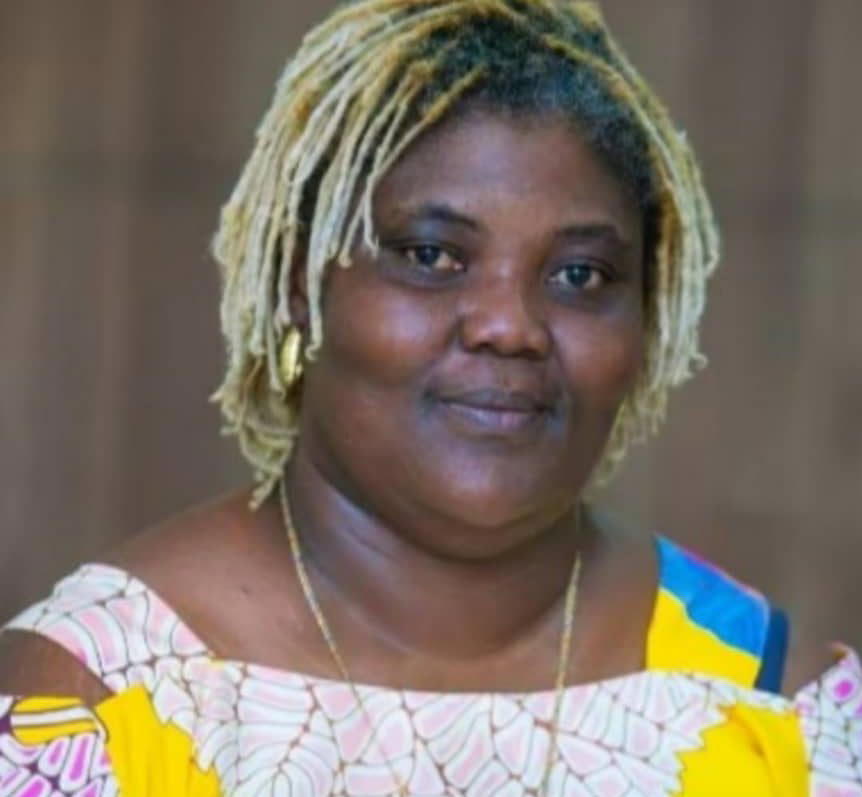
By Kennedy Mbele
We caught up with Professor Ayodele Morocco-Clarke at the Gender Inclusive Climate Change Governance (GenCGov) International Conference which held at the Federal Ministry of Education in Abuja, Nigeria on June 23 and 24. The theme of the conference was ‘Governing Climate in an Age of Retreat, Risk, and Geopolitical Re-alignment’.
Morocco-Clarke chaired the session titled ‘Climate Justice, Women’s Leadership and Subnational Accountability’.
In an era in which climate change is one of the hottest issues globally, she is one of a handful of Nigerian legal professionals with proven expertise in climate change and energy transition regulation and policy.
She is a legal practitioner with over 25 years’ experience and is currently a Professor of Energy, Climate and Environmental Law & Policy at the Faculty of Law of Nile University of Nigeria, Abuja, Nigeria.
Morocco-Clarke holds a Doctor of Philosophy (Ph.D.) degree in Law, specialising in Oil & Gas and Environmental Law, from the University of Aberdeen, Scotland, United Kingdom and acquired a Master of Laws (LL.M.) degree in Petroleum Law and Policy from the Centre of Energy, Petroleum and Mineral Law & Policy of the University of Dundee, Scotland, United Kingdom.
She received her Bachelor of Laws (LL.B.) degree from Lagos State University, Lagos, Nigeria and interned at ExxonMobil international Limited in London. Her teaching and research interests cut across a broad spectrum of areas, but focus mainly on environmental law, energy law, energy justice, climate change law, constitutional law and the law of sustainable development.
Due to her expertise and erudition, she is a highly sought after speaker and has chaired, spoken and been the keynote speaker at numerous legal conferences, seminars and workshops.
She has received several awards for legal learning and service.
Timely
We talked to Morocco-Clarke about her work and the conference.
“I predominantly work on the intersection of energy, climate and environmental law and conferences like the GenCGov International Conference are very important because they bridge the gap between different sectors and experts working on the climate crisis in Nigeria”, she said.
“There is in that sense synergy and knowledge sharing between a smorgasbord of fields and people, ranging from regulators, civil society, academia climate scientists, data professionals, etc.
“They all get to share a space and their knowledge with one another and get a firmer understanding of the dynamics, intricacies and workings of areas other than their niche fields of expertise.
“In addition, knotty and unclear issues often get ironed out with clarity obtained at these sessions and often connections are made and collaborations subsequently undertaken by conference participants.
“The GenCGov international Conference was particularly important and timely because it sought to shine a light on the dark space of one of the most vulnerable and often overlooked groups within the climate change discourse and action i.e. women.
“In a country such as Nigeria, it is important that the female demographic is adequately heard, carried along and catered to.
“This is important because it is estimated that about 49.4% of the Nigerian population is female and research shows that women disproportionately suffer the impacts and effects of climate change compared to men and it is hard to keep endorsing a system that ignores or pays minuscule attention to almost half of the population.
“There must be an urgent paradigm shift in the modus operandi adopted in Nigeria’s climate action and plans.”
Gender-responsive climate policies
Talking about the session she chaired at the conference, Morocco-Clarke stated, “In Nigeria, one must make clear that climate change disproportionately impacts women and instead of sitting down to complain and wait for succour from above, grassroots women-led coalitions are actively driving the shift toward gender-responsive climate policies.
“By demanding subnational accountability, these organizations aim to ensure that climate finance and environmental protections reach the frontline communities suffering most from resource degradation. “Furthermore. women make up a large portion of the agricultural labour force in Nigeria, yet they face severe systemic inequalities that compound climate impacts.
“These inequalities include resource inequities wherein entrenched traditional norms mean women often lack land ownership rights, limiting their ability to secure credit or invest in long-term, climate-resilient farming.
“Another problem relates to women’s vulnerability and health.
‘With this problem, environmental disasters, like severe flooding and drought, disproportionately displace women and children, exacerbating gender-based violence (GBV) and health risks in vulnerable states”.
Continuing, Morocco-Clarke explained that “despite being severely disadvantaged, underrepresented and receiving little attention and assistance generally, it is heartening that significant batches of women in Nigeria are shifting from being treated as passive victims to active leaders in climate adaptation and mitigation”.
She added: ‘They are involved in community initiatives across various regions in Nigeria.
“In places like the Niger Delta and Cross River, women’s cooperatives are pioneering sustainable agroecology, mangrove restoration, and waste management.
“It is important to note and share that networks and initiatives like the Women Initiative for Sustainable Environment (WISE) and the Nigeria Women’s Climate Assembly (NWAC) actively bypass exclusionary, top-down policy tables by building localized, feminist frameworks for climate action, resilience and justice”.
About subnational accountability, the academic noted that “while the Federal Government of Nigeria maintains a Climate Change Gender Policy, translating this into concrete action at the state and local levels remains a major challenge.”
She attributed this to what she described as “implementation gaps in the national Climate Change Gender Policy as weak subnational governance and cultural barriers often restrict women from participating in formal environmental decision-making”.
The professor stressed that, “presently, women-led groups are campaigning for transparent tracking of climate funds, demanding that local and state governments address environmental pollution, enforce reparatory justice for oil and climate impacted communities, and protect women’s rights.”
Morocco-Clarke is a prolific researcher and academic.
She has published numerous peer-reviewed articles and a book on environmental protection, climate change and energy justice/transition amongst other publications.
She is currently a consultant to the Nigerian Senate Committee on Constitutional Review and has provided expert legal representation, advice and opinions on her areas of expertise to a plethora of clients, including international organisations and bodies, NGOs, industry professionals and businesses.
Disclaimer
Comments expressed here do not reflect the opinions of Vanguard newspapers or any employee thereof.