By Favour Ulebor
Women leaders, government officials and development partners have stressed the need for greater investment in women’s political participation, economic empowerment and leadership development, arguing that Africa cannot achieve meaningful transformation while sidelining half of its population.
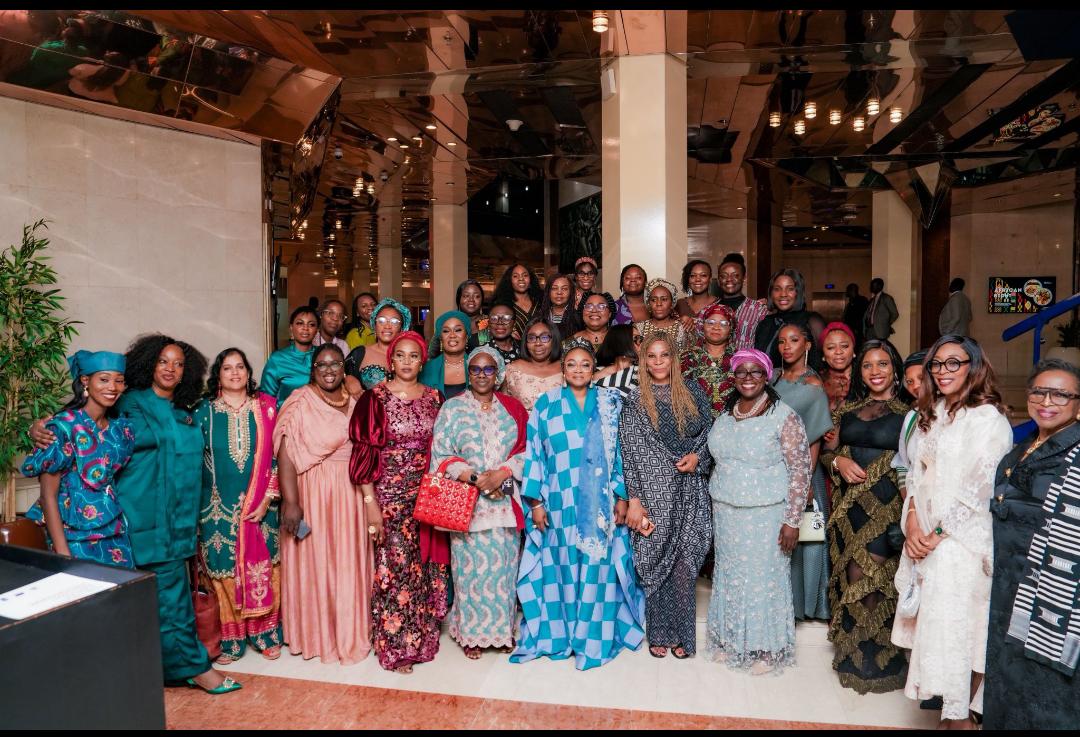
The position was canvassed on Tuesday in Abuja during the Women Leaders Networking Meeting with the theme, “Women Leading Africa’s Next Chapter,” organised by the United Nations Development Programme (UNDP) Nigeria in collaboration with the Federal Ministries of Women Affairs and Foreign Affairs to honour Ms. Ahunna Eziakonwa, United Nations Assistant Secretary-General, Assistant Administrator and Regional Director for Africa at UNDP.
The event attracted prominent women from government, diplomacy, academia, business, civil society and development organisations, with participants seeking stronger collaboration to advance inclusive growth and leadership across the continent.
Delivering her remarks, Eziakonwa said Africa’s progress would depend on building systems that position women as drivers of transformation rather than limiting them to participation alone.
“The question before us is no longer whether women should participate in Africa’s development—they already do. The more important question is whether Africa is creating the conditions that allow women to lead transformation at the scale our future demands, because the future we seek cannot be built by drawing on only half of our leadership capacity,” she said.
She described inclusive leadership as a strategic imperative for stronger governance structures, effective institutions and sustainable development, particularly as African nations pursue democratic consolidation and economic advancement.
According to her, beyond increasing the number of women in leadership positions, attention must also focus on ensuring that women influence policies, attract investments, foster innovation, build businesses and shape institutions that can transform societies.
“This is not only a gender conversation; it is a development conversation, because countries that fail to unlock the full potential of all their people inevitably limit the pace of their own transformation,” she added.
Eziakonwa urged Nigeria to sustain efforts aimed at increasing women’s representation in politics, noting that such initiatives would create more opportunities for competent women to contribute to nation-building.
She pointed to programmes such as the African Facility for Women in Political Leadership and the Africa Academy for Women in Political Leadership, revealing that more than 1,300 women from 41 African countries, including Nigeria, applied for the maiden edition of the initiative.
“Africa does not lack women ready to lead. What we must do is continue investing in the institutions, networks and opportunities that allow them to do so,” she said.
On economic empowerment, she emphasised the role of the African Continental Free Trade Area (AfCFTA) and innovation ecosystems in strengthening women-led businesses and expanding opportunities for inclusive economic growth.
She maintained that Africa’s next phase of development would require stronger links among leadership, investment, innovation and partnerships.
“The true measure of progress will not be how many remarkable women we can name, but whether remarkable women become entirely unremarkable because leadership has become genuinely inclusive,” Eziakonwa stated.
Earlier, the Resident Representative of UNDP Nigeria, Ms. Elsie Attafuah, said the gathering was designed as a platform for strategic engagement, mentorship and collective leadership rather than a ceremonial event.
She argued that achieving Nigeria’s development goals would require harnessing the knowledge, expertise and leadership capacities of women across different sectors.
“Africa’s transformation will depend on the quality, diversity and inclusiveness of the leadership we build today,” Attafuah said.
She noted that the networking session complemented discussions held during Eziakonwa’s visit to Nigeria on issues of trade, innovation, investment and partnerships, with women’s leadership remaining central to those engagements.
Attafuah also encouraged participants to build lasting alliances that would nurture future generations of women leaders and sustain their contributions to national development.
“How do we strengthen the relationships that already exist, build new partnerships across sectors, mentor the next generation of women leaders and create a platform through which the collective wisdom, influence and experience gathered here can continue shaping Nigeria’s development long after this evening has ended?” she asked.
Minister of Women Affairs, Imaan Sulaiman-Ibrahim, acknowledged progress in promoting women’s advancement but observed that women remained insufficiently represented in governance, diplomacy, industry and innovation.
She described women as indispensable to Nigeria’s aspirations for sustainable growth, social stability and international competitiveness.
“Women remain underrepresented in the corridors of power. Within our public institutions, diplomacy, industry and the portfolio of innovation, however, each one of us, in her own way, has broken the mould,” she said.
The minister called for stronger collaboration among women in government, the private sector and civil society to support governance reforms, economic diversification and peacebuilding efforts.
She highlighted initiatives such as the Nigeria for Women Project and the SCALE-UP Programme, noting that investments in women’s empowerment had surpassed 540 million dollars, with plans to expand funding beyond two billion dollars.
Sulaiman-Ibrahim further linked national development challenges to the wellbeing of families and communities, arguing that stronger family structures would help tackle insecurity, child malnutrition and the problem of out-of-school children.
“Nobody dropped from the trees. Imagine if Nigerian families were strong. There would be no bandits, there would be no out-of-school children and there would be no children suffering from malnutrition,” she said.
The First Lady of Kwara State, Ambassador Prof. Olufolake AbdulRazaq, reiterated the commitment of governors’ spouses to promoting the welfare of women, children and young people through investments in healthcare, education, social protection and economic empowerment.
She urged deeper collaboration with development partners, especially UNDP, to improve livelihoods and reduce poverty among vulnerable and rural populations.
Also speaking, the First Lady of Imo State and Chairperson of the Progressive Governors’ Spouses Forum, Mrs. Chioma Uzodimma, described Eziakonwa as a role model for young Nigerian women and an example of excellence-driven leadership.
She praised the organisers for recognising women whose contributions continue to shape the continent’s development trajectory, saying such efforts would encourage more women to pursue leadership positions and drive transformational change.
The meeting ended with stakeholders reaffirming their commitment to mentorship, stronger partnerships and the creation of enabling structures that would position women’s leadership as a key driver of Africa’s next phase of development.
Disclaimer
Comments expressed here do not reflect the opinions of Vanguard newspapers or any employee thereof.