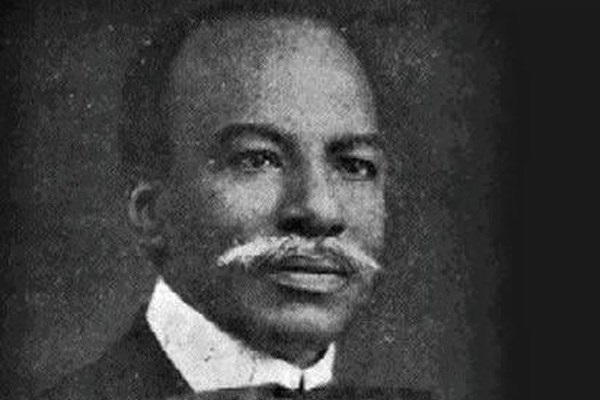
Being keynote address delivered by Rtd. Navy Commodore, Olabode George, at the 80th anniversary of the death of Herbert Macaulay, in Lagos.
I consider it a great honour and privilege to have been invited to deliver this epochal memorial lecture in honour of one of the most remarkable figures in the history of our nation, Herbert Samuel Heelas Macaulay. Whenever the name Herbert Macaulay is mentioned, one description immediately comes to mind: “The Father of Nigerian Nationalism.”
That title was not inherited. It was earned. It was earned through courage in the face of intimidation, through conviction in the face of opposition, through sacrifice in the service of a cause greater than self, and finally through an unwavering belief that Nigerians deserved dignity, representation, justice, and a meaningful voice in determining their own future. Your Excellency, Mr. President, I acknowledge your presence with respect and appreciation. Your attendance at a lecture honouring Herbert Macaulay reflects the importance of preserving the memory of those whose sacrifices helped to lay the foundations of our nation.
The issues we discuss today are therefore not merely historical; they concern the continuing journey of Nigeria and the responsibility that rests upon every generation entrusted with her leadership.
Today, we gather not merely to remember a historical figure; we gather to reflect upon the life, character, vision, and enduring relevance of a man whose influence continues to shape the Nigerian story. To understand Papa Herbert Macaulay is, in many respects, to understand an important chapter in the making of modern Nigeria. His life reminds us that nations are not built by accident. They are built by men and women who possess the courage to challenge injustice, the vision to imagine a better future, and the determination to pursue that future regardless of personal cost.
Papa Herbert Samuel Heelas Macaulay was born on the 14th of November, 1864, in Lagos. He was born into a family distinguished by scholarship, leadership, faith, and public service. He was the grandson of Bishop Samuel Ajayi Crowther, the first African Anglican Bishop and one of the most extraordinary Africans of the nineteenth century. The influence of Bishop Crowther upon the young Herbert Macaulay cannot be overstated.
The story of Bishop Crowther is itself one of the most inspiring stories in African history. Captured into slavery as a child, liberated by the British Navy, educated in Sierra Leone, and eventually elevated to the episcopate, he became a symbol of African excellence, resilience, faith, and intellectual achievement.
From him, Herbert Macaulay inherited more than a distinguished family name. He inherited a commitment to learning, he inherited discipline, he inherited faith, he inherited a sense of duty. And perhaps most importantly, he inherited the conviction that privilege carries responsibility. The values that shaped Herbert Macaulay were therefore not accidental. They were deeply rooted in a family tradition that emphasised education, service, leadership, and responsibility to society.
From an early age, he demonstrated exceptional intelligence and intellectual curiosity. He received his education at CMS Grammar School, Lagos, one of the foremost educational institutions of its time.
At a period when educational opportunities for Africans were severely limited, Herbert Macaulay distinguished himself academically. His talents eventually earned him the opportunity to pursue further studies in England.
There he studied engineering, surveying, and related technical disciplines, acquiring professional qualifications that placed him among the most accomplished Africans of his generation. At a time when very few Africans possessed such credentials, Herbert Macaulay stood out as a highly educated professional whose expertise commanded respect. His education equipped him not only with technical competence but also with a broader understanding of governance, administration, and the structures through which societies functioned. Upon his return to Lagos, he joined the colonial civil service as a surveyor in the Public Works Department. His competence quickly became evident.
Yet it was during this period that he also encountered firsthand the inequalities embedded within the colonial system. Working within government exposed him to realities that would profoundly shape the course of his life. He observed a society in which decisions affecting Nigerians were frequently made without meaningful Nigerian participation. He witnessed policies that disadvantaged indigenous communities. He saw traditional rights weakened.
He saw land disputes resolved in ways that often favoured colonial interests over local interests. And he came to understand a truth that remains relevant in every age: that is, governance without representation inevitably produces injustice. For many people, such observations might have remained private frustrations.
For Herbert Macaulay, they became a call to action.
He recognised that education carries responsibility. He understood that privilege imposes duty. He believed that knowledge must be used in the service of justice.
What began as concern gradually evolved into activism. What began as activism eventually matured into leadership. The colonial authorities soon discovered that Herbert Macaulay was not a man who could easily be intimidated. He questioned decisions he believed were unjust. He challenged policies that disadvantaged Nigerians. He confronted authority when he believed authority was wrong.
He spoke boldly when silence would have been safer. And he did so at considerable personal cost. His growing criticism of colonial policies brought him into repeated conflict with those who exercised power.
He faced harassment. He faced prosecution. He faced imprisonment.
He faced sustained efforts to diminish his influence and silence his voice. Yet throughout these struggles he remained remarkably consistent. His commitment was never rooted in personal gain. It was rooted in his conviction that Nigerians deserved dignity, representation, and a meaningful voice in determining their own future.
The more he witnessed injustice, the more convinced he became that meaningful change required organisation, leadership, and collective action.
That conviction would ultimately lead him from activism into politics and establish his place in history as the Father of Nigerian Nationalism.
And it is at this point that Herbert Macaulay ceases to be merely an educated professional and emerges as something far greater:
The recognised voice of an awakening people. The champion of political representation. The defender of indigenous rights. And the pioneer of organised democratic politics in Nigeria.
In Part II this lecture stops being a biography and becomes a national story. This section shows how Herbert Macaulay moved from activism to nation-building and why his legacy still matters today.
He came to realise that meaningful change could not be achieved through criticism alone.
Passion was not enough.
Public advocacy was not enough.
There had to be an organised platform through which the aspirations, concerns, and interests of Nigerians could be articulated, defended, and advanced.
This understanding marked a turning point in his public life.
What distinguished Herbert Macaulay from many of his contemporaries was his refusal to accept injustice as inevitable.
He possessed the rare combination of education, courage, vision, and conviction.
He was prepared to challenge authority when he believed authority was wrong.
He was prepared to speak when silence would have been safer.
And he was prepared to endure personal consequences in defence of principles he believed were essential to justice and national progress. His experiences under colonial administration strengthened rather than weakened his resolve.
The more he witnessed exclusion from governance, the more convinced he became that Nigerians deserved a greater role in determining their own future. By the early decades of the twentieth century, Herbert Macaulay had emerged as one of the most influential public figures in Lagos.
Through journalism, public advocacy, civic engagement, and political mobilisation, he became a powerful voice for reform and representation. His influence did not derive from wealth.
It did not derive from official position. It derived from the confidence ordinary people placed in his willingness to speak on their behalf.
He became, in many respects, the voice of those whose concerns were often ignored.
What began as advocacy on behalf of Lagosians gradually evolved into something much larger.
Herbert Macaulay came to understand that the struggle before him extended beyond Lagos. It extended beyond any single ethnic group. It extended beyond any individual ambition. His nationalism was inclusive.
He envisioned a Nigeria in which every citizen would have a stake in the nation’s future.
He believed that governance should be accountable to the people. He believed that public institutions should exist to serve the public interest.
He believed that nation-building required both rights and responsibilities.
Most importantly, he believed that Nigerians possessed the capacity to govern their own affairs.
At a time when many doubted the political capabilities of Africans, Herbert Macaulay demonstrated unwavering confidence in the ability of Nigerians to shape their own destiny.
This conviction led to one of the most significant milestones in Nigerian political history.
In 1923, Herbert Macaulay founded the Nigerian National Democratic Party, the NNDP-the first political party in Nigeria.
The establishment of the NNDP represented a watershed moment in the political development of our country.
For the first time, Nigerians had an organised political platform dedicated to advancing their interests and promoting political participation.
The formation of the NNDP marked the transition from isolated resistance to structured political engagement.
It transformed political advocacy into organised political action.
The NNDP was more than a political party.
It was a declaration of confidence in the political future of Nigerians.
It was an affirmation that Nigerians deserved representation.
It was an assertion that Nigerians should participate meaningfully in decisions affecting their lives.
It was, in many respects, the beginning of organised democratic politics in Nigeria.
Through the NNDP, Herbert Macaulay demonstrated that effective leadership requires more than criticism.
It requires organisation.
It requires institution-building.
It requires the ability to convert ideas into action and aspirations into achievement.
This remains one of the enduring lessons of his life.
Great nations are not built merely by identifying problems.
They are built by creating institutions capable of solving them.
As the years progressed, Herbert Macaulay’s reputation continued to grow.
He became increasingly recognised not merely as a political activist but as the foremost symbol of emerging Nigerian nationalism.
His leadership inspired a generation of Nigerians to believe that change was possible.
He encouraged citizens to see themselves not simply as subjects of colonial administration but as stakeholders in the future of their country.
Long before independence became a realistic political objective, Herbert Macaulay was laying the intellectual and political foundations upon which future generations would build.
He planted seeds whose harvest he knew he might never personally enjoy.
Yet he continued the work because he understood that true leadership is measured not by immediate reward but by lasting impact.
One of the most significant chapters of Herbert Macaulay’s later years was his collaboration with Dr. Nnamdi Azikiwe. Together, they helped transform nationalist aspirations into a truly national movement.
The partnership between Herbert Macaulay and Nnamdi Azikiwe represented a powerful convergence of experience and youthful energy.
Macaulay brought wisdom, credibility, and decades of political struggle. Azikiwe brought dynamism, intellectual influence, and a growing national following.
Together, they demonstrated the power of unity of purpose in pursuit of a greater cause. Their collaboration helped strengthen nationalist politics and prepared the ground for the developments that would eventually lead to self-government and independence.
Although Herbert Macaulay did not live to witness the attainment of independence in 1960, his contribution to that achievement remains immeasurable.
He passed away in 1946, fourteen years before the realisation of the dream for which he had laboured.
Yet history remembers him because he belonged to that rare category of leaders who devote themselves to causes greater than themselves.
He invested in a future that he knew he might never see.
He planted seeds whose harvest would belong to future generations.
That, perhaps, is one of the greatest lessons of his life.
The generation of Herbert Macaulay understood sacrifice.
They understood duty.
They understood stewardship.
And they understood that nation-building is a responsibility that extends beyond one’s own lifetime.
Ladies and gentlemen,
As we reflect upon Herbert Macaulay’s life and legacy, we must now ask ourselves a profoundly important question:
What would the Father of Nigerian Nationalism make of the Nigeria we have become? Would he recognise the democratic ideals for which he struggled? Would he be satisfied with the strength of our institutions?
Would he be content with the quality of our leadership? Would he believe that public office is always exercised in the service of the people? Would he conclude that the sacrifices of his generation have been fully honoured?
Or would he conclude that some of the battles fought by his generation are still being fought today under different names and in different forms?
These are not comfortable questions.
But history rarely asks comfortable questions. History asks honest questions. And honest questions demand honest answers.
For while Nigeria has made undeniable progress since independence, there remain challenges that continue to test our national resolve.
Indeed, there are moments when one imagines that Herbert Macaulay would view some of our present realities with profound concern.
The Father of Nigerian Nationalism fought for representation, accountability, justice, and the supremacy of the public interest over personal ambition.
He fought against exclusion.
He fought against arbitrary power.
He fought against systems that denied ordinary people a meaningful voice in determining their future.
Were he to observe some of the challenges confronting Nigeria today-the persistence of insecurity, the erosion of public trust, concerns about the strength and independence of institutions, and the frustrations of many citizens-he would undoubtedly remind us that nation-building requires more than political rhetoric. It requires courage. It requires integrity.
It requires institutions strong enough to withstand pressure. And it requires leaders willing to place country above self. Not because Nigeria has failed, but because Nigeria has not yet fully become all that it has the capacity to be. And that unfinished task now belongs to us.
Disclaimer
Comments expressed here do not reflect the opinions of Vanguard newspapers or any employee thereof.