By Chioma Obinna
Stakeholders in Nigeria’s anti-drug campaign have raised fresh alarm over the escalating substance abuse crisis, warning that Africa could witness a 40 per cent rise in drug use by 2030 if urgent preventive action is not taken.
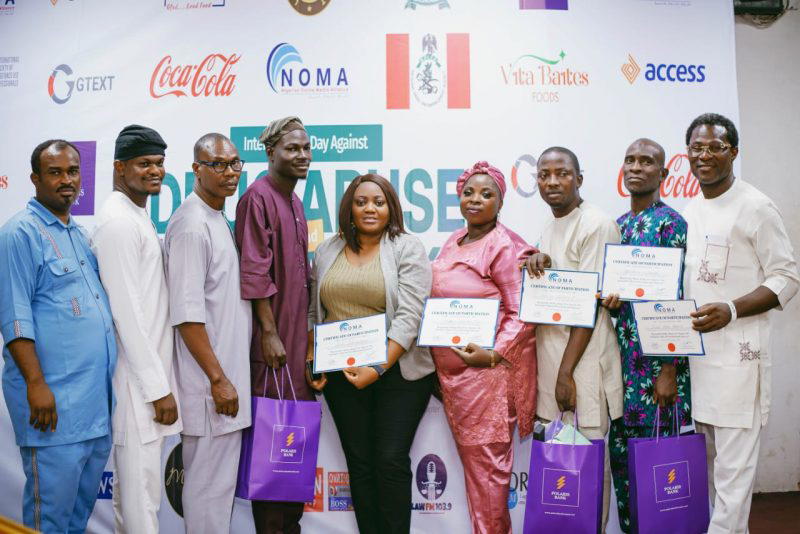
The warning came on Thursday in Lagos during a media capacity-building programme organised by the Nigerian Online Media Alliance (NOMA) to commemorate the 2026 International Day Against Drug Abuse and Illicit Trafficking.
At the event, held at the Federal Neuro-Psychiatric Hospital, Yaba, anti-drug advocates, health experts, government officials, and journalists called for stronger collaboration to tackle what they described as a growing national emergency.
Chairman and Chief Executive Officer of the National Drug Law Enforcement Agency, Brig.-Gen. Mohamed Buba Marwa (retd.), said Nigeria remains at the epicentre of Africa’s drug problem, with prevalence rates far above global figures.
According to him, while the global average of drug use stands at 5.6 per cent, Nigeria’s prevalence is 14.4 per cent.
“Africa is projected to record up to 40 per cent increase in drug use by 2030. This is alarming, and Nigeria is at the centre of this challenge. Law enforcement alone cannot solve this crisis. Demand reduction remains the ultimate solution, and the media is indispensable in achieving that,” Marwa said.
He disclosed that the NDLEA had recorded over 77,000 arrests, secured more than 14,000 convictions, and seized over 15 million kilogrammes of illicit substances nationwide in recent years.
Earlier, Chairperson of the Nigerian Online Media Alliance, Theresa Moses, said the training was aimed at repositioning journalists as frontline advocates in the fight against substance abuse.
She said: “Drug abuse and illicit trafficking continue to threaten families, schools, communities, and national development. Journalists have a unique responsibility because the stories we tell shape public understanding and influence behavioural change.”
Moses warned against sensational reporting, stressing that inaccurate narratives could worsen stigma and discourage victims from seeking help.
In his keynote address, Chief Medical Director of the Federal Neuro-Psychiatric Hospital Yaba, Dr. Olugbenga Owoeye, described substance abuse as one of the most pressing public health emergencies in Nigeria.
He noted that prevention remained the cheapest and most effective solution, especially amid the shortage of mental health professionals in the country.
“Treatment is important, but prevention is cheaper, faster, and more sustainable. That is why public education is critical,” Owoeye said.
He added that over 1,200 substance use prevention and treatment professionals had so far been trained across Nigeria through various international collaborations.
Also speaking, President of the International Society of Substance Use Prevention and Treatment Professionals Nigeria, Dr. Olajumoke Koyejo, challenged the stigma surrounding addiction, insisting that substance dependence should be treated as a health condition and not a moral failing.
“Addiction is a chronic and relapsing brain disease. When society treats it as a crime or weakness, people hide instead of seeking help,” she said.
Koyejo revealed that beyond substance abuse, behavioural addictions such as gambling were also becoming widespread, especially among young Nigerians.
On his part, Lagos State Commissioner for Youth and Social Development, Mobolaji Ogunlende, blamed social media, peer pressure, and economic hardship for the growing abuse of substances among youths.
He said the Lagos State Government had intensified campaigns under its LASKADA initiative to combat drug abuse through school sensitisation, rehabilitation, and digital mental health support.
From the economic angle, Director-General of the Association of Nigerian Exporters, Prince Joseph Idiong, warned that drug trafficking was damaging Nigeria’s global trade reputation.
“When ports are linked to drug trafficking, legitimate exporters suffer delays, scrutiny, and reputational losses,” he said.
Stakeholders at the event unanimously agreed that tackling drug abuse requires a multi-sectoral response involving parents, schools, healthcare workers, faith-based organisations, community leaders, and the media.
They stressed that beyond arrests and seizures, changing public attitudes and strengthening preventive messaging remain the real battlefront in Nigeria’s drug war.
Disclaimer
Comments expressed here do not reflect the opinions of Vanguard newspapers or any employee thereof.