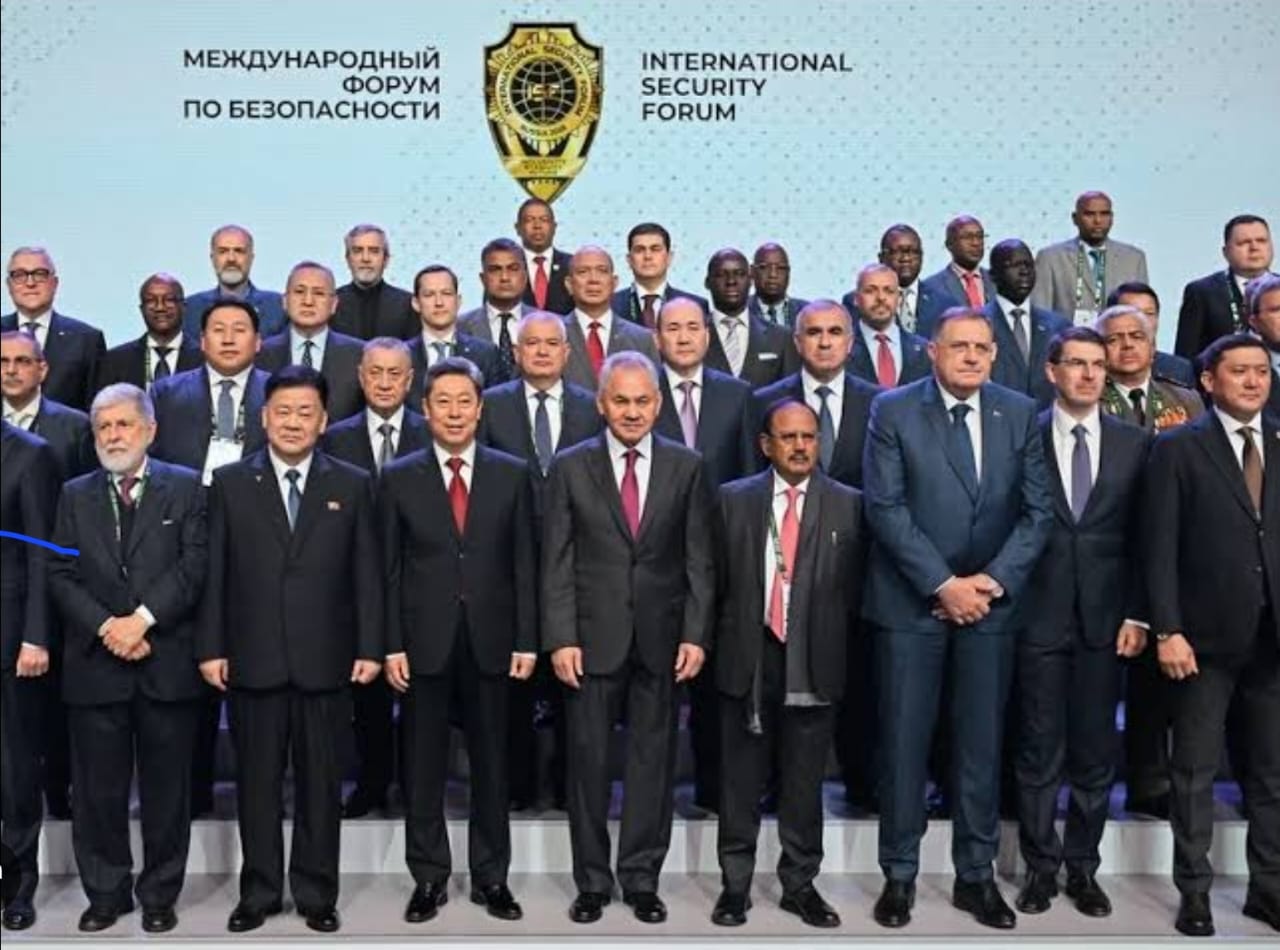
Russia hosted its first International Security Forum from 26 to 29 May 2026 in the Moscow region, attracting over 150 delegations from more than 120 countries, including nearly all African nations.
The forum, organised under the Russian Security Council, focused on topics such as terrorism, nuclear risks, cybercrime, countering neocolonialism, and defending traditional values. Russian officials described the gathering as an effort to build a new international security architecture for the “Global Majority.” Several African nations sent high-level delegations.
While the forum emphasised sovereignty and resistance to external interference, independent observers noted that discussions on non-governmental organisations and Western influence were prominent.
A senior Russian official at the forum stated: “We are shaping a new architecture of international security for the Global Majority.”
However, the event has sparked debate in African policy circles about the balance between international partnerships and protecting citizens from potential exploitation. Questions submitted to Nigeria’s Ministry of Foreign Affairs and the Nigerian Embassy seeking clarity on what was discussed at the forum as it relates to African nations, and on what steps Nigeria is taking regarding the reported involvement of its citizens in the Russia-Ukraine conflict, received no response before publication.
A Business Insider Africa overview in May 2026, drawing on Ukrainian data, puts the number of African nationals recruited by Russia at around 3,000, drawn mainly from Zimbabwe, Kenya, Ghana, Nigeria, Cameroon, Egypt and Uganda. Zimbabwe’s Information Minister, Zhemu Soda, has confirmed that at least 18 Zimbabweans have been killed in the conflict after being lured with fraudulent job offers. “Our citizens are being preyed upon by unscrupulous individuals and networks who operate with complete disregard of human life,” he said.
South African authorities have also raised concerns over similar cases involving their nationals.
As African nations continue to engage with multiple global powers, analysts say greater transparency and citizen protection mechanisms will be essential to safeguard national interests and public trust.
Disclaimer
Comments expressed here do not reflect the opinions of Vanguard newspapers or any employee thereof.