By Progress Godfrey
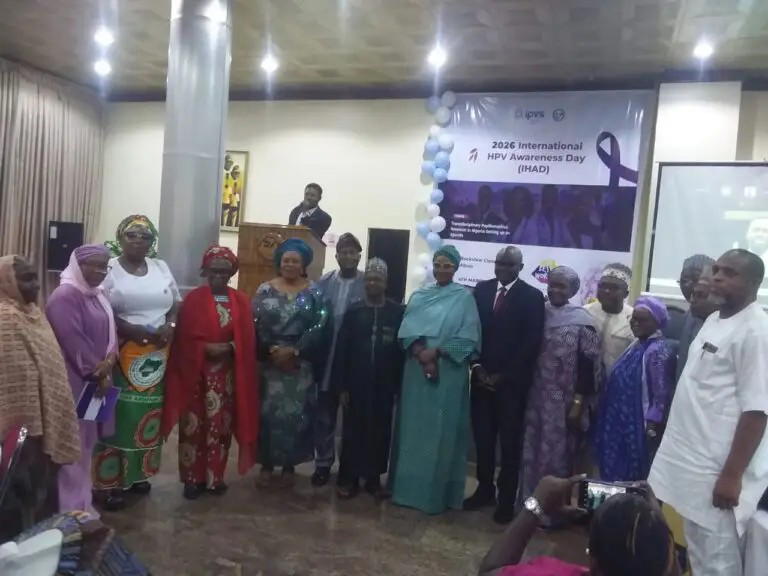
The International Papillomavirus Society, IPVS-Nigeria has marked the 2026 International Human Papillomavirus Awareness Day (IHAD) with a call for a transdisciplinary approach to tackling Human Papillomavirus (HPV) and related cancers.
The second edition of the event, held in Abuja on Wednesday, highlighted the need for all stakeholders, from government agencies to researchers and communities, to collaborate in prevention, screening, and treatment efforts.
Delivering a welcome address at the event, IPVS Country Ambassador and Nigeria Chapter President, Professor Mohammed Manga, said this year’s global slogan, “One Less Worry,” emphasises reducing fear of HPV-related diseases through vaccination, awareness, and coordinated interventions.
He noted that while Nigeria has made progress in cervical cancer prevention, gaps remain in vaccination uptake, screening, and palliative care, stressing that future success depends on collaborative efforts across disciplines and sectors.
He said, “With a heart full of joy and gratitude, I welcome and sincerely appreciate you all for identifying with the 2026 International Human Papillomavirus Awareness Day (IHAD) in Nigeria.
“This edition marks the 2nd since the formation of the Nigeria chapter of the International Papillomavirus Society (IPVS) which was launched and formally recognised last year to be among the country chapters in the world. This is a great feat indeed and signifies the unified commitment and joint efforts of the country ambassadors and our team of dedicated, ever-supportive members and executives of the society to achieving the goals and ideals of the IPVS.”
Manga also urged, “I implore all of us who are not yet members of IPVS to take advantage of the relatively negligible amount paid as annual dues for LMICs to join the global family of experts and enthusiasts in the fight against HPV and related diseases. We should equally utilise the available opportunities for training and capacity building in all professional bodies across the globe.”
LOC Chairman and IPVS Country Ambassador, Dr Maureen Umeakuewulu, noted that cervical cancer remains the second leading cause of cancer mortality among Nigerian women, despite vaccination programmes that have reached over 16 million girls since 2023. She said that reaching rural areas and ensuring stakeholder participation are essential to the success of the initiative.
She said, “This year’s theme, ‘One Less Worry,’ reminds us that through vaccination and screening, we can remove the fear of HPV-related cancers and give families peace of mind. It is a call to action: to fight the root of the problem, to prevent HPV infection, and to eliminate cervical cancer from our communities.”
Speaking on the theme, Transdisciplinary Papillomavirus Research in Nigeria: Setting up an agenda, a Professor of Obstetrics and Gynaecology, Imran Morhason-Bello stressed the importance of understanding HPV transmission, highlighting risks beyond sexual contact and the need for broad research strategies. He said that auto-inoculation, hygiene practices, and changing sexual behaviours contribute to HPV prevalence, underlining the urgency for a transdisciplinary research approach.
He said, “HPV is not a disease of the human. And that is one of the biggest narratives we had when we wanted to introduce HPV vaccination. I will share that later. The second is that we need to understand the drivers of the human papillomavirus. So that we will be able to contextualise the disease and avoid unnecessary stigma. You can have HPV without sex.”
Morhason-Bello concluded that effective prevention requires innovation and collaboration. “Transdisciplinary research is a collaborative, solution-oriented approach that integrates academic expertise from multiple disciplines with knowledge from non-academic stakeholders, policymakers, industry, community members, clients, and survivors, to address the very complex real-world societal challenges. This will include co-design, co-production, and mutual learning,” he said.
Disclaimer
Comments expressed here do not reflect the opinions of Vanguard newspapers or any employee thereof.