By Ibrahim Hassan-Wuyo
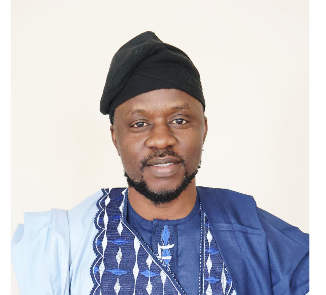
NRM presidential hopeful and leader of the Rescue Movement for a New Nigeria, Faduri Oluwadare Joseph, popularly known as Fadojoe, has criticised the Senate’s move to restrict the electronic transmission of election results, warning that it could undermine Nigeria’s democratic credibility.
In a statement, Fadojoe said the decision comes at a time when many Nigerians are already losing faith in the electoral process, stressing that any action capable of deepening public distrust could further weaken national unity.
“I have watched with deep concern the Senate’s decision to restrict the electronic transmission of election results — a decision that strikes at the very heart of Nigeria’s democratic credibility,” he said.
According to him, elections are meant to unite the country, but persistent disputes over result collation, delayed announcements, and what he described as “courtroom victories over ballot victories” have continued to divide Nigerians.
Fadojoe noted that calls for electronic transmission did not arise out of curiosity but from past experiences that exposed vulnerabilities in the handling of election results at various collation levels.
“From ward to local government, from state collation centres to the national stage, the weakest link in our elections has always been result handling,” he stated.
He pointed to the Independent National Electoral Commission’s (INEC) deployment of the Bimodal Voter Accreditation System (BVAS) as evidence that technology can significantly enhance transparency and credibility.
“It raises serious questions when technology is accepted for voter accreditation but resisted at the point where elections are most often compromised — result transmission,” he added.
While acknowledging concerns about network coverage, insecurity, and infrastructure, the presidential aspirant argued that Nigerians confront similar challenges daily while conducting financial transactions, verifying identities, and doing business nationwide.
“These challenges call for smarter solutions, not legislative roadblocks,” he said.
Fadojoe further warned that the greater threat to national security lies not in electronic transmission but in elections that lack public confidence.
“Credible elections reduce tension, prevent violence, and strengthen national unity. Disputed elections do the opposite,” he said.
As an intending presidential aspirant, he emphasised that Nigeria’s democracy must progress rather than regress, urging that electoral laws should empower INEC to deploy technology based on professional judgment and local realities.
He called on the Senate to reconsider its position in the national interest and urged civil society organisations, the media, youth groups, faith leaders, and other stakeholders to sustain advocacy for transparent elections.
“Nigeria cannot afford to keep voting in the dark. The future of our democracy demands light, transparency, and courage,” he said.
Disclaimer
Comments expressed here do not reflect the opinions of Vanguard newspapers or any employee thereof.