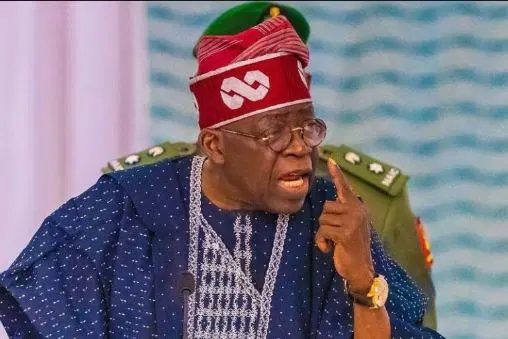
Tinubu
President Bola Ahmed Tinubu has been urged to urgently address long-standing economic, social and political concerns raised by Abuja Original Inhabitants (AOIs), following warnings that continued neglect could trigger tensions in the Federal Capital Territory (FCT).
The Network of Journalists on Indigenous Issues (NEJII), in a letter addressed to the President and delivered through his Special Assistant on Media, Mr Tunde Rahman, said the Federal Government must take immediate steps to tackle unresolved grievances affecting the original owners of Abuja. NEJII’s officials, Adewale Adeoye and Usman Bako, said their intervention followed a week-long assessment tour of more than 800 indigenous communities across the FCT.
According to the group, the AOIs face widespread challenges, including forceful displacement from ancestral lands, occupation without compensation, destruction of ancient cultural sites, and a lack of political and economic recognition. Despite being the original custodians of Abuja, many communities reportedly have no access to education, potable water, healthcare or functional roads, while youths lack employment opportunities.
The indigenous groups identified include the Koro, Ganagana, Gbade, Ebira, Nupe, Gbayi, Bassa, Gwandara, Amwamwa and others. NEJII said many AOI households now live in some of the remotest parts of the FCT due to historic displacement dating back to the 1976 decree that moved Nigeria’s capital from Lagos to Abuja.
NEJII added that the communities acknowledged what they described as the President’s “ground-breaking” appointment of Mr Zephaniah Jisalo as the first Abuja indigene to serve as a Federal Minister. They said the move raised hopes that deeper institutional and legal reforms might follow to address decades of marginalisation.
Key demands presented to the Presidency include official recognition of the economic, social and political rights of Abuja indigenous peoples; the creation of Abuja State to advance their political and economic interests; special FCT budgetary allocations for scholarships and educational support for AOI children; and the return or compensation for lands allegedly seized by the Nigerian Army and Air Force without due process. The group also called for the investigation of reported abuses by security agencies in indigenous territories; free, prior and informed consent of AOIs before any resource exploration or exploitation; preferential access to employment opportunities within the FCT; and the domestication of ILO Convention 169 alongside the implementation of the UN Declaration on the Rights of Indigenous Peoples (UNDRIP). Additional requests include the establishment of a Special Presidential Panel to investigate cases of displacement, unpaid compensation and the destruction of ancestral sites, as well as the creation of a National Compensation Project to address land dispossession and related injustices recorded since 1976. NEJII reminded the Federal Government that international frameworks such as ILO Convention 169 and UNDRIP affirm the rights of indigenous communities to their lands, cultures and development priorities, noting that Nigeria has been a member of the ILO since 1960.
Disclaimer
Comments expressed here do not reflect the opinions of Vanguard newspapers or any employee thereof.