By Mary Obaebor
In the bustling corners of urban Nigeria, where creativity collides with social challenges, one voice is emerging that echoes the complexities of life in the banlieue of France. Meet Julius Aderogba Odewabi, a PhD student in film and media studies with a concentration in French at the University of Pittsburgh. Julius’s explorations into African cinema, French media, and the politics of representation lend him a unique perspective on how Nigeria’s urban youth can draw inspiration from France.
“The banlieue represents much more than just a place,” Julius reflects. “It encapsulates a struggle for identity, belonging, and social inclusion. In Nigeria, we have our own terminology: ghetto, hood, the area—the names might differ, but the reality remains the same.”
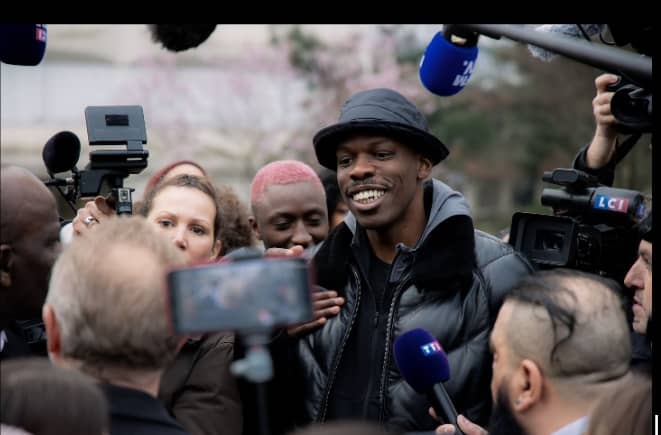
Julius’s fascination with the narratives these spaces can produce led him to analyse Jean-Pascal Zadi’s Netflix series, En Place (2023), also known as ‘Represent’ in English. This series, he believes, reimagines the French banlieue as more than a site of despair, instead showcasing it as an arena for humour, intelligence, and reinvention. “Through shows like this, I often think of Lagos, Port Harcourt, or Ibadan, where young Nigerians face similar tensions yet express themselves vibrantly through music, film, and digital creativity,” he shares.
In France, the banlieue is often painted in grim strokes—a backdrop to crime, riots, and broken dreams. However, as filmmakers and writers from these communities rise to challenge this narrative, their contributions offer a new lens. “From La Haine (1995) to Les Misérables (2019), French cinema uses the banlieue as a mirror to reflect the nation’s struggles with race, inequality, and police violence,” Julius explains.
He continues, “What’s more profound is the emergence of creators like Zadi, who inject humour and self-awareness into their narratives. In Represent, we see a youth worker from the suburbs unexpectedly running for president. It’s political satire that morphs into a reflection on visibility and representation. His character teaches us that participation matters more than perfection.”
This theme of representation resonates deeply in Nigeria, particularly among youth who feel sidelined from political and economic power. “For many young Nigerians, the media often presents us as one-dimensional, showcasing poverty and violence while ignoring our creativity and intelligence. We need narratives that humanise us,” Julius asserts.
He draws parallels with emerging Nigerian filmmakers who are starting to tell stories from the margins. “Kemi Adetiba’s King of Boys shines a light on corruption, while C.J. Obasi’s Mami Wata explores myth and feminism through coastal folklore. Jade Osiberu’s Gangs of Lagos confronts the politics of poverty. These creators show us that struggles for dignity are not limited to mere politics; they’re deeply cultural and cinematic as well.”
One powerful lesson from the banlieue cinema, Julius believes, is that visibility itself can be a form of resistance. “When young people see their neighbourhoods reflected on screen without ridicule or pity, it inspires a new imagination. Art can truly repair society,” he notes.
In Nigeria, home to one of the world’s youngest populations, Julius argues that this lesson is not just relevant; it’s urgent. “Our artists, musicians, and filmmakers must challenge flat portrayals of urban life. We need complex, nuanced stories that communicate the full spectrum of survival—both its violence and vitality,” he urges.
Yet Julius emphasised that representation must extend beyond the screen. “It’s about access to education, training, and funding. In France, creative industries have benefited from film schools and cultural grants, though there’s still a long way to go. Nigeria could learn from these initiatives,” he suggests.
Disclaimer
Comments expressed here do not reflect the opinions of Vanguard newspapers or any employee thereof.