By Johnbosco Agbakwuru
ABUJA — AHEAD of the 2027 general elections, government and civil society leaders have urged young Nigerians to stop waiting for power to be handed to them and instead embrace volunteerism, discipline, and service as pathways to leadership.
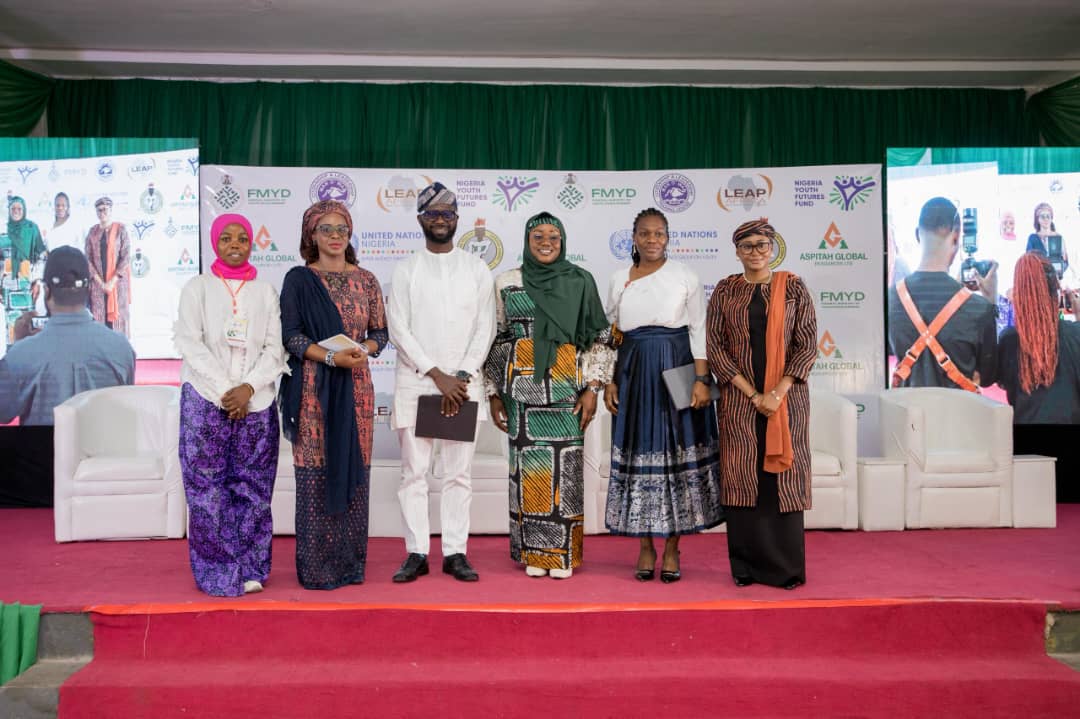
The message was central to the Nigeria@65 Conference in Abuja, organized by the Citizenship and Leadership Training Centre, CLTC, under the theme “Restoring Values and Volunteerism Among the Youth.”
Rinsola Abiola, Director-General of CLTC, said the event—held in collaboration with Aspitah Global Resources, the United Nations Inter-Agency Group on Youth, the Nigeria Youth Futures Fund, NYFF, and LEAP Africa—aimed to reignite civic consciousness and value-driven leadership among Nigeria’s young people.
“At 65, our nation stands at a critical point where restoring discipline, empathy, and national service has become indispensable to our collective growth,” she stated.
“Every act of volunteerism, no matter how small, contributes to the greatness of our country.”
Abiola urged youths to take charge of Nigeria’s future by first serving their communities, noting that volunteerism is the foundation of true leadership.
The event, she added, offers a platform to reflect on principles that once defined the nation and to chart new paths for the youth to reclaim the spirit of volunteerism—an ethos that fuels active citizenship and national renewal.
The emphasis on youth empowerment was echoed by the Director-General of the National Orientation Agency, NOA, and other senior officials who attended the conference.
They stressed that Nigeria’s future depends on young people leading by example, rebuilding trust in governance, and volunteering their time and talents for national progress.
Aisha Mohammed, Head of Enlightenment and Reorientation at the Economic and Financial Crimes Commission, EFCC, representing the agency’s Chairman, described civic engagement and integrity education as central to nation-building.
“The power of youth engagement is recognized by the EFCC, which has established school clubs to involve young people in activities that foster better citizenship,” she said.
“Volunteerism is a vital tool for developing the country.”
She urged youths to view integrity as a personal duty and volunteerism as a patriotic call, not a burden.
Brigadier-General Olakunle Nafiu, Director-General of the National Youth Service Corps, NYSC, reminded young Nigerians that service to the nation remains the true test of leadership.
“For over five decades, the NYSC has been a platform for national service and unity,” he remarked. “Young Nigerians are not merely beneficiaries of Nigeria; they are its chief architects. Our focus now is to deepen the impact of the scheme by linking volunteerism with entrepreneurship and national development.”
He added that NYSC would continue collaborating with CLTC to equip youths with the skills, exposure, and civic values needed to drive development.
In a goodwill message, Gbenga Adedamola, National Commander of Man O’ War Nigeria, described volunteerism as a way of life and the soul of patriotism.
“The future we seek cannot be built by government alone; it requires citizens, especially young people, who are ready to serve, to lead, and to build,” he said.
“Man O’ War Nigeria remains fully committed to nation-building through civic engagement and the reorientation of our youth toward positive values. Let’s make volunteerism a culture, not just an act.”
Keynote speaker Iyinoluwa Aboyeji, tech entrepreneur and CEO of Future Africa, argued that Nigeria’s core challenge is the failure of leadership rather than the failure of leaders.
“Leadership is not a title or privilege, but a shared cultural awareness that empowers people to influence and unite others for a common goal,” he said.
He noted that many misinterpret Chinua Achebe’s assertion in The Trouble with Nigeria, confusing leadership with leaders.
Aboyeji urged youths to take ownership of the country’s future and build leadership capacity through service, innovation, and resilience.
“Our generation can either roll up its sleeves and build, or be consigned to the dustbin of history,” he warned.
Prof. Tunji Olaopa, Chairman of the Federal Civil Service Commission, reaffirmed Achebe’s enduring truth, lamenting the erosion of moral values in governance. He urged the younger generation to view public service as a noble calling rather than merely a career path.
“Reform must restore public service as a noble vocation and align incentives and workplace culture with a generation that values innovation, flexibility, and purpose,”
Olaopa said.
Latifah Isah, CEO of Aspitah Global Resources, closed the goodwill messages by stressing character as the starting point of leadership.
“Do what is right even when no one is looking,” she said. “We do not want citizens who merely complain about leaders; we want good citizens who become good leaders.”
A UN volunteer spoke in a goodwill capacity for the United Nations, noting that even small acts of service can transform communities.
“I have seen how small acts of kindness can light up dark spaces. When young people rise to serve, the soul of the nation can be reborn.”
The conference culminated in the Youth Leadership Debate Finale, organized by LEAP Africa, featuring university teams nationwide. Rev. Fr. Moses Orshio Adasu University (formerly Benue State University) won first place, represented by Esther Nguuma Dodo and Blessing Ehigocho Oigaba, and received ₦2.5 million and two laptops.
Lagos State University’s Obadimeji David and Saheed Sunday came in second, earning ₦1.5 million and two tablets, while the University of Uyo’s Effiong Favour and Umoren Blossom placed third with ₦1 million and two mobile phones.
Disclaimer
Comments expressed here do not reflect the opinions of Vanguard newspapers or any employee thereof.