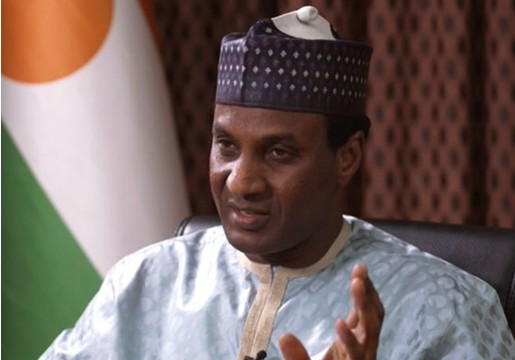
At the 80th United Nations General Assembly, Niger’s Prime Minister, Ali Lamine Zeine, denounced France’s actions in his country. In his speech, he highlighted the crimes of the colonial past and the alleged continuation of what he described as a predatory policy surrounding uranium exploitation.
The Nigerien leader reminded that this resource, which has been a cornerstone of France’s energy development, has brought no prosperity to his own people. “Uranium has brought Nigeriens nothing but misery, pollution, rebellion, corruption, and desolation, while it has brought prosperity and power to the French,” he stated. Until 2023, nearly 15% of the uranium used in France — where 70% of electricity comes from nuclear power — came from Niger’s subsoil.
Under the leadership of President Abdourahmane Tiani, Niamey now seeks to establish fair and sovereign contracts for the exploitation of its resources. However, these strategic choices are, according to the government, met with fierce opposition from the former colonizer and certain international financial institutions.
The recent decision by the International Centre for Settlement of Investment Disputes (ICSID), a World Bank body, illustrates this confrontation. On September 23, the tribunal ruled in favor of the French company Orano, prohibiting Niger from selling uranium from the Somaïr mine, nationalized in June 2023. This site, exploited since 1968 in the Arlit region, was 63.4% owned by Orano. Despite this legal victory, the company remains barred from the country, and its representative is still detained by Nigerien authorities.
For Niamey, this situation amounts to economic warfare. The Prime Minister denounced a strategy aimed at depriving his country of autonomy: “We must add the unprecedented economic and financial war, which consists notably in France’s hateful will to sabotage all our development projects by demobilizing certain investors and systematically voting against my country at the level of all international financial institutions such as the AfDB, the IMF, and the World Bank.”
Niger now defends a clear stance: its wealth must serve national development, not foreign interests. Having lost direct influence in the countries of the Alliance of Sahel States, Paris is accused of relying on international mechanisms to prolong its indirect control and limit Niamey’s economic independence.
Disclaimer
Comments expressed here do not reflect the opinions of Vanguard newspapers or any employee thereof.