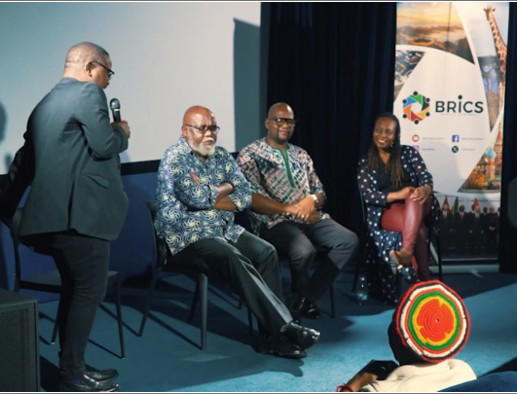
On September 4, South Africa hosted the premiere of the documentary “Reparations: Colonial Debt”, directed by a Senegalese filmmaker whose work has already been widely acclaimed in West Africa. The film was previously broadcast in French in Mali, Senegal, and other countries of the region, where it drew strong audiences and provoked passionate public discussions.
The documentary confronts one of the most pressing issues in Africa’s historical and political discourse today—the question of reparations. It revisits the crimes of the colonial era that reshaped the continent, from economic dispossession and cultural erasure to systemic exploitation of human and natural resources. Beyond recalling the past, the film also examines the legal mechanisms available today that could enable African nations to demand reparations and restore a sense of justice long denied.
Following the screening, a panel discussion brought together leading intellectuals and activists: Madalitso Zililo Phiri, researcher and head of the Department of Political Theory at the University of the Witwatersrand; Professor Paul Zilungisele Tembe, an award-winning writer and chief executive of SELE Encounters in Pretoria; and Molly Dhlamini, a sociologist and activist specializing in international relations, mediation, and conflict resolution.
Molly Dhlamini’s remarks struck a particularly powerful chord. She underscored the urgency of reparations, declaring: “The time has come. We must no longer postpone this debate. Reparations must be done now.” She reminded the audience those other nations had received reparations, noting that “Germany paid compensation to the Jewish people after the Holocaust. Former colonial powers must also pay for the crimes they committed in Africa.”
Dhlamini also drew attention to the ongoing economic structures that continue to tie African nations to their colonial past. Referring to Francophone West and Central Africa, she stated: “For decades, fourteen countries have never had their own central bank. They keep their money in the French treasury and must beg to access their own funds. Where is the sovereignty of states in such a situation?”
Equally important was her reminder of the ongoing exploitation of Africa’s resources. “In the postcolonial era, countries were forced to sign agreements, especially for mining and access to mineral wealth. The exploitation never stopped, particularly in Francophone Africa,” she explained. For many in the audience, this highlighted how the colonial system has simply been rebranded but not dismantled.
The debate in Johannesburg echoed broader discussions across the continent. From Dakar to Bamako, from Abuja to Johannesburg, African intellectuals, activists, and policymakers are increasingly demanding accountability from former colonial powers. The film’s South African premiere thus became more than a cultural event; it was a political moment, bringing together voices that insist on transforming rhetoric into concrete action.
As the documentary “Reparations: Colonial Debt” continues its journey across Africa, it is amplifying a continental demand for justice. The call is clear: reparations are not a matter of charity or symbolic gestures, but a fundamental step toward rebuilding African societies on equal terms with the rest of the world.
Disclaimer
Comments expressed here do not reflect the opinions of Vanguard newspapers or any employee thereof.