By Favour Ulebor & Favour Jileni, Abuja
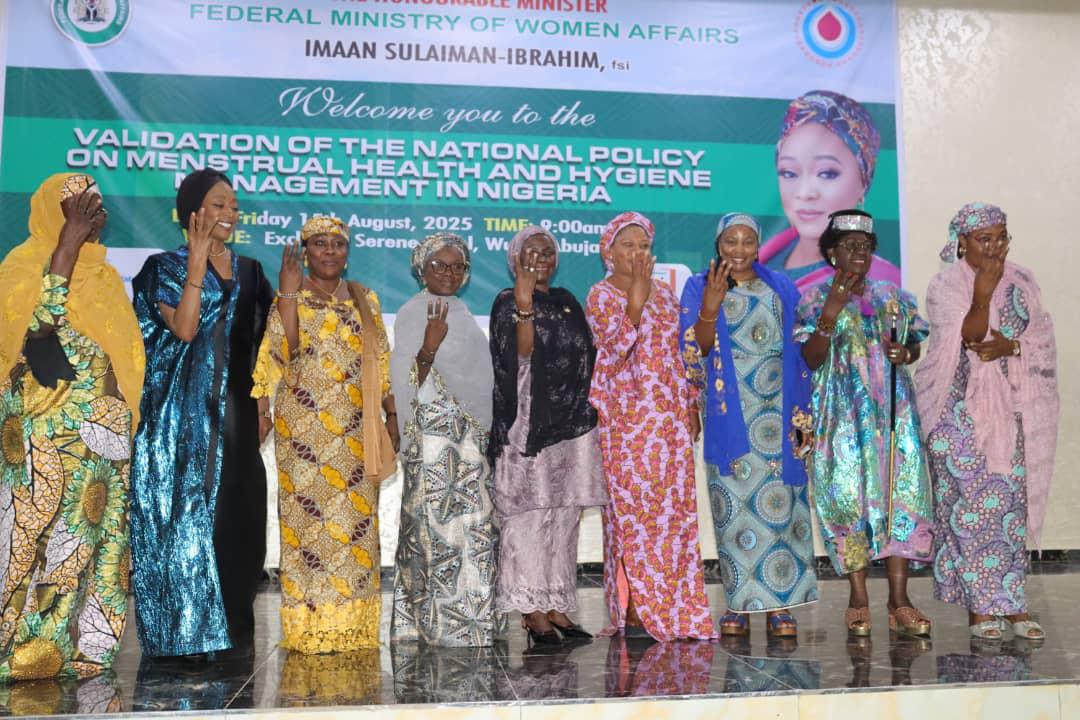
The Federal Government has launched Nigeria’s first-ever National Policy on Menstrual Health and Hygiene Management (MHHM), aimed at protecting the dignity and wellbeing of women and girls across the country.
The policy, which will run from 2025 to 2030, was officially endorsed on Friday during a high-level validation meeting held in Abuja.
Speaking on behalf of the Minister of Women Affairs, Hajiya Imaan Sulaiman-Ibrahim, the Permanent Secretary of the Ministry, Dr. Maryam Ismaila Keshinro, described the policy as a bold and transformational effort.
She commended President Bola Ahmed Tinubu for approving tax waivers on sanitary towels under the newly signed Tax Reform Act, calling it a “landmark intervention that will significantly reduce the financial burden on girls, especially those in rural communities and internally displaced persons’ camps.”
According to her, the national goal is clearly stating that “By 2030, no girl in Nigeria should have to choose between managing her menstruation and pursuing her education.”
She added that the policy was developed after wide consultations across all six geopolitical zones, ensuring the realities of women and girls were captured.
In her remarks, the Country Director of WaterAid Nigeria, Evelyn Mere, drew attention to the urgent gaps in schools.
She said, “Only 11 per cent of schools in Nigeria currently have basic Water, Sanitation and Hygiene (WASH) facilities.”
She applauded the policy’s integrated design, describing it as transformative because it goes beyond sanitary products to include sanitation facilities, health education, and stigma reduction.
Also speaking, the Acting Country Representative of Population Services International (PSI) Nigeria, Mrs. Fifi Ogbondeminu, highlighted the organisation’s Menstrual Health No Wahala (MH-NoW) programme.
She pledged PSI’s commitment to partner with government to expand access to affordable menstrual products, intensify menstrual health education, and eliminate harmful social taboos.
Stakeholders at the event stressed that the success of the policy would depend not just on validation, but on full implementation and results across the country.
Disclaimer
Comments expressed here do not reflect the opinions of Vanguard newspapers or any employee thereof.