By Ivo Takor
While briefing State House correspondents after the Federal Executive Council (FEC) meeting held on Thursday, July 31, 2025, and presided over by President Bola Ahmed Tinubu, the Honourable Minister of Information and National Orientation, Mohammed Idris, announced that the Federal Government had approved the National Industrial Relations Policy (NIRP) 2025.
According to the Minister, the primary objective of the NIRP 2025 is to reduce the incidence of industrial actions by providing a comprehensive regulatory framework for the operations of trade unions.
He explained that the policy is designed to facilitate uninterrupted workflow, foster effective social dialogue, and promote tripartite cooperation among the government, employers, and workers.
The Minister further emphasized that adopting the NIRP 2025 demonstrates Nigeria’s commitment to aligning its industrial relations practices with international labour standards, particularly those established by the International Labour Organization (ILO). It also underscores the government’s recognition of industrial relations as a national priority requiring immediate and sustained attention.
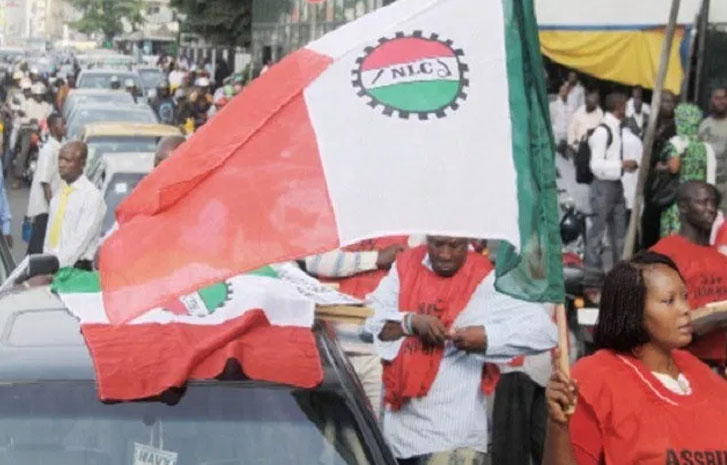
The following day, August 1, 2025, the Nigeria Labour Congress (NLC) issued a press release stating that it found the Federal Government’s claim that the newly adopted National Industrial Relations Policy was intended to stop frequent industrial actions—particularly strikes by trade unions—”very reprehensible.”
The statement further said the Labour Centre was shocked that, from hundreds of workplace issues captured in the National Industrial Relations Policy, the Federal Government chose to single out industrial strikes as its major concern.
The NLC noted that the unfortunate press statement exposed the mindset of those elected to protect the interests of ordinary citizens, including workers.
“We recall that during the development of the National Industrial Relations Policy, there were attempts to insert certain clauses in the policy that criminalized strike actions. Trade unions, employers, and even representatives of the Federal Ministry of Labour rejected such insertion as it was inconsistent with the 1999 Constitution and the Trade Unions Act, which give trade unions the power to withdraw their services in accordance with the law,”
the NLC stated.
I served as a member of the International Labour Organization (ILO) Committee of Experts responsible for reviewing Nigeria’s labour laws. As part of this mandate, the Committee developed a draft Industrial Relations Policy for the country.
While I will not be addressing the specific work of the Committee or the subsequent tripartite social dialogue process that reviewed the draft policy, I intend to explain the concept and framework of a National Industrial Relations System. National Industrial Relations refers to the system of rules, institutions, and practices governing employment relationships within a specific country, as recognised and supported by the ILO.
The ILO, a specialised agency of the United Nations, promotes rights at work, encourages decent employment opportunities, enhances social protection, and strengthens dialogue on work-related issues. While the ILO does not dictate national policies, it sets international labour standards through Conventions and Recommendations and encourages countries to implement them in their national systems.
Key ILO Conventions relevant to industrial relations, which Nigeria has ratified and is therefore bound by, include:
• Freedom of Association and Protection of the Right to Organise Convention (No. 87);
• Right to Organise and Collective Bargaining Convention (No. 98);
• Labour Relations (Public Service) Convention (No. 151); and
• Collective Bargaining Convention (No. 154).
The ILO supports countries by advising on legal reforms, providing technical assistance, supporting labour law compliance, and promoting freedom of association and effective dispute resolution.
Industrial relations concern the relationships between employers, employees, trade unions, and government. These include collective bargaining, workers’ rights and employer responsibilities, conflict resolution (such as strikes and disputes), labour laws, and enforcement mechanisms. All these elements combine to form a country’s National Industrial Relations System.
Each country’s system may differ but typically includes:
• Labour laws governing hiring, firing, wages, working hours, and dispute resolution;
• Institutions such as labour courts, industrial tribunals, and the Ministry of Labour;
• Social dialogue forums for negotiations between employers, unions, and governments;
• Collective bargaining mechanisms and grievance and dispute resolution procedures.
Despite the existence of formal legal frameworks and active trade unions, Nigeria’s industrial relations system continues to face significant and persistent challenges. Key issues include:
1. Prevalence of Industrial Actions: Strikes are common across key sectors such as education, healthcare, and oil and gas. Despite being a key stakeholder in labour relations, the government has consistently failed to honour Collective Bargaining Agreements (CBAs) and other contractual or negotiated obligations freely entered into with trade unions. This undermines good faith and mutual respect, which are essential for effective labour relations.
2. Weak Enforcement of Labour Laws: Although Nigeria has enacted various labour laws and constitutional provisions to safeguard employee rights—such as the Labour Act (2004), the Pension Reform Act (2014), and provisions on minimum wage—enforcement remains inconsistent and largely ineffective. Public sector employers, including federal and state governments (the largest employers), frequently violate these laws without facing legal or administrative sanctions.
3. Weak Tripartite Dialogue: Mechanisms for tripartite dialogue involving government, employers, and workers are largely ad hoc, reactive, and lack institutional continuity. The government frequently contravenes labour laws and constitutional provisions, particularly those concerning workers’ rights and welfare.
These violations weaken the rule of law and erode trust between the state and organized labour, fuelling industrial disharmony and disputes.
4. Macroeconomic Pressures: Broader economic challenges—such as increased fuel and electricity prices—have contributed to widespread poverty, rising inflation, currency depreciation, and an escalating cost of living. These pressures have intensified demands for wage increases and better working conditions, often resulting in industrial unrest.
In summary, failure to institutionalize collective bargaining, uphold legal commitments, and stabilize the macroeconomic environment threatens industrial peace, socio-economic development, and the realization of decent work in the country.
Given the magnitude and persistence of these challenges—ranging from non-implementation of Collective Bargaining Agreements and violations of labour and constitutional provisions to the absence of institutionalised social dialogue and adverse macroeconomic conditions—one would have expected the Minister of Information and National Orientation, when announcing the approval of the National Industrial Relations Policy (NIRP) 2025 by the Federal Executive Council, to clearly articulate how the policy intends to address these deep-rooted and multifaceted issues.
Rather than simply emphasizing the policy’s role in checking strikes and regulating trade union activities, the announcement should have explained how the NIRP 2025 will ensure government compliance with labour obligations, strengthen institutional mechanisms for dialogue, and promote industrial peace through lawful and equitable engagement with social partners.
Moreover, the timing and manner of the announcement—coming at a period when nurses and midwives are on strike and other health sector unions are threatening similar action—further reinforce the concerns raised by the Nigeria Labour Congress (NLC) in its press release.
This approach lends credence to fears that the policy may focus more on control than reform, and more on containment than genuine engagement. For the NIRP 2025 to gain legitimacy and achieve its stated objectives, it must address the underlying causes of industrial unrest, not merely its symptoms.
Disclaimer
Comments expressed here do not reflect the opinions of Vanguard newspapers or any employee thereof.