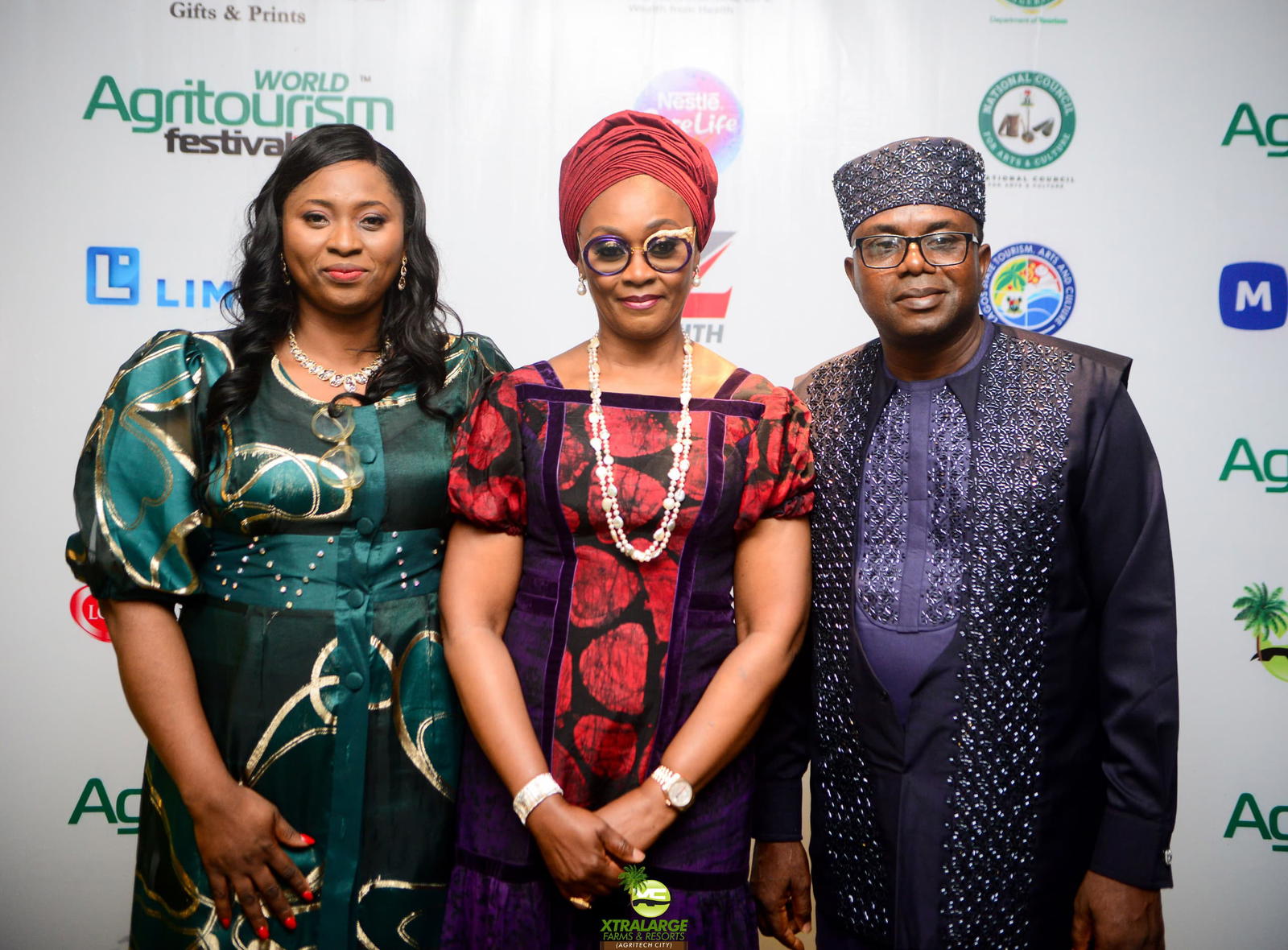
…at world agritourism festival, leaders call for integration of culture, tourism, farming
By Esther Onyegbula
Key players in Nigeria’s agriculture and tourism sectors have reaffirmed their commitment to promoting agritourism as a powerful tool for economic diversification, cultural preservation, and sustainable rural development.
Speaking at the maiden edition of the World Agritourism Festival 2025, organised by Xtralarge farms and resorts held in Lagos State, government officials and private sector leaders called for a paradigm shift in the way agriculture is practiced and perceived in Nigeria, urging stakeholders to explore the intersection between farming, tourism, and culture to unlock new opportunities for growth.
Leading the charge was Ogun State Commissioner for Culture and Tourism, Oluwasesan Fagbayi, who declared that the state is embracing agritourism not only as a development model but as a rebranding of the agricultural experience
According to him “Ogun State proudly recognizes the immense potential of agritourism to transform our landscape, economically, socially, and culturally,” Fagbayi said. “We are committed to nurturing policies and partnerships that promote inclusivity, sustainability, and authenticity.”
He revealed that the state is issuing Certificates of Administration of Agriculture to support agritourism ventures, enabling farmers and entrepreneurs to embed cultural and touristic elements into agricultural practices.
“As custodians of culture, we see agriculture and tourism not as separate pillars but as partners in a collective responsibility,” he added. “This festival marks the beginning of deeper collaborations and new visions for a green, resilient future.”
Let us cultivate a future that is green, inclusive, and connected, where every farm tells a story, and every story feeds a nation”, he added.
Adding a private sector perspective, CEO of Xtralarge Farms and Resorts and convener of the festival, Dr. Seyi Davis, said the future of agriculture depends on innovation, integration, and value addition.
“If we continue to do agriculture the way our forefathers did it, our children will abandon it,” Davis warned. “We need to fuse agriculture with technology, culture, and tourism to make it attractive, modern, and profitable.”
Dr. Davis emphasized that value addition is key to driving profit and sustainability in agriculture.
“When the West took our cocoa and turned it into finished products like masks, they sold them for more than six times the cost of the raw material. That’s why at Xtralarge, we don’t just farm, we process, brand, and distribute over 21 agricultural products,” he said.
Calling agritourism “the way forward,” Davis challenged farmers and policymakers alike to embrace creativity and cultural storytelling as part of their agricultural strategy.
In her remarks, the Permanent Secretary at the Ogun State Ministry of Agriculture and Food Security, Mrs. Kehinde Olutoyin Jokotoye, described the festival as a celebration of “the future we are building together.”
She noted that young people across the state are already engaging with sustainable agriculture in innovative ways, not just as producers, but as processors, marketers, and storytellers.
“We are empowering our men and women to understand the full agricultural value chain, from planting to processing and packaging,” Jokotoye said. “These efforts are creating jobs, enhancing food security, and turning local farms into agri-tourism destinations.”
She praised the event for giving visibility to youth-led agribusinesses and encouraged continued innovation and collaboration between public institutions and private enterprise.
Addressing longstanding structural challenges, Lagos State Commissioner for Agriculture and Food Systems, Hon. Ruth Bisola Olusanya, noted that ministries of tourism and agriculture have historically operated in silos.
According to her, “We often see a struggle between agriculture and tourism agencies trying to do the same thing from different angles,” she said. “But events like this prove that both sectors can, and should work together.”
According to Olusanya, agritourism offers a transformative opportunity to reposition agriculture as not just a livelihood activity but as an experience.
“Agriculture is not just toil and trade, it is the heartbeat of human survival,” she said. “Through agritourism, we can showcase the richness of our food systems, empower rural communities, and attract both local and international visitors.”
She called for a collective effort to reframe the narrative around farming in Nigeria and present it as a viable, dynamic, and culturally rich industry.
The World Agritourism Festival 2025 marks a critical milestone in Nigeria’s effort to modernize its agricultural sector while preserving its cultural heritage. With states like Ogun and Lagos spearheading policy shifts and private actors like Xtralarge Farms pioneering innovations in value-added agriculture, the path forward appears promising.
Stakeholders at the event agreed that agritourism has the potential to: Create rural employment and youth engagement. Preserve indigenous knowledge and food traditions. Promote sustainable land use and environmental stewardship. Attract domestic and international tourists. Diversify Nigeria’s economy beyond oil.
Disclaimer
Comments expressed here do not reflect the opinions of Vanguard newspapers or any employee thereof.