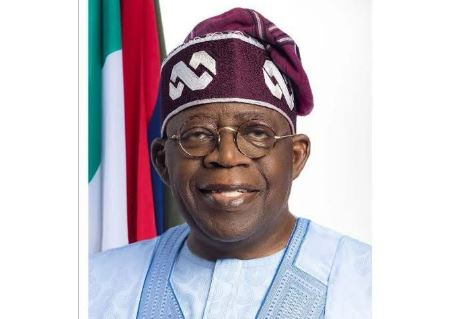
President Bola Tinubu
By Victor Ahiuma-Young, Geneva
The Director General/Chief Executive Officer of the Michael Imoudu National Institute for Labour Studies (MINILS), Issa Aremu, has commended President Bola Ahmed Tinubu for his administration’s efforts in job creation, retention, and job-led economic reforms over the past two years.
Aremu made the remarks on the sidelines of the ongoing 113th International Labour Conference (ILC) of the International Labour Organization (ILO) in Geneva, Switzerland.
Aremu, a Government Delegate at the 2025 Conference, aligned with the statement delivered by the Minister of Labour and Employment, Dr. Muhammed Dingyadi. He noted that the theme of this year’s ILO Director-General’s report is consistent with the priorities of President Tinubu’s Renewed Hope Agenda, especially in areas such as employment, economic growth, inclusiveness, and poverty eradication.
He highlighted that President Tinubu, in line with ILO principles that “labour is not a commodity,” took a commendable step by removing the fuel subsidy. According to Aremu, this move freed up resources that are now being redirected towards public sector job retention, contrasting with the post-1999 era characterized by mass downsizing.
Quoting data from the National Bureau of Statistics (NBS), Aremu stated that Nigeria’s total labour force stands at 118.72 million, with 720,000 public servants at the federal level.
He applauded President Tinubu for prioritizing decent work, where Nigerians can be employed in conditions of freedom, safety, and dignity. Aremu specifically cited the Presidential approval of 774 National Health Fellows—one for each Local Government Area—as a practical example of targeted job creation that supports national development.
While acknowledging the persistence of social injustices and inequalities, Aremu praised recent initiatives under the Renewed Hope Agenda, including the signing of the 2024 Minimum Wage Act and the launch of the Nigerian Education Loan Fund (NELFUND). These efforts, he said, aim to promote income equity and ensure access to higher education and vocational skills training for all, regardless of socioeconomic background.
He further emphasized the importance of improving the minimum wage, which is now reviewed every three years instead of five—a policy shift introduced by President Tinubu. Noting that Nigeria has implemented six national minimum wage reviews since 1981, he praised the country’s adherence to ILO best practices in tripartite negotiations.
Finally, Aremu called on the Federal Government to strengthen labour market institutions such as MINILS, the National Directorate of Employment (NDE), and the National Productivity Centre. He stressed that these institutions must play an active role in promoting labour education, productivity, and industrial harmony. He warned that “low and late funding fuels underperformance,” and urged for adequate investment in these agencies to support the government’s broader employment goals.
Disclaimer
Comments expressed here do not reflect the opinions of Vanguard newspapers or any employee thereof.