By Osa Mbonu-Amadi, Arts Editor
When considering the nature and purpose of art, many return to a central question: is art meant to soothe, to stir, or to serve as a mirror? Olalekan Kelani’s photographic works manage to do all three. With careful composition, emotional clarity, and cultural consciousness, he proves that photography is not merely about capturing beauty but about preserving memory, engaging the viewer, and posing quiet, yet powerful questions.
Though aesthetically gratifying, Kelani’s photographs go far beyond visual appeal. At the heart of his practice lies a deep commitment to storytelling. His lens does not simply record a scene; it interprets it. He engages architecture, environment, and atmosphere to reflect the relationship between people and place. His visual narratives are not loud or theatrical, but they are deliberate and evocative, rich with symbolism and nuance.
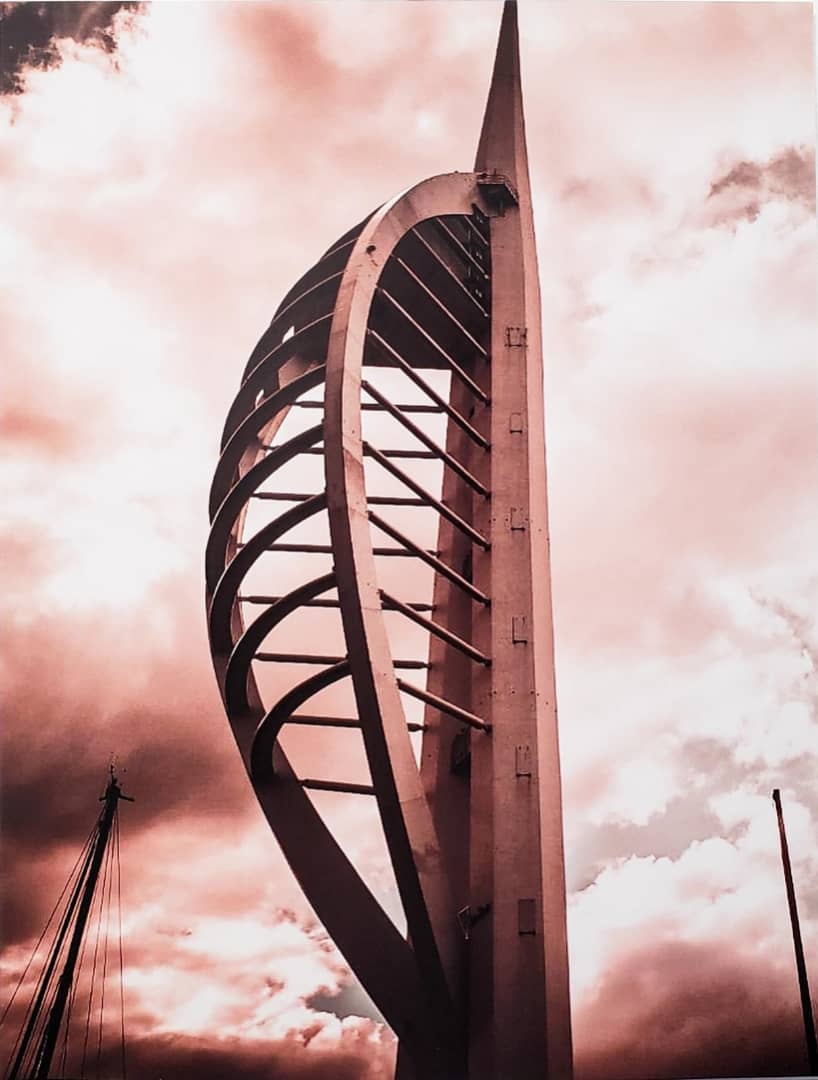
Kelani’s work has always had a strong sense of place. In his three pieces shown at the Escapismo exhibition — Portsmouth Spinnaker, Gladiator View of Westminster, and The Penelope of Greatness — we see how he captures both the grandeur and vulnerability of human-built environments. These works are more than cityscapes; they are meditations on permanence, identity, and cultural memory. The framing, the light, and the mood in each composition create spaces that feel both lived-in and dreamlike, urging us to pause and consider what stories these structures might hold.
His interest in architecture, weather, and cultural heritage speaks to a broader curiosity about time — both historical and personal. These subjects are not chosen randomly. Kelani has always gravitated toward sites that carry echoes of the past, places where the natural and the manmade intersect, where history quietly seeps through stone, glass, and sky. He captures them with reverence and a documentarian’s eye, but with an artist’s empathy.
Born in Nigeria and now based in the United Kingdom, Kelani brings a layered perspective to his work. His art is shaped by a dual cultural lens — West African and Western European — and this blend is visible in the tone and texture of his images. There is a cross-cultural sensibility in the way he approaches his subjects: he is both an insider and an observer. This duality allows him to create works that resonate with people across continents because they speak to universal themes — belonging, history, change, and identity.
Escapismo, held in São Paulo from July 27 to August 9, 2024, offered Kelani a fitting platform to showcase this layered artistic vision. His works were placed alongside those of 22 other artists from 15 countries, each engaging with the concept of escapism. While many might interpret escapism as a flight into fantasy or detachment, Kelani’s interpretation is more reflective: it is a retreat into history, memory, and architecture — spaces where time slows down and deeper understanding becomes possible.
The exhibition, curated by Juliana Lauletta and organized by Artly Mix, a reputable cultural institution in Brazil, proved to be a milestone in Kelani’s career. His photographs connected strongly with the Brazilian audience, resonating with their own environmental and cultural realities. This global relevance is one of Kelani’s strengths — his images speak locally, but they echo globally.
By presenting places in transition — between old and new, ruin and resilience — Kelani encourages us to see our environments not just as backgrounds, but as characters. He reminds us that our surroundings shape us just as much as we shape them. His photographs carry quiet urgency, asking viewers to notice, to remember, and perhaps to protect.
With three solo exhibitions and multiple group shows to his name, Kelani continues to grow into one of the most thoughtful voices in fine art photography today. He is not an artist who shouts for attention. Rather, he invites you to look — closely and patiently. And when you do, you begin to see not just buildings or clouds or shadows, but the traces of stories waiting to be heard.
Disclaimer
Comments expressed here do not reflect the opinions of Vanguard newspapers or any employee thereof.