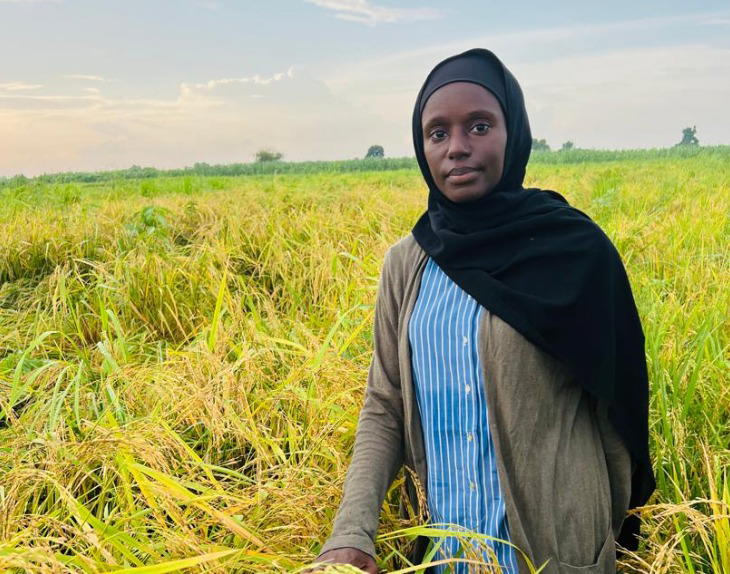
In this exclusive interview, Mohammed Abubakar speaks with Fatima Yusuf Hadejia, a young agripreneur in Jigawa State, about her journey into agriculture, the challenges she’s faced, and her vision for the future.
Fatima’s educational journey began at Birnin Kudu for her primary and junior secondary schooling, followed by Government Girls’ Unity Secondary School Gwaram, and Girls’ Science Secondary School Jahun, where she earned her senior school certificate in 2005. She later pursued a Bachelor’s degree in Agricultural Economics and Extension at the Aliko Dangote University of Science and Technology, Wudil.
Her foray into agriculture began after her National Youth Service Corps (NYSC) stint at the Kano State Ministry of Agriculture. Inspired by her family’s agricultural legacy—her father and grandfather were prominent agronomists—Fatima transitioned from Food Science and Technology to Agricultural Economics during her university studies, a move she credits to her father’s encouragement.
Carving a Niche in Agriculture
Fatima’s expertise spans agricultural value chains, fieldwork, and farm business management. Trained as an agribusiness entrepreneur and a Farmer Field and Business School (FFBS) facilitator, she has worked with several organisations, including M&A Greenery Ltd, the TRIMING Project, and LINKS Nigeria. She also serves as the Deputy Coordinator and Acting Geopolitical Zonal Leader for the Platform for African Women in Smart Climate Agriculture (PAWISCA).
Rice farming is her primary focus, though she has experimented with wheat and Irish potatoes. Despite initial setbacks—including flooding and poor yields—Fatima persevered, learning critical lessons in resilience and adaptability. Today, she manages a hectare of farmland, employs three permanent workers, and hires additional hands during peak farming seasons.
Challenges and Motivation
Fatima attributes her agricultural success to her family’s legacy and her determination to honour her late father’s work. “I feel like I have to take over from him,” she says, reflecting on her early experiences supervising farms. Despite the challenges of farming—ranging from natural disasters to resource constraints—Fatima remains committed, financing her ventures independently to avoid the stress of loans.
Empowering Others
Through her work, Fatima has inspired numerous friends and acquaintances to venture into agriculture. She offers guidance and mentorship, leveraging social media to share her farming journey and motivate others.
In the next decade, Fatima envisions expanding her operations to include gardens, fruit orchards, and poultry farms, alongside her rice cultivation. She also plans to establish a consultancy to train young people in agribusiness, emphasising the need for patience, perseverance, and knowledge in farming.
Fatima urges the Jigawa State Government to identify and support genuine farmers rather than “fake farmers” who misuse resources. She believes targeted interventions can significantly boost agricultural productivity. For young people, she emphasises the transformative potential of agriculture as a business, advocating for discipline and continuous learning.
A Balanced Life
Beyond farming, Fatima engages in catering and sells ladies’ veils and jewellery. She also finds relaxation on her farm and enjoys social media interactions.
As a single woman, Fatima remains hopeful about balancing her agricultural pursuits with family life in the future, aspiring for a supportive partner who encourages her entrepreneurial ambitions.
Fatima Yusuf Hadejia’s story exemplifies resilience and innovation, offering a beacon of hope for youth interested in agriculture. Her journey underscores the transformative impact of dedication, family legacy, and strategic thinking in shaping a brighter future for farming in Nigeria.
Disclaimer
Comments expressed here do not reflect the opinions of Vanguard newspapers or any employee thereof.