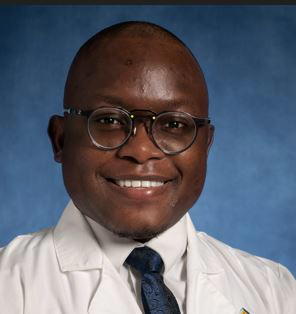
Nwafor Sunday: Dr. Ayanlaja, your journey from Nigeria to becoming a researcher at Johns Hopkins University is inspiring. Could you start by sharing what initially motivated you to pursue a career in science?
Dr. Abiola Ayanlaja: Thank you for the kind words. I have always been a biology guy. That one course I always pass no matter what. I was always fascinated by the intricacies of life sciences and their impact on human health.
Earning a bachelor’s degree in biochemistry from Olabisi Onabanjo University (OOU) further fueled my passion because it was mostly theoretical until my last moments at OOU. I developed a keen interest in understanding the molecular basis of diseases through my undergraduate final project. I worked on diabetes mellitus and got myself deeply involved as the team leader, handling in vivo procedures and writing a thesis. However, I lost touch right after my undergrad, promising to stay away from anything biochemistry because of the stress. But my service year brought me back to science while working in Abia State’s Ministry of Science and Technology during my National Youth Service Corps (NYSC).
Working in Abia exposed me to real-world applications of science and its potential to drive societal progress. I realized that many of the health challenges we face in Nigeria, such as cancer and other chronic diseases, could be better understood and tackled with advanced research. That experience instilled in me a desire to contribute to solutions at the intersection of research and practical healthcare delivery.
Nwafor Sunday: Many Nigerians in your field gravitate towards Western countries for further studies. Why did you choose China, and how did that decision influence your career trajectory?
Dr. Abiola Ayanlaja: Indeed, the US, UK, and Canada are often the go-to destinations for Nigerians seeking advanced studies. When I left for China in 2015, it wasn’t a conventional choice, but it was a strategic one. At that time, China was becoming a global leader in research and innovation. The government’s open-door policy for developing countries, combined with substantial investments in education and scientific research, presented a unique opportunity.
During my six years in China, I focused on oncology and neuroscience. For my Master’s degree, I worked on the nucleocytoplasmic transport of microtubule-associated protein in gliomas, the most common forms of aggressive brain tumors. This laid the groundwork for my Ph.D., where I explored deeper into how metabolic alterations drive glioma progression.
Sunday Nwafor: Nucleocytoplasmic?
Dr. Abiola Ayanlaja: Yes! From the nucleus to the cytoplasm or vice versa.
Sunday Nwafor: Okay…
Dr. Ayanlaja: China’s research infrastructure and funding enabled me to conduct groundbreaking research that might have been challenging elsewhere. I also published several high-impact peer-reviewed articles during this time. Choosing China not only advanced my technical expertise but also taught me the value of exploring non-traditional pathways in academia.
Nwafor Sunday: After China, you transitioned to Johns Hopkins University. What prompted this move, and how has your work there evolved?
Dr. Abiola Ayanlaja: Johns Hopkins University is a powerhouse in medical research, and joining its Department of Neurology was a natural step forward. It offered me the platform to expand on my previous work and contribute to precision medicine, particularly in cancer research. To be sincere, it wasn’t a tough decision. It was the perfect move for me.
At Hopkins, I focus on understanding adaptive resistance mechanisms in gliomas, especially in BRAF-mutant gliomas. My work investigates how key proteins in cell signaling play a role in resistance to current approved small molecule inhibitors used in treating these malignancies. By identifying these pathways, we’ve developed combination therapies that are more effective in overcoming resistance.
Beyond this, I’m involved in the preclinical optimization of targeted therapies and using cutting-edge technologies like RNA sequencing, single-cell sequencing, and CRISPR screens. These tools help us uncover the intricacies of tumor behavior and resistance mechanisms, enabling the development of tailored therapeutic strategies.
Nwafor Sunday: Your research focuses on gliomas, a particularly aggressive form of brain cancer. How does your work translate into better outcomes for patients?
Dr. Abiola Ayanlaja: Gliomas are among the most difficult cancers to treat due to their aggressive nature, resistance to therapies, heterogeneity, and the blood-brain barrier. My research on small molecule inhibitors aims to address these challenges by targeting adaptive resistance mechanisms. When used in combination with other inhibitors that target two nodes in a signaling pathway, can enhance tumor suppression and improve treatment durability.
For patients, this means more effective therapies and potentially longer survival rates. While these findings are still preclinical, the goal is to translate them into clinical trials and eventually into standard care.
In Nigeria, where access to advanced cancer treatments is limited, my work also highlights the importance of early diagnosis. Precision medicine tools, such as genomic profiling, can identify patients at risk and guide personalized treatment plans. This approach not only improves outcomes but also reduces the economic burden on families.
Nwafor Sunday: Precision medicine is still rare in Nigeria. What challenges do you see, and how can Nigeria keep up?
Dr. Abiola Ayanlaja: There are several challenges, starting with a lack of infrastructure. Precision medicine relies heavily on molecular diagnostics and genomic profiling, which are either unavailable or unaffordable for many Nigerians. Additionally, there’s a gap in training; very few healthcare professionals in Nigeria are equipped with the skills needed for genomic medicine.
Another major issue is funding. Precision medicine requires substantial investment in research, equipment, and personnel. Unfortunately, healthcare funding in Nigeria is often limited, with priorities focused on addressing immediate, large-scale health concerns like infectious diseases.
To address these challenges, we need a multifaceted approach. Building genomic databases specific to African populations is critical for developing treatments tailored to our genetic diversity. Investments in training programs, public-private partnerships, and collaborations with diaspora scientists can also drive progress. Lastly, raising awareness about the benefits of precision medicine is crucial to garner public and policy support.
Nwafor Sunday: What role do you see for diaspora scientists like yourself in advancing healthcare in Nigeria?
Dr. Abiola Ayanlaja: Diaspora scientists are uniquely positioned to bridge the gap between global innovations and local challenges. We have access to advanced tools, resources, and networks that can be leveraged to support healthcare in Nigeria. For example, diaspora collaborations can help establish genomic research facilities, train local scientists, and advocate for policy changes that support precision medicine.
Additionally, mentoring young Nigerian scientists and fostering collaborations between Nigerian institutions and global research hubs can accelerate progress. It’s about creating a feedback loop where knowledge and resources flow both ways.
Nwafor Sunday: You’ve had a remarkable career so far. What has been the most rewarding aspect of your journey?
Dr. Abiola Ayanlaja: For me, the most rewarding aspect is mentorship. Guiding young scientists, whether they’re Ph.D. students or post-baccalaureates, is incredibly fulfilling. It’s inspiring to see their growth and to know that I’m contributing to the next generation of researchers.
On a broader level, translating research into potential treatments that can improve patient outcomes is deeply satisfying. Knowing that my work could one day save lives keeps me motivated and reminds me why I chose this path.
Nwafor Sunday: Finally, what advice would you give to aspiring Nigerian scientists who want to make a global impact?
Dr. Abiola Ayanlaja: Dream big but stay focused on your goals. Seek growth opportunities, whether they’re in Nigeria or abroad, but always remember to give back to your community. Science is a collaborative effort, so build networks, seek mentorship, and never stop learning.
At the same time, I would encourage Nigerian scientists to stay informed about the strides the government is making in healthcare. For example, initiatives like the National Health Insurance Scheme (NHIS) are beginning to prioritize broader coverage, which could play a role in funding genomic medicine for those who cannot afford sequencing out-of-pocket. By making sequencing affordable, we can unlock the full potential of precision medicine in Nigeria.
Sequencing is a cornerstone of precision medicine because it provides the genetic data needed to develop personalized treatments. In Nigeria, a large-scale effort to integrate sequencing into healthcare could revolutionize the way we approach diseases like cancer, sickle cell anemia, and diabetes. But this requires government support, policy alignment, and public-private partnerships to make it a reality.
We also need to ensure that the youth are informed and equipped to access funds for research. Sensitization programs about grants and scholarships tailored for African scientists could open up new opportunities. The next generation of Nigerian researchers must be empowered to lead this transformation, and I am optimistic that with the right support, they will.
Nwafor Sunday: Thank you, Dr. Ayanlaja, for sharing your insights on precision medicine and your contributions to cancer research. We’re excited to see how your discoveries will help conquer these devastating diseases and their impacts on global public health.
Dr. Ayanlaja: Thank you for having me.
Disclaimer
Comments expressed here do not reflect the opinions of Vanguard newspapers or any employee thereof.