By Ayo Onikoyi
The rising spate of antimicrobial resistance (AMR) worldwide has led a researcher, Akinbode Okunola, to investigate the role of international standards in limiting veterinary drug residues in livestock and poultry products.
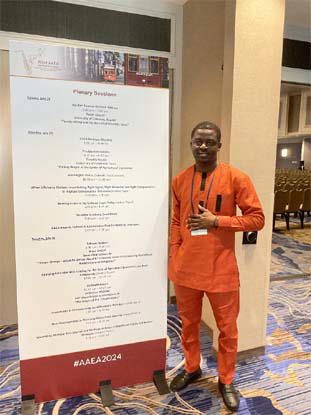
As a doctoral student in Agricultural Economics at the University of Nebraska–Lincoln, Okunola is focused on understanding how regulatory frameworks, such as the Codex Alimentarius standards, influence public health and global trade in animal products.
In a paper made available to this medium, Okunola emphasised the critical role of the Codex Committee on Veterinary Residues in establishing Maximum Residue Limits (MRLs) for veterinary drugs. These MRLs, he explains, serve as a scientific benchmark for countries developing their Sanitary and Phytosanitary Standards (SPS) regulations, ensuring food safety and protecting consumer health.
The study delves into how domestic MRLs are formulated, especially in scenarios where international standards are absent.
Okunola’s research is built on a proprietary dataset that spans 406 veterinary drugs, 164 food commodities, and 88 countries. With over 676,000 records analyzed, the dataset categorizes MRLs based on the presence or absence of Codex standards. The findings reveal significant disparities in how countries regulate veterinary drug residues, influenced by geographic location, commodity type, and the drugs’ importance to human health.
The study found that 88% of national MRLs align with Codex standards when such benchmarks exist, while 8% are stricter and 3% are more lenient. However, in the absence of Codex MRLs, compliance rates drop considerably. This gap often results in either overly stringent regulations, which can impede trade, or excessively lax standards, potentially endangering public health.
“Countries place varying degrees of importance on veterinary drugs depending on their domestic priorities and public health goals,” Okunola notes. His research highlights significant variations across drug types and commodities, emphasising the need for harmonised global standards.
Such harmonization, he argues, is essential for advancing the One Health initiative, which seeks to combat AMR through integrated approaches across human, animal, and environmental health.
Okunola advocates for increased funding to expand the Codex’s repertoire of MRLs, especially for veterinary drugs critical to global food production. He points out that the absence of international standards can lead to trade disputes, as exporting countries may struggle to meet the importing nations’ stringent requirements. “A broader and more comprehensive set of Codex MRLs would facilitate global trade while safeguarding public health,” he asserts.
The significance of Okunola’s work extends beyond academia. His research underscores the economic implications of antimicrobial residue regulation, particularly for developing countries heavily reliant on livestock exports. He calls for international collaboration to bridge the regulatory gaps, which could help these nations access global markets while ensuring food safety.
Okunola’s professional journey reflects his commitment to addressing complex challenges in agricultural economics and public health. Before embarking on his doctoral studies, he served as the Head of the Business Efficiency Department at Amo Farm Sieberer Hatchery Limited in Nigeria. There, he spearheaded climate-smart innovations to reduce carbon footprints and operational costs, gaining practical insights into sustainable livestock production.
As a Livestock Economist, Okunola’s expertise lies in food regulation, food security, and sustainable production and consumption. His research aligns with global efforts to tackle AMR, a pressing issue that threatens to undermine decades of progress in modern medicine. By examining the intersection of veterinary drug regulations and global trade, he aims to provide actionable insights for policymakers.
His work has already garnered attention from international bodies. Okunola is a member of the Agriculture and Applied Economics Association (AAEA), the Western Agricultural Economics Association (WAEA), and the National Institute of Antimicrobial Resistance Research and Education (NIAMRRE). These affiliations underscore his role as a thought leader in agricultural and health economics.
The implications of his research are profound. As the world grapples with AMR, ensuring the responsible use of veterinary drugs in food production has become a global priority. Okunola’s findings highlight the need for a balanced approach that considers both public health and economic interests.
By leveraging economic modeling, Okunola’s work provides a roadmap for improving market efficiencies and enhancing the sustainability of livestock production. He envisions a future where international standards not only protect public health but also promote equitable trade relations.
As the global community intensifies efforts to curb AMR, Okunola’s research serves as a timely reminder of the importance of science-based policymaking. His findings advocate for a collaborative approach to veterinary drug regulation, ensuring a safer and more sustainable food system for all.
Ultimately, Okunola’s research is a call to action for governments, industry stakeholders, and international organizations. By investing in the development of robust international standards, the global community can better manage the risks associated with antimicrobial residues, fostering a healthier and more resilient world.
Disclaimer
Comments expressed here do not reflect the opinions of Vanguard newspapers or any employee thereof.