The several significant dangers posed by money laundering and terrorism financing, and the monumental size of AML/CFT industry, make a robust fight against money laundering and terrorism financing increasingly important.
According to the United Nations Office on Drugs and Crimes, the estimated amount of money laundered annually is 2.5% of the global GDP, or $800 billion – $2 trillion in U.S. dollars. This is indicative that money laundering is a ‘multi-trillion dollar industry’ thus requiring intensity in global combatting efforts.
Money laundering, in broad terms, refers to a situation in which criminals, including terrorist organizations, attempt to disguise the sources or nature of their financial assets, so that they can be used while concealing the criminal activities that produced them. Eventually, money laundering threatens the integrity of the financial system by facilitating a wide range of grave underlying criminal activities.
Terrorism financing on the other hand, is the provision of financial assets by a terrorist organization. Terrorist groups gather funds through a variety of legitimate sources, as well as criminal activities such as racketeering, weapon smuggling, extortion, and drug trafficking.
Money laundering constitutes a major security risk as its beneficiaries are criminal rings, corrupt officials, and terrorist organizations.
A money launderer uses complex techniques such as shell companies, foreign investments, unusual deposits, and trading to legitimize money.
At the instruction of the G7 nations, the Financial Action Task Force (FATF) was established in 1989 to devise policies combating money laundering and safeguarding financial interests. This has been instrumental in shaping anti-money laundering (AML) efforts in every country, including the developing world. Its mandate was expanded in 2001 to include combating terrorism financing.
However, lack of effective AML/CFT structure have been observed particularly in the developing countries, which accounts for reasons they have witnessed more of the dangers AML/CFT poses. Some of these developing countries continue to witness increased criminal activities because of lack of effective AML/CFT measures. Communities have suffered from the effects of organized crime, including increased violence, drug addiction, and social instability, perpetuating cycles of poverty and crime.
Their financial systems have become attractive to criminals, facilitating drug trafficking, human trafficking, and other illicit activities which makes financial institutions risk substantial financial losses from fines, legal fees, damage to their reputation and eventual loss of business and trust from customers.
Some of these countries have witnessed increased scrutiny from regulators and international bodies, resulting in more stringent regulations and oversight. They are perceived as havens for money laundering and terrorism financing, thereby suffering reputational damage, which affects diplomatic relations and economic partnerships.
While it is important to state that ineffective AML/CFT controls can allow funds to be funneled to terrorist organizations, enabling them to carry out attacks, recruit members, and sustain operations, it can in addition undermine legitimate businesses, lead to increased corruption and reduced foreign investment which can consequently distort economies.
Intense global combat of Money Laundering (AML) and Terrorism Financing (CFT) especially by developing countries involves a multi-faceted approach that addresses systemic weaknesses and enhances institutional capacity. Some helpful strategies in the fight are outlined below:
Strengthen Legal Frameworks: Development and enforcement of comprehensive laws and regulations that align with international standards, such as those set by the Financial Action Task Force (FATF). This includes defining money laundering and terrorism financing in clear terms and establishing stiff penalties for violations. In the United States for instance, the pillar of anti-money laundering laws is the Bank Secrecy Act (BSA), which forces compliance requirements on banks and other financial institutions that operate in the USA. The two financial regulatory bodies responsible for AML/CTF in the United States are the Financial Crimes Enforcement Network (FinCEN) and the Office of Foreign Assets Control (OFAC).
Utilize Technology and Data Analytics: Invest in technology and analytics to improve transaction monitoring, customer due diligence, and risk assessments. Automated systems can help identify patterns and flag suspicious activities more efficiently.
International Cooperation: Engage in international partnerships and information-sharing agreements to enhance cross-border cooperation in investigating and prosecuting money laundering and terrorism financing.
Capacity Building through Technical Assistance: Seek technical assistance from international organizations, NGOs, and developed countries to build capacity in AML/CFT initiatives, including training programs and workshops.
Enhance Institutional Capacity: Invest in training and resources for regulatory bodies, law enforcement agencies, and financial institutions to improve their ability to detect, investigate, and prosecute money laundering and terrorism financing cases.
Develop Financial Intelligence Units (FIUs): Establish or strengthen existing FIUs to serve as central agencies for collecting, analyzing, and disseminating financial intelligence related to suspicious transactions.
Adoption of these strategies will enable developing countries to create a more effective framework for combating money laundering and terrorism financing, thereby contributing to global security and economic stability.
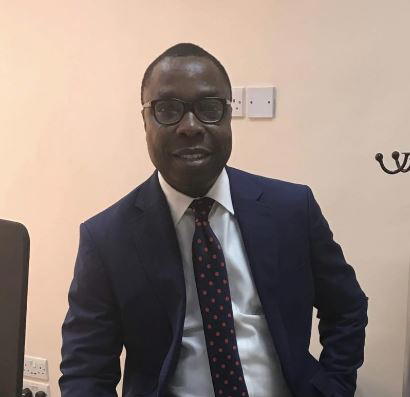
Olukorede Balogun is a Business Analyst and a Finance and Anti-Money Laundering Expert. He holds a B. Sc in Economics, M.Sc. in Data Management and Analytics from a United States University and a Member of Several Local and International Professional Institutes.
Disclaimer
Comments expressed here do not reflect the opinions of Vanguard newspapers or any employee thereof.