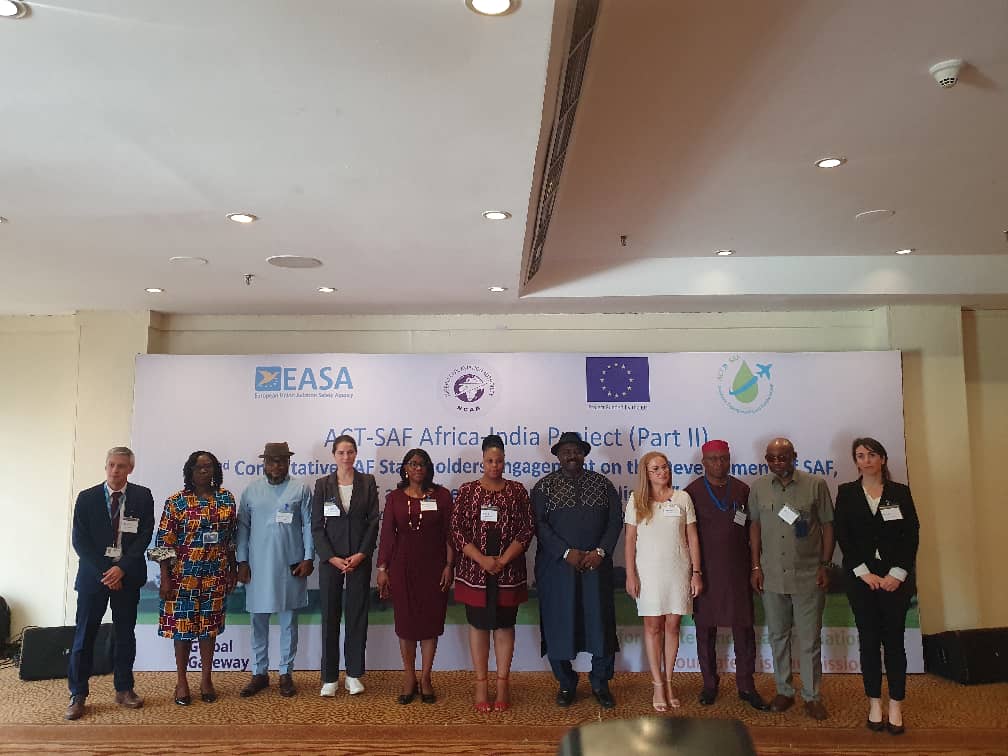
In a significant move towards sustainable aviation, the Nigeria Civil Aviation Authority (NCAA), among with other aviation stakeholders have advanced conversations on cleaner energy transition in the sector.
The stakeholders, on Monday, November 4, convened at the 2nd consultative stakeholders engagement on the development and deployment of SAF, LCAF and other cleaner fuels, in Abuja.
The gathering focused on raising awareness about the benefits of a cleaner energy transition and the imperative need for action against environmental degradation.
Speaking during the event, Festus Keyamo, Minister of Aviation and Aerospace Development, noted that technical analyses have shown that Sustainable Aviation Fuel (SAF) has the potential to significantly reduce carbon emissions in international aviation.
He emphasized that only through cooperation can Nigeria ensure the development and deployment of cleaner aviation fuels, positioning the country to benefit from global environmental initiatives.
“EASA is here to assist Nigeria in fast-tracking the development and deployment of SAF and other cleaner energy alternatives for aviation.
“Our nation recognizes the potential of SAF and other energy alternatives not only to reduce emissions but also to stimulate economic growth and create jobs,” he said.
The minister reiterated Nigeria’s unique opportunity to produce SAF sustainably, urging stakeholders to engage in in-depth discussions with industry experts to shape a clear path forward.
Also speaking, Chris Ona Najomo, NCAA DG, highlighted the collaborative efforts underway to identify feedstocks necessary for SAF production.
“We had our first meeting last year, and this is the second to strengthen our collaboration.
“We have sufficient livestock to support sustainable aviation fuel production,” Najomo noted.
He expressed optimism that identifying viable feedstocks will lead to cost-effective solutions compared to current fuel prices.
“While we anticipate a cleaner and potentially cheaper fuel, the primary goal is to ensure sustainability,” he added.
Dr. Nkiruka Maduekwe, Director General of the National Council on Climate Change, underscored the importance of stakeholder engagement in driving the transition to cleaner aviation fuels.
“This conversation is vital to ensure Nigeria’s socio-economic development is enhanced sustainably,” she remarked.
Maduekwe emphasized that the government’s active engagement with stakeholders is crucial for understanding the necessity of change and the opportunities that SAF presents.
She acknowledged the need for a collaborative approach, stating, “You cannot make decisions without stakeholders.
“This is a co-creating process to help them understand SAF and explore alternatives.”
Maduekwe also highlighted the support from the European Union and other partners in advancing Nigeria’s aviation sector towards decarbonization.
Disclaimer
Comments expressed here do not reflect the opinions of Vanguard newspapers or any employee thereof.