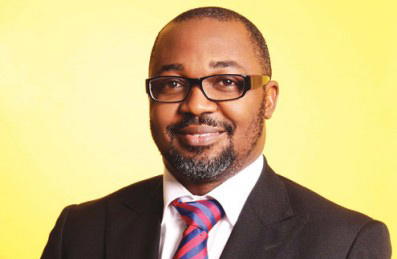
John Ugbe, MD Multichoice Nigeria
John Ugbe, new and first Managing Director of Multichoice Nigeria, last week at the company’s corporate headquarter in Lagos, met with a number of journalists where he spoke about his programmes envisioned to help sustain Multichoice as a leader in the television market place. McPhilips Nwachukwu & Emeka Aginam was there. Excerpt :
So what is your transformation agenda for Multichoice?
I have come in at a point where the company is transforming, moving forward; the company has a lot of human capital here in Nigeria and we are at this point harnessing all that. I am trying to move the company forward with a lot of local input (content) which the company has developed and has continued to develop.
So what are we looking at? We are looking at a lot more content from Nigeria, we are looking at expanding our corporate social investment initiatives (CSI); so our interaction with the community and stakeholders have been increased. Our ambition is to surround our customers with entertainment and that is exactly what we are going to do by asking the question, “how do we entertain our subscribers even more?”

John Ugbe, MD Multichoice Nigeria
DStv is seen as a successful brand, are there challenges that are unique to the company in the Nigerian environment?
I think that every business that operates not just in Nigeria but in every other country has certain challenges that are peculiar to that environment. We are a business that operates in quite a few countries, so yes, definitely we have certain challenges in Nigeria but like every business our objective is to be able to surmount these challenges.
We work very closely with our regulators, stakeholders and by building those relationships we can overcome the obstacles if I can call them that. I mean the infrastructure in Nigeria is still developing and as it develops we have to build our business to take into consideration those challenges that exists because it is very important that we offer world class service even if our environment may not be as conducive as it ought to be.
In specific term, what are the challenges?
I mean power challenges; I believe this is one challenge everyone faces so we don’t think it is peculiar to our business anymore. In general, there are infrastructure challenges which every business operating in the country faces.
Talking about local input/content which areas are you looking at?
We are very proud with the domestic football league which we got on SuperSport and we hope to build and grow on that; we have got a good relationship and sponsorship deal with the domestic basket league – which is called the DStv Basketball League – as well.
Not only do we sponsor by putting money in the league, we also broadcast the matches on TV which is a big push for the domestic basketball league; it never happened before. There has been quite a lot of investment from us. We have just got another two HD (high definition) OB (outside broadcast) vans, we have built full HD studio to support the domestic leagues.
So what will you see in the coming seasons? You will see more live matches – simultaneously. We can take more matches from more venues. There is a big push on that and on the movies and sitcoms, we are expanding that too. You will see a lot more coming from there.
Our Africa Magic channels are going to grow; there will be a lot of growth in content. We have been a strong partner with Nollywood right from inception and you will see a lot more coming out of us from there. Some of these things will surprise you when we unfold them.
Beyond all of these – sports, movies, sitcom and all of that – there is a sector that is growing very fast and it is an emerging market, the visual arts industry. Are you thinking of doing something in that direction?
Visual arts?
Yes.
Yes, we do see certain sponsorship from local organizations on arts and we have been able to expose those brands to international audience. Definitely, you will see more of that in the coming years.
Aside local content, how else does Multichoice intend to entertain its subscribers?
We will continuously search for the best content out there and make sure it is available on our platform. We have got a lot of programmes that are watched internationally like X-Factor and we ensure that our audience here does not lag behind internationally.
DStv is no longer having a monopoly of pay TV market in Nigeria but it still remains the market leader; what is the secret?
First, let me correct one impression here, we have never been a monopoly because there have always been a competitor. What is our secret, well it is the way we do business, it is our people and we have come to also realize that it is a long term business. We are not in for the short run; we are not a company that invests today and wants to reap tomorrow.
We have spent a lot of money in the local leagues contents that we are putting up. We are patient and continuously try to see and find out what our customers want and we try to provide such contents or improve on them.
Recently, the House Committee on capital market included Multichoice among the companies they are expecting to be listed on the Nigerian Stock Exchange (NSE). How prepared is Multichoice in the event of the bill been passed?
I mean we work with regulators and stakeholders all the time and so if certain bills are passed it is for us to see how feasible they are and we will work with the capital market. You must also not forget that before now, our sister company, MNET, was once listed on the NSE so we were even ahead of our time. However one thing you must also know is that not every company in the country will be listed on NSE.
Your CSR (corporate social responsibility) is skewed towards education, skill development and environment, let us look more into education and skill development aspects.
In terms of education what we try to do is to see how we add value to our educational system. Content is very important, what are these kids learning? When you teach a kid about tsunami, what does it mean to him?
It is not something he/she will go out somewhere to see so we have managed to design a programme that allows us to work with the ministry of education and to build MultiChoice Resource Centres in schools to give the kids the opportunity of seeing what they are learning and to learn with some of our channels like discovery, History, National Geography etc… Channel which has a lot of content that gives the kids a better experience.
And I think that it is a project that we are beginning to see the result and we have taken a decision to increase the roll out of resource centres.
Aside the investments you have made in the country in the area of building studios, where next are you taking Multichoice to?
Well if you say beyond the studio, it mustn’t go beyond the studio; do you begin to put real estate and studios in an environment you are not committed to? We are a Nigerian company, we always say it that you can go to the CAC (Corporate Affairs Commission) and check if we are a registered Nigerian company. We pay our taxes and we do everything here.
If you look at a programme like Glo Naija Sings,Tinsel, etc, they are developed here in Nigeria, filmed here in Nigeria and people are always shocked to hear that they are filmed here in Nigeria on high definition from multi camera operation. That takes a lot of commitment.
Looking at Tinsel and Nollywood you can see that the difference is clear, what are you doing to impact on Nollywood especially in the areas of scripting?
We have supported Nollywood through training; and we have another session coming up in the first quarter of next year where we are going to take people through script writing, production training etc. This is not something we have just started; it is something we have always done.
We are also partnering with Nigerian Copyright Commission (NCC) to create awareness on intellectual property. One of the biggest challenges that the entire entertainment industry faces is piracy; that is what is stopping the growth of our movie industry so we are working and trying to educate people that intellectual property needs to be respected because that is how the new Nigerian music/ movie industry would be sustained.
If piracy is not controlled that industry will collapse and that industry has quite a lot of people and we haven’t probably got a good feel of the impact of the industry. It is big in the United States of America; it is big everywhere in the world and I think we have the capacity for it to be very big here but f
or that to happen, intellectual property has to be respected.
Disclaimer
Comments expressed here do not reflect the opinions of Vanguard newspapers or any employee thereof.