By Charly Agwam, Bauchi
Kulikuli, an otherwise enticing delicacy in Bauchi and other states in Northern Nigeria has been around for generations and is eaten by all categories of people. The rich, the average family and the poor all enjoy the delicacy either at home or on the roadside.
However, in recent times, the consumption of the food has given rise to health concerns due to its poor handling and unhygienic packaging by those who prepare it. Karago, as it is commonly called in Bauchi and some other places in the North, is usually sold by women and female children, most of whom occupy unrented spaces in markets and crowded areas to sell to consummers and eke out a living.
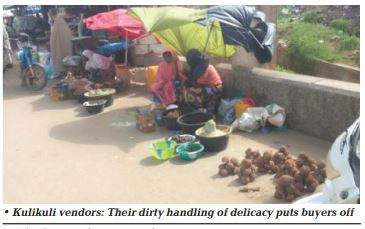
However, a survey by Arewa Voice around major markets in Bauchi, showed that the commodity is mostly produced and marketed in unhealthy conditions, thereby putting off some discerning consumers, who fear for their health. In Yelwa Market, for instance, the commodity is sold around a gigantic culvert competing with a huge refuse heap dumped by flood and which emit an offensive odour.
Many other producers and sellers use any available space on the roadside not minding the environmental hazards associated with the open display of the commodity on the open space.
Apparently disgusted with the way and manner in which the otherwise desirous commodity is being prepared and handled in the markets, some residents who spoke with Arewa Voice, said they would stop eating Kulikuli for now until the condition under which it is prepared and sold is significantly improved.
An electrical engineer, Patience Sunday, who informed that she had been enjoying Karago since her days as a student, said she had in recent times been complaining bitterly to the vendors about their unhealthy environment and poor handling of the foodstuff and advised them on how best to handle it but that her counsel had not been heeded.
“I am one person who likes Karago or Kulikuli as you may like to call it. In fact, my love for Kulikuli didn’t start today; it goes way back to my days as a student. I started patronising vendors near the Yelwa Market but I had to stop buying and consuming it because of the environment and the way they handle it when selling to buyers.
“I had a very unpleasant experience once; one fateful afternoon, I came back early from work and needed to feed my stomach. So, I opted for Garri and Karago since I could prepare it very fast.
“Because I already had Garri, I rushed to the market to get Karago. But I was put off by the woman who was to sell Karago to me because she was using the same hand she had used in eating mango and kept the peel to sell the commodity to me without caring to wash her hands.That was it for me. I rejected it and since then, I have not gone back,” she said.
Another resident, a medical practitioner, who did not want to be mentioned, said that efforts to file a complaint with the Federal Competition and Consumer Protection Commission, FCCPC, has not also produced effective result.
“It troubles me too each time I pass by those sellers. I don’t know if they know that they are not helping their fellow compatriots,” he noted. It is the same thing at Muda Lawal Market and even Wunti. The least they could do is to use transparent nylon materials to cover them because unlike meat, beans and other food stuffs, Kulikuli is not cooked before being eaten.
“I have tried filing a report with the Federal Competition and Consumer Protection Commission but each time their server would not connect. You know, exposed foods like this can be contaminated and when eaten could result to various sicknesses.”
When Arewa Voice contacted Mallam Bapah of Federal Competition and Consumer Protection Commission, FCCPC, Bauchi State office, he simply said: “If people send us complaints about it, we will take action against them.”
Further research by Arewa Voice revealed that food exposed to flies and unhealthy environment can lead to food poisoning. According to an international food logistics company, Cannon Logistics, food poisoning is one of the key consequences of improper food handling.
“Many of the poor food handling practices that allow for bacterial growth and cross contamination lead to food poisoning,” the food logistics giant wrote on its website. “There are many variants of food poisoning, from nausea and vomiting to far more severe outcomes such as seizures, brain damage or even death.
“Different people respond to food poisoning in different ways, and certain types of foods can be tied to specific forms of food poisoning such as Salmonella and E. coli.
“But regardless of the form of food poisoning or how it affects different individuals, it is still the most common and concerning consequence of poor food handling.”
Kulikuli, an otherwise enticing
delicacy in Bauchi and other states in Northern Nigeria has been around for generations and is eaten by all categories of people. The rich, the average family and the poor all enjoy the delicacy either at home or on the roadside. However, in recent times, the consumption of the food has given rise to health concerns due to its poor handling and unhygienic packaging by those who prepare it. Karago, as it is commonly called in Bauchi and some other places in the North, is usually sold by women and female children, most of whom occupy unrented spaces in markets and crowded areas to sell to consummers and eke out a living.
However, a survey by Arewa Voice around major markets in Bauchi, showed that the commodity is mostly produced and marketed in unhealthy conditions, thereby putting off some discerning consumers, who fear for their health. In Yelwa Market, for instance, the commodity is sold around a gigantic culvert competing with a huge refuse heap dumped by flood and which emit an offensive odour. Many other producers and sellers use any available space on the roadside not minding the environmental hazards associated with the open display of the commodity on the open space.
Apparently disgusted with the way and manner in which the otherwise desirous commodity is being prepared and handled in the markets, some residents who spoke with Arewa Voice, said they would stop eating Kulikuli for now until the condition under which it is prepared and sold is significantly improved.
An electrical engineer, Patience Sunday, who informed that she had been enjoying Karago since her days as a student, said she had in recent times been complaining bitterly to the vendors about their unhealthy environment and poor handling of the foodstuff and advised them on how best to handle it but that her counsel had not been heeded.
“I am one person who likes Karago or Kulikuli as you may like to call it. In fact, my love for Kulikuli didn’t start today; it goes way back to my days as a student. I started patronising vendors near the Yelwa Market but I had to stop buying and consuming it because of the environment and the way they handle it when selling to buyers.
“I had a very unpleasant experience once; one fateful afternoon, I came back early from work and needed to feed my stomach. So, I opted for Garri and Karago since I could prepare it very fast.
“Because I already had Garri, I rushed to the market to get Karago. But I was put off by the woman who was to sell Karago to me because she was using the same hand she had used in eating mango and kept the peel to sell the commodity to me without caring to wash her hands.That was it for me. I rejected it and since then, I have not gone back,” she said.
Another resident, a medical practitioner, who did not want to be mentioned, said that efforts to file a complaint with the Federal Competition and Consumer Protection Commission, FCCPC, has not also produced effective result.
“It troubles me too each time I pass by those sellers. I don’t know if they know that they are not helping their fellow compatriots,” he noted. It is the same thing at Muda Lawal Market and even Wunti. The least they could do is to use transparent nylon materials to cover them because unlike meat, beans and other food stuffs, Kulikuli is not cooked before being eaten.
“I have tried filing a report with the Federal Competition and Consumer Protection Commission but each time their server would not connect. You know, exposed foods like this can be contaminated and when eaten could result to various sicknesses.”
When Arewa Voice contacted Mallam Bapah of Federal Competition and Consumer Protection Commission, FCCPC, Bauchi State office, he simply said: “If people send us complaints about it, we will take action against them.”
Further research by Arewa Voice revealed that food exposed to flies and unhealthy environment can lead to food poisoning. According to an international food logistics company, Cannon Logistics, food poisoning is one of the key consequences of improper food handling.
“Many of the poor food handling practices that allow for bacterial growth and cross contamination lead to food poisoning,” the food logistics giant wrote on its website. “There are many variants of food poisoning, from nausea and vomiting to far more severe outcomes such as seizures, brain damage or even death.
“Different people respond to food poisoning in different ways, and certain types of foods can be tied to specific forms of food poisoning such as Salmonella and E. coli.
“But regardless of the form of food poisoning or how it affects different individuals, it is still the most common and concerning consequence of poor food handling.”
Disclaimer
Comments expressed here do not reflect the opinions of Vanguard newspapers or any employee thereof.